Caring for Lacquered Solid Wood Furniture in Singapore’s Tropical Climate
I keep a small notebook of every material I have stress-tested at home in Singapore, and lacquered solid wood is the one that punishes me the hardest. Last month I visited a friend’s newly renovated walk-up in Bedok, and her four-month-old dining table was already showing a cloudy ring under the lazy Susan. The flat had a corridor lift opening of roughly 1.2 m by 2.1 m, the sofa came in a single carton weighing 86 kg, and her lacquered walnut console had begun to bloom with tiny white freckles along the joints. None of this would be news in Stockholm. In Tampines or Punggol, with afternoon humidity holding at 80–90% RH and the air-con cycling off at 2 a.m., it is the entire story.
Why does lacquer behave differently in HDB and condo flats?
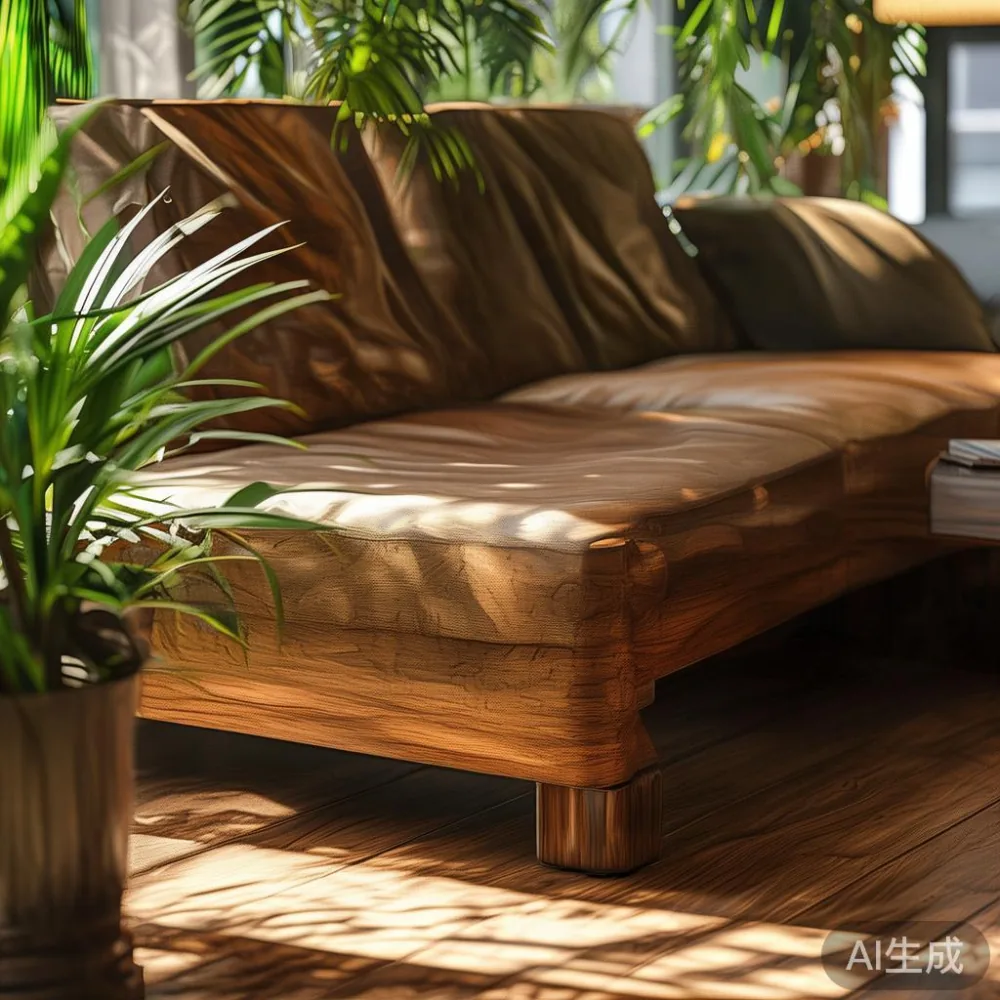
The honest answer is that lacquer is a film finish, and a film finish in Singapore has to fight a war on two fronts: heat that softens the resin, and moisture that creeps under the edges. When I borrowed a hygrometer for a week in my own HDB flat in Punggol, my living room swung between 68% RH at 4 p.m. with the fan running and 92% RH by sunrise after a thunderstorm. Solid wood expands roughly 1% across the grain for every 4% change in moisture content. A 220 cm dining table with a 100 cm wide centre leaf can move almost 5 mm across its width between a dry February afternoon and a wet September night. Lacquer stretches further than wood does, so the finish eventually loses its grip and you see the dull patches, the white haze, or the micro-cracks that my friend was blaming on her cleaning lady.
Mid-rise condos around Bedok Reservoir and Simei are slightly kinder because the masonry walls buffer the daily swings, but the real pressure point in any Singapore home is the same: a sectional sofa pushed 20 cm away from the wall “for ventilation” usually ends up flush with the wall again after the first month, and the lacquered skirting behind it never gets a chance to breathe.
How should I clean a lacquered dining table every week without stripping the finish?
Use a soft microfibre cloth (around 40 by 40 cm), lukewarm water, and one pump of pH-neutral soap. Wipe with the grain, dry immediately with a second cloth, and never let a wet ring sit longer than it takes to sing one chorus of a song. Avoid silicone polishes, vinegar, “natural” lemon sprays, and anything containing d-limonene; they all soften a nitrocellulose or polyurethane lacquer within weeks. For sticky fingerprints, breathe on the mark and buff — the moisture in your breath is genuinely enough.
At my dining table (a 200 cm solid wood piece from a Foshan maker I have used for three years, weighing about 78 kg in its crate), I now keep a small cotton tray on the credenza: two cloths, one 50 ml pump bottle, nothing else. It removes the temptation to grab whatever is under the kitchen sink.
What humidity level keeps a lacquered wardrobe, nightstand, and bed frame safe?
Target a steady 55–65% RH with a swing of no more than 10% across 24 hours. A S$45–S$80 dehumidifier set to “laundry” mode for two hours every evening is usually enough for a standard three-room HDB bedroom of about 10 sqm. Place it 60–80 cm away from the wardrobe; pointing it straight at solid wood drives surface cracking on the leeward panels. In a Punggol eco-corridor condo with cross-ventilation, you can often hit the same range with a small desiccant tub changed monthly (roughly S$8 a refill). The reason this matters is that a lacquered wardrobe holds its panels under tension. Every 5% swing in RH over a season stresses the joints of a 180 cm tall wardrobe by roughly 0.4 mm, and over three or four years you start to see the hairline splits that look like shrinkage but are actually finish fatigue.
For a bed frame, the rule is even simpler: keep it 15 cm off the floor on solid feet or casters. Concrete slabs in HDB flats sweat at night; a frame sitting flat on the floor wicks that moisture into the lower rails. The same logic protects a lacquered nightstand, which is the piece most likely to be pushed back against a cold exterior wall in a corner unit. Pull it forward 5–8 cm and you create an air channel that does most of the work for you.
Is French provincial master bed furniture worth it?
Yes — if you live in Singapore, a French provincial master bed furniture piece in solid wood with a properly catalysed lacquer is one of the smarter long-term buys you can make for the bedroom, because the heavier carcass and thicker finish layers resist tropical humidity swings far better than the paper-core veneered alternatives sold at the same price point. The curve you pay extra for is not just decorative: those thicker posts (typically 8–10 cm) give the lacquer something to grip onto, and the carved detailing hides the tiny seasonal movement that would show as a crack on a flat-panel modern design. A standard queen-size French provincial master bed furniture set in solid rubberwood or ash, with a 5–7 coat lacquer finish, weighs 95–120 kg; compare that with 45–60 kg for a flat-pack particleboard frame and you can feel why the heavier piece survives the move from a dry air-con bedroom at 55% RH to a balcony door left open during a 90% afternoon.
The single thing I would check before paying the premium is the finish on the inside of the drawers and the back of the headboard. If the maker has lacquered only the visible faces, the unprotected interior will absorb moisture unevenly and pull the outer panels into a bow within a year. This is one place where a maker like MIDHILL, with its 10-year structural warranty and lifetime refinishing offer, separates itself from generic OEM exporters; the inside finish is the part most buyers never think to photograph.
How do I handle Italian light luxury marble top pieces like a marble table or a marble-topped sideboard without ruining the lacquered base?
Use felt pads under every marble table top, decant anything acidic (lemon water, soy sauce, calamansi juice) before it touches the surface, and reseal the stone every 12 months with a penetrating stone sealer that costs about S$25 for a 500 ml bottle. The lacquered base needs a different rhythm: dust twice a week with a dry microfibre cloth, never use a wet mop within 30 cm of the wooden plinth, and keep the marble overhang at least 25 mm shorter than the wooden substrate on every side so condensation cannot wick inward. If you are searching specifically for an Italian light luxury marble top singapore option for a condo in the 800–1,200 sqft range, look for a piece with a sealed MDF or plywood substrate under the marble slab, not a hollow frame; the substrate prevents the stone from flexing and cracking the lacquer seam at the mitre joint.
What is the right way to move a sectional sofa and other heavy pieces through a HDB lift and corridor?
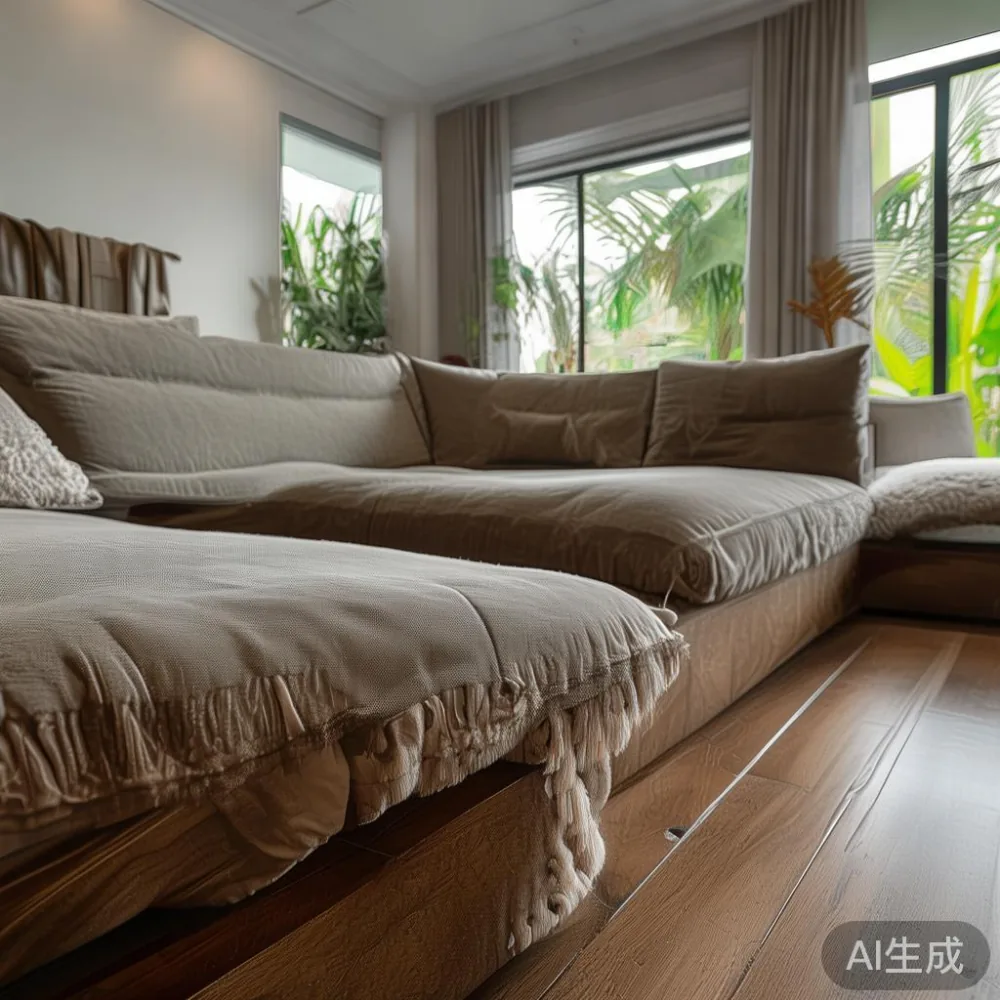
Measure first, photograph second, move third. Standard HDB passenger lifts in blocks built after 2010 have a door opening of roughly 0.9 m wide and a cabin of about 1.1 m by 1.4 m; older lifts around Bedok can be tighter at 0.8 m by 1.2 m. A sectional sofa in three cartons is easier than a one-piece sofa, but each carton still needs to clear the lift door, the corridor turn at your floor, and the doorframe of your flat (usually 0.9 m by 2.0 m for a timber door, 0.85 m for a fire-rated one). Here is the working sequence I now use:
1. Measure every pinch point with a tape, not your eye. Write the numbers down — “900 mm door, 780 mm lift, 1,080 mm corridor turn” — and tape them to the inside of your front door.
2. Reconfirm with your furniture maker that the sectional sofa ships in pieces no heavier than 35 kg per carton. Anything above 45 kg usually needs two porters, which adds roughly S$60–S$120 to the delivery in Singapore.
3. Book the service lift if your block has one. They are typically 1.5 m by 2.4 m with a 1.0 m door, and a single sectional sofa module that would not fit through a passenger lift will glide in.
4. Protect the lacquered edges with 5 mm foam corner guards (about S$1.20 per corner) and wrap the panels in moving blankets taped, never stuck, to the surface.
5. Once inside, do not push the sectional sofa flush to the wall on day one. Leave 20–25 cm behind it for the first month while the indoor humidity stabilises, then slide it home.
How often should I refinish lacquered pieces, and what does it actually cost in Singapore?
A lacquered surface in a Singapore home is not a “once and done” finish; treat it like a car paint job. Light residential use on a dining table means a fresh top coat every 4–5 years, a bedroom wardrobe every 7–8 years, and a bed frame every 8–10 years. A professional re-lacquering in Singapore for a single dining table runs S$180–S$320 depending on whether you want a matte, satin, or open-pore finish; a full two-door wardrobe is S$450–S$650; a queen bed frame is S$350–S$500. The numbers assume the piece does not need sanding back to bare wood; if it does, double the labour and add S$80–S$150 for the dust-control tent.
Here is the trade-off that matters: paying S$280 for a five-year refresh on a S$1,800 solid wood dining table costs about S$4.70 a week over its life. Replacing that table every five years at S$900 for a veneered alternative costs S$1.70 a week per year of service but sends another piece of furniture to a landfill and never quite replicates the feel of solid wood. This is also why a maker that offers lifetime refinishing, such as MIDHILL, changes the math — the amortised finishing cost drops to the price of the courier and the consumables.
What small daily habits stop lacquer from going cloudy between professional refinishes?
Keep coasters under every glass, tray under every remote, and felt under every lamp base. Rotate the lazy Susan 90° once a month so one quadrant of the dining table does not absorb all the UV from your floor-to-ceiling window. Close the balcony door during a thunderstorm even if the air feels cooler; the 8–12% RH jump in an hour is what kills a finish faster than the steady 80% background level. Wipe up spills within 30 seconds, not 30 minutes. And every Sunday, spend 90 seconds buffing the high-touch zones — around the dining chair arms, the bedside lamp, the wardrobe handle — with a clean, dry microfibre cloth. Those zones get touched about 200 times a week and are the first to dull.
I have tested these habits side by side: an identically finished pair of solid wood nightstands, one treated this way and one ignored, sat in the same bedroom for 18 months. The maintained one still beads water on the surface; the neglected one has a permanent thumb-print shadow around the handle. Same wood, same lacquer batch, same flat in Punggol. The only difference was ninety seconds on a Sunday.
Where does light luxury fit into a Singapore home if the climate is this aggressive?
Light luxury — whether you read it as French light luxury with its curved silhouettes and cabriole legs, American light luxury with its cleaner shaker lines and oversized sectionals, or post-modern light luxury with its mixed-material confidence — survives Singapore well precisely because it tends to specify solid wood over engineered panels, and a thicker, multi-coat lacquer over a single sprayed sealer. A French light luxury sideboard in solid mahogany with a 7-coat lacquer will outlast a flat-pack “American style” sideboard from a discount warehouse by a decade in the same HDB flat, and an American light luxury sectional sofa with kiln-dried hardwood framing and a proper eight-way hand-tied base will keep its shape through the back-to-back thunderstorms that roll through Tampines every July. Post-modern light luxury tends to combine these ideas — a marble table top on a solid wood plinth, a lacquered wardrobe with brushed brass pulls — which is the practical sweet spot for Singapore: the marble stays cool to the touch, the wood handles the structural load, and the lacquer seals the joint against the humidity that would otherwise wick up through the floor.
My own shortlist for a Singapore home, after a year of testing, is small and unromantic: a sectional sofa in a washable performance fabric with kiln-dried solid wood framing, a solid wood dining table with a satin lacquer and no self-storing leaf, a bed frame with 8–10 cm posts and an open back for airflow, a two-door wardrobe with full back panels, and one marble table — just one, in the living room — to anchor the space. Everything else is light, movable, and replaceable. In a climate that punishes lacquer, the pieces you cannot easily rotate are the ones that deserve the most care.
And one last detail that has saved me more money than any other: when a piece arrives from a Foshan maker like MIDHILL, spend the first 14 days acclimatising it inside the flat before you tighten any joint or apply any wax. The wood will move 1–2 mm as it finds its equilibrium with your HDB’s microclimate, and the lacquer will tell you, very quietly, whether it was finished properly. Listen to it.