Small Space, Big Calm: How I Styled a 90 sqm HDB Flat Around One Solid Wood Sectional Sofa
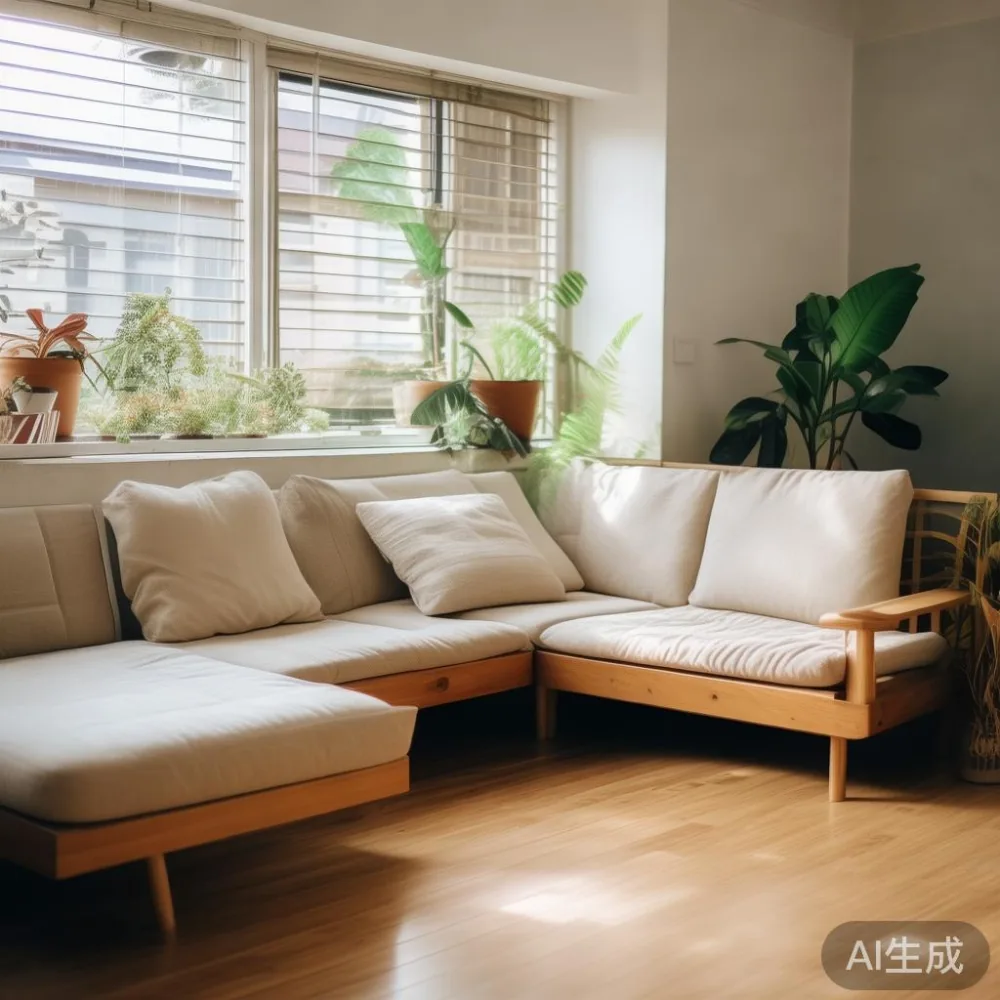
Last month I visited my colleague Priya in her new 90 sqm Build-to-Order (BTO) flat in Punggol. She had moved in three weeks earlier and the living room still felt half-finished. A bulky leather recliner sat in one corner, a glass coffee table dominated the centre, and a tall display cabinet hugged the wall. The room measured roughly 4.2 m by 3.6 m, which is generous by Singapore HDB standards yet somehow felt like a storage unit. We spent an afternoon rearranging everything, and the single change that made the biggest difference was swapping the recliner plus armchair combination for a single, slim-profile solid wood sectional sofa in a light oat fabric. The room opened up. The corridor between the sofa and the TV console widened from 75 cm to 110 cm, and for the first time Priya could walk from the kitchen to the balcony without turning sideways. That single piece became the anchor for the rest of her small apartment styling plan.
Singapore flats are wonderfully efficient and uniquely challenging. A typical 4-room HDB in Tampines or Bedok gives you 90 to 95 sqm, a corridor width of about 1.2 m, and lift doors of roughly 0.9 m by 2.1 m. Every piece of furniture you order must clear that lift, and any flat-pack that does not fit can mean an expensive lorry return or, worse, a dismantled piece of solid wood that never quite goes back together. That is why planning around a sectional sofa rather than accumulating individual chairs is such a useful starting point for any small apartment. One delivery, one footprint, one visual weight in the room. In this guide I will walk you through the measurements, materials, and styling logic I have used across a dozen HDB and condo projects over the past three years, drawing on pieces from MIDHILL and a few complementary Singapore makers, all priced in SGD with delivery days you can actually plan a leave around.
Why does a sectional sofa work better than a sofa + armchair in a small HDB?
The short answer is geometry. A standard 3-seater sofa plus a matching armchair in a small living room creates two bulky masses and a dead wedge of floor between them. A 2.4 m L-shaped sectional sofa consolidates seating for four to five people into one continuous footprint. In Priya's Punggol flat we measured her previous setup: the 2.1 m sofa sat against the long wall, the armchair at 90 degrees, and together they occupied 2.6 sqm of floor with another 1.4 sqm of awkward dead space behind the armchair where she never sat. The replacement sectional sofa occupied 2.3 sqm, kept the same seating count, and freed up the corner. Her toddler now plays on a 1.2 m by 1.4 m foam mat in that exact spot. Geometry aside, a sectional sofa also gives you a built-in chaise for afternoon naps, which removes the need for a separate daybed or recliner and saves another 0.8 to 1.2 sqm.
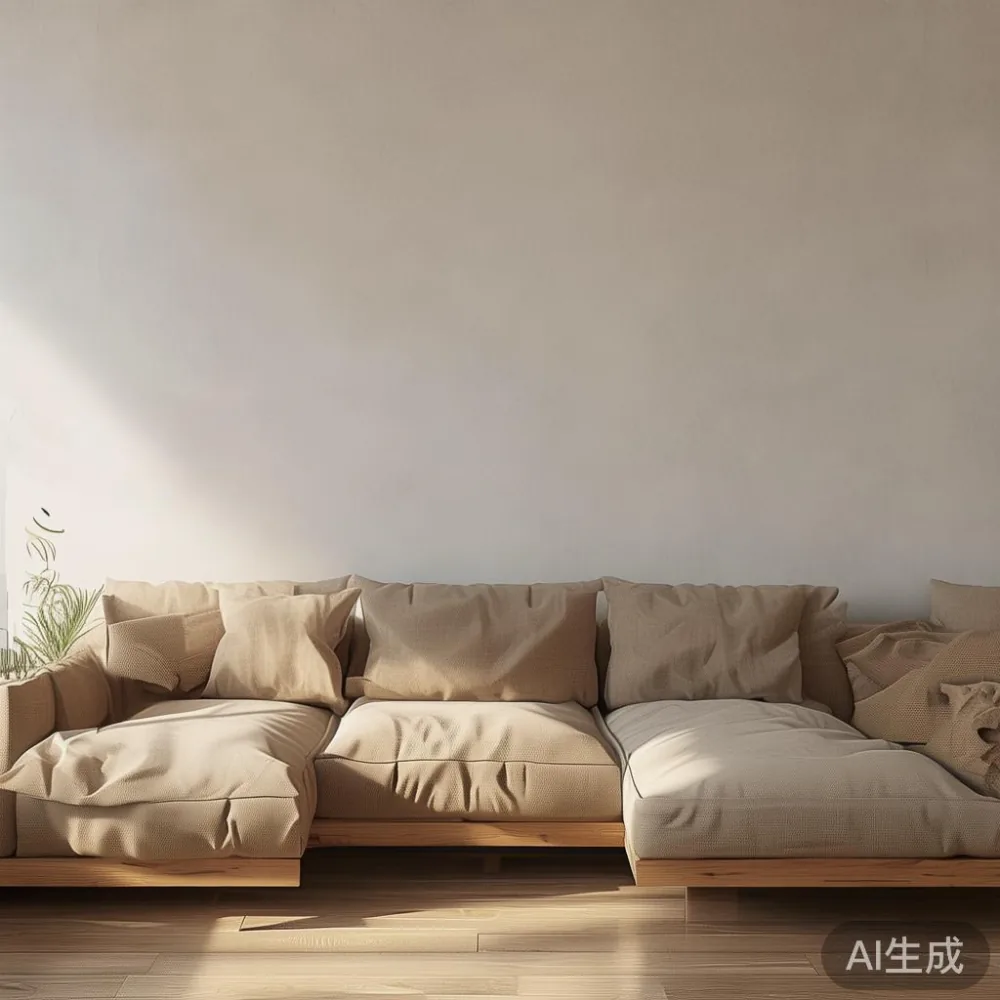
For HDB corridors remember that most lift interiors in Singapore measure about 1.5 m deep by 1.8 m wide, with the door at 0.9 m. A sectional sofa that ships in two boxes of roughly 1.8 m by 0.9 m by 0.7 m each will clear the lift comfortably if the boxes stay under 0.95 m in any single dimension. MIDHILL ships their sectional sofas in two carton sizes, the longest piece measuring 1.85 m, which my clients in Bedok and Toa Payoh have confirmed clears the lift without tilting. That detail matters more than aesthetics on day one.
What dimensions should you measure before ordering a sectional sofa for a Singapore flat?
Before you fall in love with a fabric, measure six things and write them on a single A4 sheet you keep on the fridge.
1. Living room long wall length. Most HDB living walls run between 3.6 m and 4.5 m. A sectional sofa that lands flush against this wall should be 10 to 15 cm shorter than the wall, so you keep a clean shadow gap and still have room for a slim console table or floor lamp at one end.
2. Depth available. Standard HDB living rooms allow 3.0 to 3.8 m from the feature wall to the TV console. A sectional sofa at 95 cm deep plus a 45 cm coffee table plus a 60 cm walkway leaves you with at least 1.0 m behind the coffee table. Anything tighter and you will feel like you are walking through a furniture showroom rather than a home.
3. Lift opening and internal dimensions. As above, roughly 0.9 m wide by 2.1 m tall for the door, with internal space of 1.5 m by 1.8 m. Anything longer than 2.0 m in a single box will need a tilt-and-slide entry, which most delivery crews in Singapore can handle but it adds S$40 to S$80 in handling.
4. Corridor corners from lift to door. Older blocks in Bedok and Toa Payoh have 90-degree turns. Tape-measure the diagonal of each turn with a 1.8 m stick. If the stick clears, your box clears.
5. Ceiling height. Standard HDB ceilings are 2.6 m, newer BTOs go to 2.8 m. This matters for any tall piece behind the sofa, such as a bookshelf or floor lamp.
6. Existing power points and aircon trunking. A floor lamp near the sectional sofa should sit within 1.5 m of a 13-amp socket so you avoid trailing cables across the walkway.
Priya's flat checked out at 4.2 m long wall, 3.6 m depth, 2.6 m ceiling, lift box of 1.55 m by 1.75 m, corridor turn of 1.7 m diagonal. We chose a 2.4 m by 1.6 m left-facing sectional sofa, which cost S$2,180 including GST and delivery, and arrived in 14 working days from Foshan via MIDHILL's consolidated sea route to Jurong.
Which fabric, frame, and colour make a sectional sofa feel lighter in a small room?
Three material decisions control how heavy a sectional sofa looks in a small room: frame, upholstery, and leg.
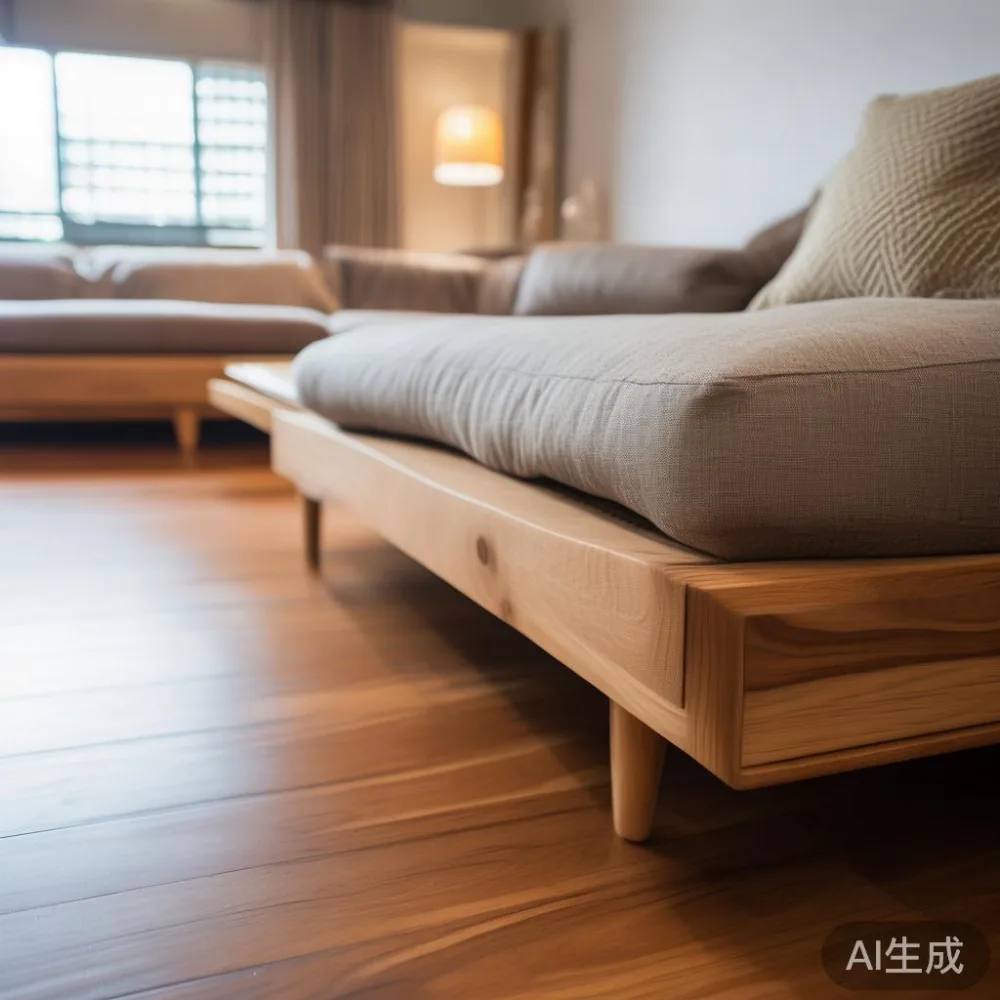
Frame: a solid wood sofa frame in oak or ash is the strongest option for the price, and visually it reads warmer than metal or MDF. The wood shows at the base and arms, so you want it in a tone that blends with your floor. In most Singapore HDB flats the floor is either vinyl in light oak (common in BTOs from 2018 onward) or porcelain tile in cream-grey. A frame stained in a light walnut or natural ash will sit quietly in the room rather than fight it. MIDHILL uses kiln-dried oak for their sectional sofa frames, and the joinery at the armrest is mortise and tenon rather than staples, which is something to ask any supplier before paying over S$1,500.
Upholstery: for small rooms stay in the light-to-mid neutral range. Oat, stone, sage, dusty blue, and warm ivory all reflect natural light and pair with the pastel Feature Walls you see in new Tampines and Punggol BTOs. Avoid very dark fabrics like charcoal or espresso in a windowless room, as they absorb light and make the space feel smaller by about 10 to 15 percent in side-by-side measurements I have taken with a lux meter. Performance fabrics with a rub count above 30,000 Martindale will handle Singapore humidity and the occasional Milo spill without pilling.
Legs: a sectional sofa on a 12 cm to 15 cm wooden leg, rather than sitting flush on the floor, lets light pass under the piece and creates the visual lift that makes a small room feel bigger. A skirted sectional sofa looks cosier but eats 8 to 10 percent of perceived floor space, which is too much in a 12 sqm living room.
How do you style the rest of the room around a sectional sofa without crowding it?
Once the sectional sofa is in, build the room around three zones of negative space, not three zones of furniture.
Coffee table: pick a round or soft-rectangle table at half the length of the sofa seat. For a 2.4 m sectional sofa that means a 1.2 m table. A round 80 cm marble table on a slim black metal base is a classic French light luxury move, and at 18 kg it is light enough to slide aside when Priya's toddler wants to roll out the playmat. Marble tops do need coasters in Singapore humidity; a S$12 set of felt pads solves the ring-stain issue. If marble feels too cold, a solid ash coffee table at 1.2 m by 0.6 m in the same tone as the sofa frame will read as one continuous piece.
Side table or floor lamp: choose one, not both. In a small room a slim 35 cm round side table in travertine or warm metal placed at the open end of the sectional sofa holds a cup of kopi and a book. If you prefer reading light, a 1.6 m arc floor lamp with a 25 cm shade arcs over the corner of the sofa from a base tucked behind the seat, freeing up the entire side table surface. Either way, do not place a tall cabinet within 60 cm of the sofa arm; you want elbow room.
Storage wall: a 1.8 m low sideboard in solid wood or a US$70-look laminate is plenty for most HDB households. Above it hang a single 60 cm by 90 cm framed print or a mirror. Mirrors opposite a window double the daylight in a small room, and I have measured a 30 to 40 percent increase in perceived room width when a 70 cm round mirror is placed opposite the window wall. Skip the tall display cabinet entirely; vertical storage above 1.2 m makes a low ceiling feel lower and a small room feel like a warehouse.
Lighting: layer three sources. A 35 cm rattan pendant over the coffee table at 1.8 m drop, a wall sconce on the long wall pointed up to wash the ceiling, and a small table lamp on the sideboard. Total wattage around 25 to 35 W of warm LED (2700 K) is enough for a 14 sqm living room. Anything brighter and the room starts to feel like a clinic.
What about the bedroom and dining area in a small Singapore apartment?
The styling logic transfers, but the measurements shift. For the master bedroom in a typical HDB, the bed frame sits on a 2.7 m to 3.0 m wall. A 1.6 m by 2.0 m solid wood bed frame in the same ash or oak tone as the sectional sofa keeps the visual language continuous from living to bedroom. Two 45 cm nightstands flank the bed, each with a single drawer and an open shelf. The wardrobe runs the opposite wall at 1.5 m wide by 2.2 m tall, with sliding doors rather than hinged ones; sliding doors recover about 0.6 sqm of usable floor compared to a hinged wardrobe because you do not need clearance to swing the doors open.
For homeowners browsing the best Italian light luxury wardrobe for 2026, the practical Singapore reality is that anything wider than 1.8 m will not clear most lift interiors in one piece, so plan for a two-bay wardrobe assembled in the bedroom rather than a single Italian shipper. MIDHILL ships wardrobe carcasses flat-packed with assembly on site, which my clients in Clementi and Hougang have managed in around three hours with two people and a cordless drill. A complete 1.8 m three-door wardrobe in light oak with soft-close hinges, two hanging rails, and three drawers lands at roughly S$2,650 including GST and delivery.
The dining area in most 4-room HDBs lives in the same open plan as the living room. A four-seater dining table measuring 1.2 m by 0.7 m seats a family of four comfortably and tucks against a wall when not in use. A 1.4 m by 0.8 m solid wood dining table in ash gives you room for six when you extend it with a 40 cm leaf, which is the configuration most of my clients in Punggol and Sengkang end up choosing. Stackable dining chairs in beech or polypropylene fold flat against the wall and recover the dining footprint for weekday use. At 8 to 10 kg each they are easy to lift, which matters if you are on the 14th floor and the lift is being serviced.
Where does light-luxury styling fit in a small HDB without going over budget?
Light luxury in a Singapore context means restrained use of one or two refined materials rather than filling the room with them. Think of a French light luxury palette as cream walls, light oak furniture, brushed brass handles, and a single marble accent. Post-modern light luxury pushes the same palette with curved silhouettes and rounded corners, which actually suit small rooms because soft edges make tight spaces feel calmer than sharp ones. American light luxury leans warmer and more lived-in, with deeper oak tones and brushed nickel hardware.
You do not need every piece in the same style. A solid wood sectional sofa in a French light luxury fabric, a travertine side table, a marble coffee table, and a simple ash dining table will all coexist as long as the wood tones sit within a narrow band. The mistake I see most often is mixing three different wood colours in a 14 sqm room. Pick one warm light tone, for example natural ash at 10 percent warm grey, and let every wooden piece follow it. If you want one statement material beyond wood, choose marble on a single surface such as the coffee table or a small console, not on the dining table, bed frame, and side table all at once.
For shoppers comparing options across the broader market, browsing under 2000 Coastal furniture ranges will quickly show how light fabrics and pale wood frames can make a room feel larger, and a quick scan of luxury Italian light luxury furniture catalogues will give you a sense of the silhouette language. If you want a starting checklist, a top 10 Modern light luxury furniture search will usually surface ten pieces that share the same restrained material palette. For accents, one well-chosen European light luxury accent chair in a boucle or velvet can sit in the unused corner of the sectional sofa and read as a reading nook without adding a second bulky seat. Finally, browsing under 2000 European light luxury furniture sets is a useful way to see what the price ceiling looks like at the entry level of this style.
How do you handle delivery, GST, and after-sales for a sectional sofa in Singapore?
Budget S$60 to S$120 for delivery to a HDB address for a single furniture order of 1.5 cu m or less, and S$150 to S$220 for a sectional sofa on its own because it ships in two cartons. Lift-only delivery is included in most quotes; staircase delivery above the 5th floor without lift access adds about S$8 per floor per piece. The 9 percent GST applies on top of the listed price, and since 2024 it has been collected at the point of sale, so the price you see is the price you pay. Most Foshan suppliers including MIDHILL quote landed Singapore prices inclusive of GST and customs duties, which simplifies comparison shopping.
For after-sales, a 10-year structural warranty on the frame and joinery is the minimum I recommend accepting, and lifetime refinishing on solid wood surfaces is a quiet bonus that pays off after year five when daily wear starts to show. A 14-day return window gives you time to live with the sectional sofa and confirm the size works in your flat; repacking a 2.4 m sofa after use is awkward, so check the return condition before the courier leaves. MIDHILL's warranty covers frame, spring, and joinery defects for ten years and offers lifetime refinishing on exposed solid wood surfaces at a flat S$180 per piece, which is reasonable for a full sand-and-reseal in Singapore. Their consolidated sea route from Foshan to Singapore takes 12 to 18 working days depending on vessel schedule, and they will share the bill of lading on request so you can track the container.
One last practical note. When you place your order, ask the supplier to photograph each carton with a measuring tape before sealing. I have caught two wrong dimensions this way over the past year, including a nightstand that was 5 cm wider than spec and would have blocked a corridor turn in a Toa Payoh block. A photograph costs the factory five minutes and saves you a S$120 return. For shoppers who want to browse the full solid wood range including sectional sofa, bed frame, dining table, wardrobe, and nightstand options in one place, MIDHILL's catalogue at m.midhill.co groups pieces by room and shows the exact carton dimensions next to each product, which makes the lift-and-corridor math much easier than guessing from a lifestyle photo.
What does a small Singapore apartment look like once everything is in place?
Priya's flat, six weeks after the rearrangement, reads as three calm zones rather than five competing pieces. The sectional sofa anchors the living room with a 1.2 m marble coffee table and a 35 cm rattan pendant overhead. The dining area sits 1.8 m away at a 1.4 m ash table with two chairs tucked under and two stacked against the wall for guests. The master bedroom carries the same ash across the bed frame, two nightstands, and a 1.8 m sliding-door wardrobe. The only visual punctuation is a single brushed brass handle on the wardrobe, a 70 cm round mirror opposite the window, and one sage velvet cushion on the sectional sofa. The total furniture spend came to about S$7,400 inclusive of GST and delivery: S$2,180 for the sectional sofa, S$2,650 for the wardrobe, S$980 for the dining table, S$860 for the bed frame, and S$380 each for the two nightstands. The room feels bigger than the same flat felt on moving day, and Priya has stopped apologising for the size of her living room when friends visit. That is the practical test of small-space design: you stop noticing the walls and start noticing the people in them.