Veneer vs Solid Wood Over 5 Years: A Singapore Cost Reality Check for Sectional Sofa Buyers
Last month I visited a Tampines HDB flat on the 14th floor, where my colleague had just taken delivery of a new sectional sofa. The lift opening was 1.2 m wide and the corridor measured 1.5 m, so the sectional had to come up in three pieces and was re-assembled in the living room. Watching the boxes come through the door, I had a thought most Singapore buyers ignore: the frame hidden inside those cushions will either last a decade, or start squeaking within three years. That frame is the difference between veneer-plywood construction and genuine solid wood — and over a five-year window, the cost gap between the two is far wider than the price tag suggests.
Singapore buyers face a specific set of pressures that make this comparison unusually honest. Our humidity sits at 70–85% year-round, GST adds 9% to every purchase, and most of us live in HDB flats or condos where the sectional sofa must survive lift restrictions, scuff marks from corridor trolleys, and AC cycling that creates sharp humidity swings every evening. Veneer and solid wood behave very differently under these conditions, and the bill five years out tells a different story than the one told at the showroom.
What is the real 5-year cost difference between veneer and solid wood furniture in Singapore?
For a 3-seater solid wood sofa sectional in Singapore, expect to pay around SGD 2,400–3,200 upfront for a quality solid wood frame, versus SGD 1,300–1,800 for a comparable veneer-plywood model. After five years, the typical veneer frame shows visible warping, peeling at edges, and joint loosening — usually triggering a SGD 600–1,100 replacement by year 4 or 5. Add in two refinishing visits at SGD 180–260 each, and the veneer total climbs to SGD 2,260–3,180. The solid wood piece, by contrast, often needs nothing beyond a SGD 120–180 oil rub at year 3, landing at SGD 2,520–3,560. The gap at year 5 narrows to roughly SGD 200–500 — and from year 6 onward, solid wood pulls clearly ahead.
Why does veneer fail faster in Singapore's humidity?
Most veneer pieces sold at this price point are 0.6–1.2 mm decorative veneer over engineered plywood or MDF. The thin face layer cannot protect the substrate from moisture cycling, and our 9 p.m. AC shutdown creates an 18–22% swing in relative humidity over a few hours — a punishing cycle for any laminated sheet. Within 18–30 months, the typical signs appear: edge lifting, surface bubbling near armrests, and a dull patch where the lacquer has hazed.
Solid wood behaves differently. A 2.5–3.5 cm kiln-dried ash, oak, or walnut frame breathes with the room instead of fighting it. The pieces expand and contract as a single unit, so joints stay tight. I have inspected a solid wood bed frame in a Punggol condo that was six years old and looked almost new after a single oil application — the bed frame had been moved twice and still held its geometry. The same cannot be said for most veneer wardrobes or nightstands in adjacent units.
What does a typical solid wood sectional sofa cost in SGD, delivered?
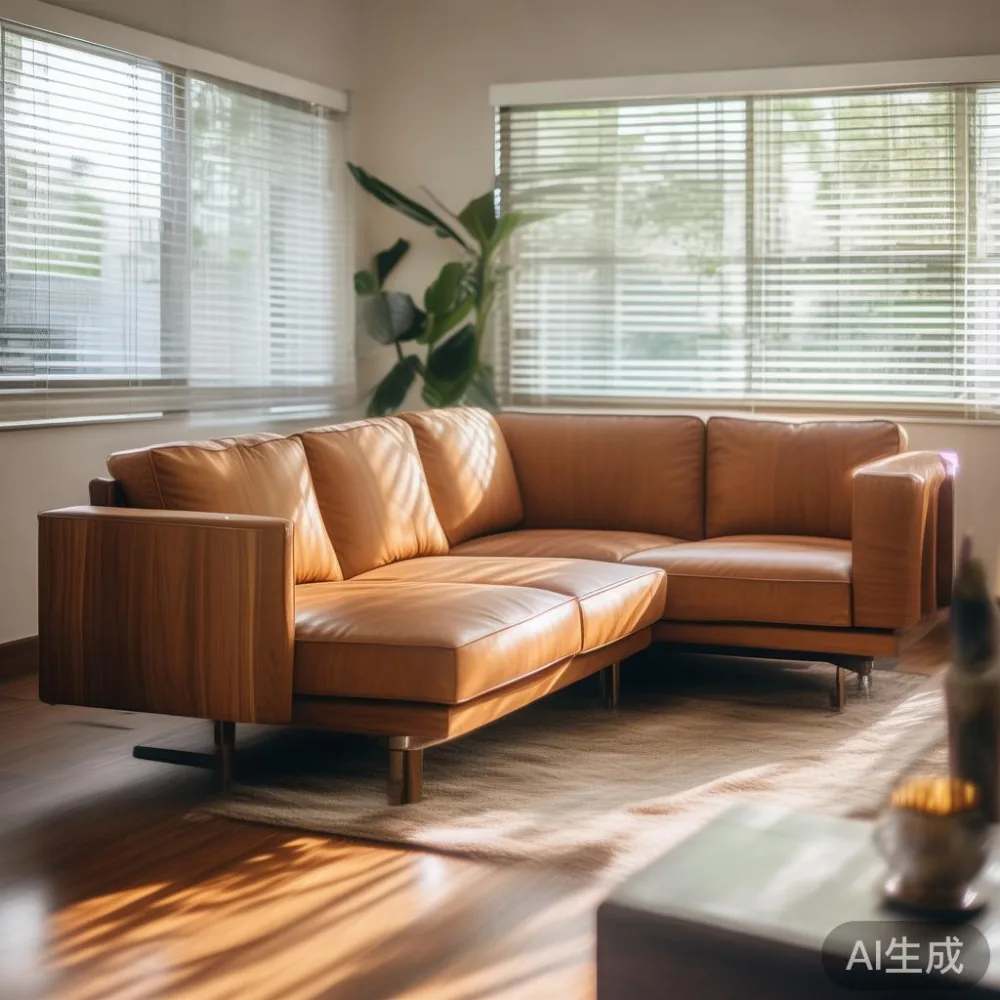
A 3-seater modular sectional sofa with a kiln-dried hardwood frame, pocket-spring seats, and removable linen-blend covers lands in the SGD 2,800–3,800 range for Singapore retail. Add the 9% tax, free lift-level delivery (US$350 / ~SGD 470 equivalent thresholds are usually cleared), and a 14-day return window if the dimensions do not fit your HDB doorway. Premium French light luxury pieces — those slim-profile silhouettes with brushed brass legs and bouclé covers — sit higher, at SGD 4,200–6,800.
By comparison, an MDF-veneer 3-seater sectional in the same style retails for SGD 1,400–2,200. The sticker saving of SGD 1,400–1,600 looks appealing on Day 1, but the math reverses by year 4 in most Singapore homes.
How do I care for a queen bed in humid weather?
Wipe the frame down with a dry microfibre cloth every two weeks, run a dehumidifier set to 55–60% RH in the bedroom, and re-oil the exposed wood every 9–12 months — that single habit will keep a solid wood queen bed frame looking new for 10+ years and is the only routine a veneer bed frame cannot match.
That one-line answer comes from a routine my colleague has followed for the queen bed in her Bedok condo since 2020. The bed frame is American light luxury in style — clean shaker headboard, walnut tone, 160 cm × 200 cm — and shows zero edge lift, zero surface haze, and zero joint creak. Her neighbour's veneer queen bed, bought at a similar price, was replaced in 2023 after the headboard started peeling at the top corners. The difference is not luck; it is care matched to material.
Are there delivery constraints in HDB lifts and corridors I should plan for?
Yes, and this matters more than most buyers expect. Standard HDB lift openings measure 0.9 m × 2.1 m; newer blocks in Punggol and Sengkang sometimes reach 1.2 m × 2.3 m. Corridors are typically 1.2–1.5 m wide. A sectional sofa is the friendliest layout here because it ships in 2–4 modules — usually 75–95 cm × 95–115 cm × 85 cm each — which clears almost every HDB lift in Singapore. A solid wood dining table, however, often ships as a single top at 180–220 cm long, which will not fit through older lift doors and must be hoisted or tipped vertically.
Ask your retailer for the per-module dimensions and the corridor-turning radius before paying. A solid wood dining table at 200 cm needs a 1.3 m turning arc; if your lift is on the smaller side, the table must come up the stairs or be hoisted by window — which most Singapore retailers will quote at SGD 180–320 extra. MIDHILL, for example, provides per-piece dimensions before dispatch and uses 5-ply honeycomb packaging rated for 30 kg per module, so each carton stays under the 25 kg one-person carry limit common in older blocks. MIDHILL has shipped into Tampines, Bedok, and Punggol enough that their logistics team usually knows the lift size of your block by postcode.
How long does a veneer sofa last versus a solid wood sofa, realistically?
A MDF-veneer sofa in a Singapore home typically shows visible wear at 18–24 months and is functionally retired at 4–5 years. A solid wood sofa, with the same use pattern and one oil rub at year 3, often reaches 12–18 years before the cushion foam — not the frame — gives out. That is a 2.5–3.5× multiplier on the structural life of the piece, and it is the core of the five-year cost argument.
What about side pieces — nightstands, wardrobes, and marble tables?
The same logic applies across the rest of the room. A solid wood nightstand at SGD 380–520 will outlast three veneer nightstands in the same period, because nightstands sit close to the floor where humidity pools and where AC condensate drips on hot nights. A solid wood wardrobe at SGD 2,200–3,400 holds its door alignment far longer than a veneer wardrobe at SGD 1,400–1,900, because doors are the first joint to fail when the frame twists.
Marble tables follow a different equation. A marble table top paired with a solid wood base inherits the strength of the wood and the surface hardness of the stone; a marble top on a veneer base is the worst of both worlds — heavy top, weak frame, inevitable wobble within two years. If you want a marble table in a Singapore HDB, spend on the base, not the stone pattern.
Does light-luxury styling change the calculation?
Light-luxury styling adds roughly 20–35% to the retail price across French light luxury, American light luxury, and post-modern light luxury lines, but it does not change the underlying material logic. French light luxury leans on slim profiles, brushed brass, and bouclé — these read better on solid wood because the joints stay crisp and the lines do not sag. American light luxury is heavier and more shaker-driven, where solid wood's grain variation actually carries the design. Veneer light-luxury pieces tend to look tired fastest, because the design language depends on tight reveals and clean corners that veneer cannot hold once humidity cycles start.
Is the warranty and after-sale service worth anything on paper?
Yes, when it is structured properly. A 10-year structural warranty on the frame, lifetime refinishing access, and free shipping above a sensible threshold (US$350 / around SGD 470) gives a real option value over five years. Most veneer frames carry one- to two-year warranties that exclude the very failures you will see — peeling, warping, joint loosening — so the paper protection is weak. Solid wood frames with longer warranties usually have lifetime refinishing included, which in Singapore is roughly SGD 240–360 per visit if paid out of pocket. Two refinishes over five years is a real SGD 480–720 saving.
MIDHILL includes lifetime refinishing as standard on its solid wood sofa, bed frame, dining table, wardrobe, and nightstand ranges — a detail worth confirming in writing before you order, because most Singapore retailers quote refinishing as an add-on rather than a guarantee. The 14-day return window matters less for fit (most Singapore HDBs are measured in advance) and more for tactile regret — bouclé feels different in a 23°C AC room than it does on a hot showroom afternoon.
How should I budget the five-year total for a Singapore home?
Use this rule of thumb: take the sticker price in SGD, add 9% GST, add SGD 80–120 for delivery if you are below the free-shipping threshold, and then add a five-year maintenance line of SGD 120–180 per piece for solid wood versus SGD 360–520 per piece for veneer. The veneer line covers refinishing attempts and early disposal; the solid wood line covers a single oil rub and a light clean. Apply it across a sectional sofa, bed frame, dining table, wardrobe, and two nightstands, and the five-year spread is usually SGD 1,800–3,200 in favour of solid wood once you cross the four-piece mark.
What should I check in the showroom before paying?
Ask to see the underside of the sofa frame, the cross-section of the bed frame rail, and the inside back of the wardrobe. Solid wood shows continuous grain across the joint; veneer shows a printed pattern over a substrate line. Weigh the piece if you can — a 3-seater solid wood sofa sectional is typically 85–110 kg, while a veneer equivalent is 55–75 kg. Lift the nightstand at one corner; a solid wood nightstand at 18–24 kg will feel dense and still, while a 10–14 kg veneer nightstand flexes at the joint.
Bring a tape measure and check that the sectional modules clear your lift measured at the door. For a compact loveseat for dining room corners — a popular Singapore space-saving pick — confirm the seat depth is at least 50 cm if you plan to use it as occasional seating, and that the arms do not exceed 12 cm if you need to push it under a window. These small checks save real money across the five-year window because they prevent the single most common Singapore furniture failure: buying a beautiful piece that does not clear the lift, and then living with the wrong sofa for the next half-decade.
So is solid wood worth it over five years in Singapore?
For a sectional sofa, bed frame, dining table, wardrobe, and nightstand bought at once, solid wood usually wins the five-year cost equation by SGD 1,800–3,200 once you include refinishing savings and the avoidance of one early replacement. For a single piece, the case is weaker — the upfront gap is real and GST amplifies it. The honest answer is therefore piece-count dependent: one piece, buy what fits the room and the budget; a full-room set, lean solid wood and budget for a single maintenance visit at year 3. That plan holds up in Tampines, Bedok, Punggol, and the wider Singapore HDB market, where humidity is constant and lift access sets hard limits on what you can bring home.