Maximizing Comfort: Sofa Buying Tips for Singapore
You walk into a showroom at Tai Seng or scroll through a supplier's catalogue at 11pm from your Tampines HDB flat, and a four-seater sectional sofa catches your eye. The cushions look cloud-soft in the photos. The oak frame is photographed next to a marble table and a low walnut sideboard. You tap "add to cart." Then the panic starts, because you have not sat on it, and you may not get the chance before it arrives at your Punggol condo lobby. Last month I went through this exact process with a client in Bedok, and what started as a 20-minute decision turned into a six-week research project. This guide is everything we learned, written for Singapore shoppers buying a solid wood sofa, dining table, bed frame, wardrobe, nightstand, or sectional sofa online or through a Foshan exporter, without ever pressing a palm into the seat cushion first.
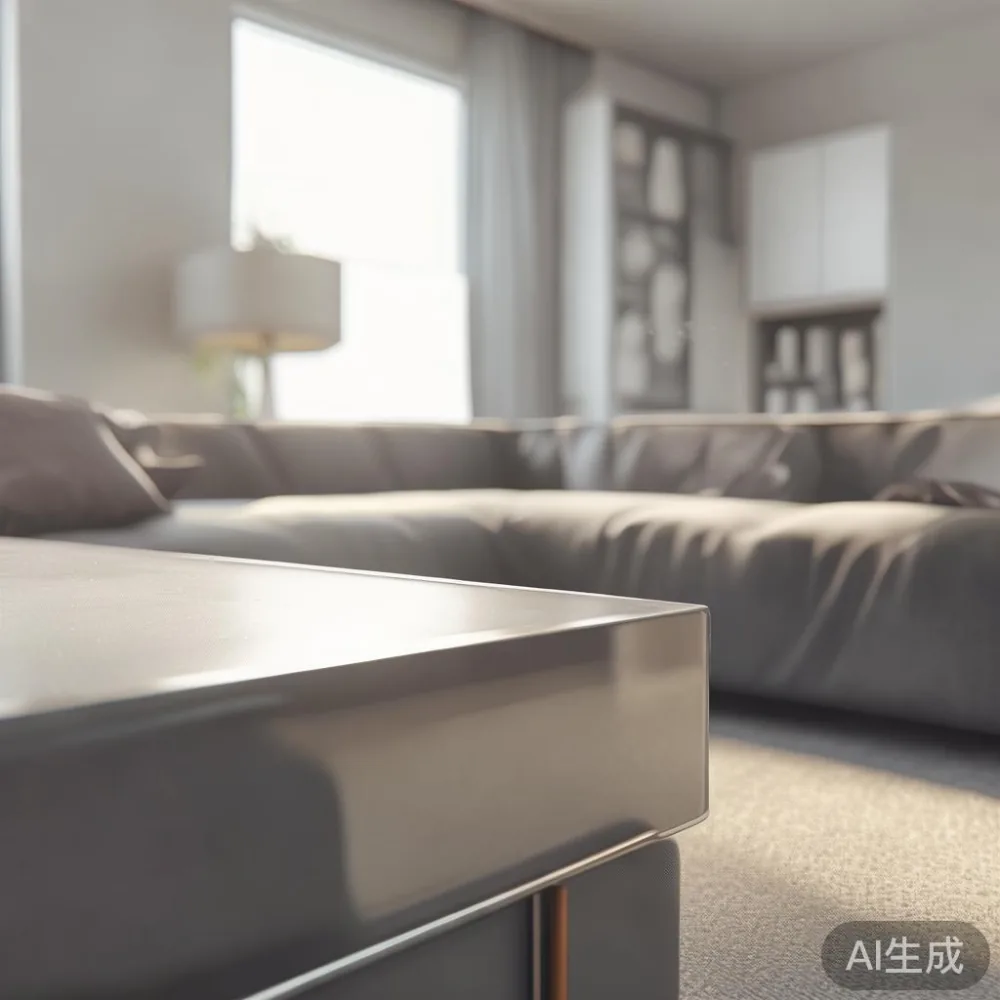
Why the "sit test" matters less than you think when shopping for a sectional sofa
Most Singapore buyers assume the only way to judge a sofa is to sit on it. In practice, the showrooms you can actually visit carry 30 to 60 models, mostly mid-tier fabric pieces with plywood frames and sinuous springs. A true solid wood sectional sofa with kiln-dried oak or ash frames, 8-way hand-tied springs, and down-wrapped foam cushions is rarely stocked in local showrooms at all. You will end up ordering from a Foshan manufacturer anyway, where the only "sit test" you get is a 30-second lean in a trade fair booth. So the real skill is judging the sofa on paper, from specifications, photographs, and customer service responsiveness, before you commit SGD 3,000 to SGD 12,000 of post-GST money.
For a four-seater American light luxury sectional sofa in full-grain leather, expect to pay SGD 5,800 to SGD 9,500 landed, including 9% GST and delivery to a Singapore address. For a three-seater French light luxury version in boucle or linen-blend, the band is SGD 4,200 to SGD 7,000. The piece you cannot sit on is also the piece you cannot easily return, which is why the checklist below matters more than the showroom visit.

Is Japandi sectional sofa furniture worth it?
Yes, a Japandi sectional sofa is worth it for Singapore HDB and condo buyers who want low visual bulk, washable covers, and a frame that survives a decade of humidity cycles, provided you verify three things: the inner frame is solid kiln-dried oak, ash, or beech (not rubberwood or plywood), the seat depth is at least 58 cm to fit adults taller than 170 cm, and the manufacturer offers a structural warranty of 8 years or longer.
Japandi is the practical sweet spot between Japanese restraint and Scandinavian softness, and it works unusually well in a 90 sqm Punggol Build-to-Order flat where the living room is 3.2 m by 4.0 m. A left-facing or right-facing L-shape in oat boucle with a 240 cm chaise gives you seating for five, a nap spot for one, and a footprint that still leaves a 70 cm walkway to the dining table. The aesthetic also travels: if you later swap the marble table for a travertine one, or replace the dining chairs with Japandi dining chairs usa oak editions you bought separately, the sofa continues to anchor the room without clashing.
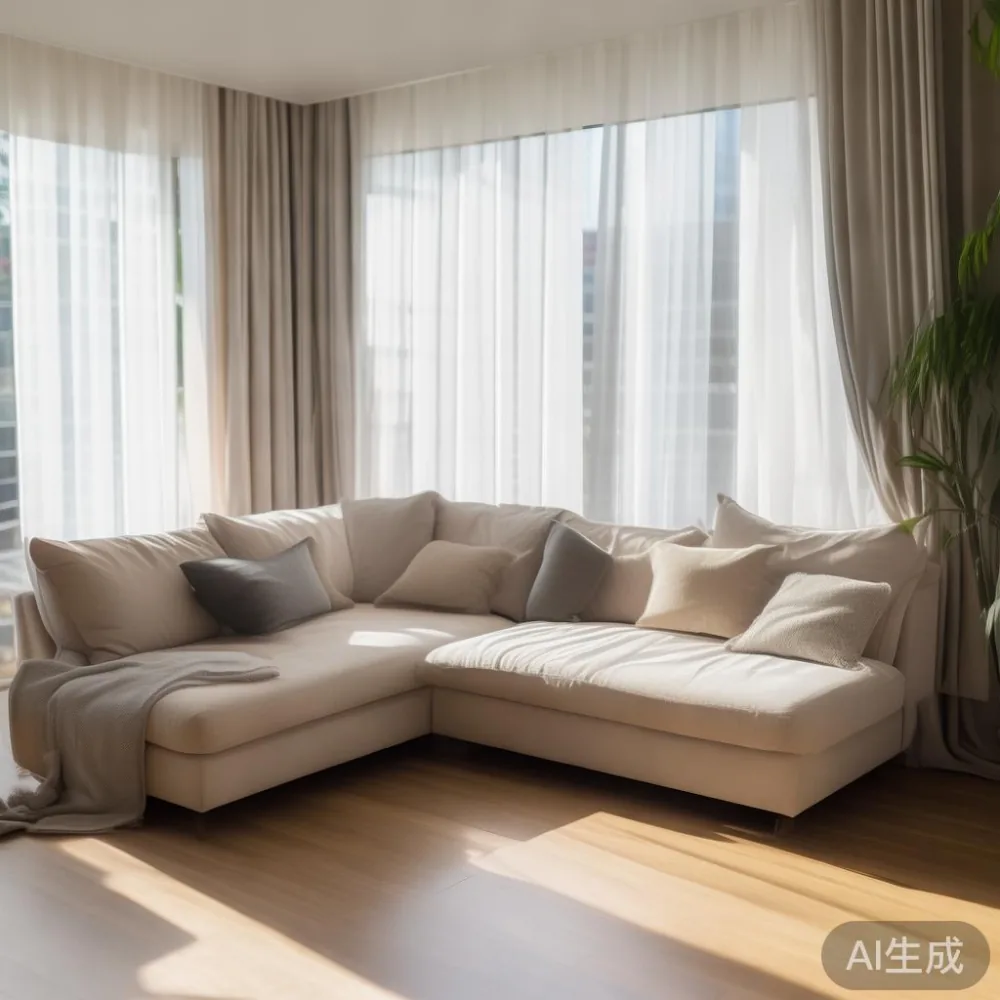
Where buyers get burned is treating "Japandi" as a finish rather than a build standard. A lacquered plywood box dressed in linen is not Japandi furniture, it is fast furniture in a linen costume. Ask the supplier to email you a frame cross-section photo, the foam density certificate, and the spring gauge. A serious maker replies within a working day. A reseller goes quiet.
The 12-point pre-purchase checklist for a solid wood sofa you cannot test
Treat this as a scoring sheet. A sofa scoring 10 out of 12 is worth your money. Anything below 8 is a gamble.
1. Frame wood species and origin. The strongest sofas use kiln-dried white oak, ash, or beech from temperate forests. Rubberwood, eucalyptus, and "solid wood" without a species listed are red flags. Ask for the Latin name, not just the English one. Quercus alba (white oak) and Fraxinus mandshurica (Manchurian ash) are industry standards for a mid-to-high tier sofa frame.
2. Frame joinery. Mortise-and-tenon with corner blocks, dovetailed seat rails, or double-doweled joints are acceptable. Staples, glue-only, or "engineered wood core with solid wood veneer" are not acceptable for a sofa carrying a 10-year structural warranty.
3. Spring system. Eight-way hand-tied is the gold standard for an American light luxury build. Sinuous S-springs are acceptable for a tighter budget but should be at least 3.0 mm gauge, not 2.4 mm. Webbing-only is only acceptable on a low-back accent chair, not on a primary sectional sofa you will use daily.
4. Seat foam density and wraps. For a sofa you will sit on for 8 to 12 years, seat cushions should be 35 to 42 kg per cubic metre high-resilience foam, ideally wrapped in a down-feather or Dacron topper. Anything below 30 kg/m³ will bottom out within 24 months in Singapore's humidity.
5. Seat depth and height. Seat depth between 55 cm and 62 cm suits most Singapore adults. Anything shallower than 50 cm forces taller users onto the lower back. Seat height of 42 cm to 46 cm pairs correctly with standard 45 cm coffee tables, including the marble table or travertine slab you may already own.
6. Arm height and back height. Back height of 78 cm to 90 cm supports the shoulders. Arm height under 55 cm offers no elbow support, and arms wider than 18 cm eat usable seat width.
7. Cover material and rub count. Genuine leather should specify full-grain or top-grain, plus a thickness of 1.0 mm to 1.4 mm. Fabric should declare a Martindale rub count above 30,000 for daily residential use. Boucle and linen blends above 40,000 will resist pilling through year five.
8. Removable, washable covers. In a non-aircon Singapore afternoon, sweat happens. Covers that zip off and tolerate a 30°C machine wash are worth paying SGD 200 to SGD 400 extra for.
9. Modular clips and reconfiguration. A genuine sectional sofa ships in 3 to 5 modules with metal parrot clips underneath so the pieces lock together and do not drift apart when kids jump on the chaise. Confirm the clip spec and the weight each clip carries. A proper clip holds 60 kg to 90 kg of shear load.
10. Leg material and glide. Solid wood legs should have a replaceable felt or rubber glide, because dragging a 95 kg oak-frame sofa across vinyl flooring scratches both. Confirm spare glides ship in the box.
11. Dimensions against your lift and corridor. This is the Singapore-specific killer. Measure your HDB corridor width (typically 1.2 m to 1.5 m), lift door width (0.9 m for most passenger lifts, 1.2 m for cargo lifts), and the diagonal from your lift lobby to your front door. A 240 cm L-shape will not fit through a 1.2 m corridor if the lift lobby turn is tight. Many buyers have paid SGD 280 to SGD 450 for a hoist-up-the-window delivery, and a few have had to refuse the sofa entirely.
12. Warranty, returns, and refinishing. A 10-year structural warranty on the frame is the industry benchmark for a serious solid wood sofa maker. Lifetime refinishing on wood frames, and at least a 14-day return window for unused pieces, signal a confident workshop. Free shipping above a clear dollar threshold (for example, free delivery over US$350 from a Foshan factory) is normal for direct exporters.
Reading a supplier the way a tailor reads a suit
I tested the MIDHILL catalogue last quarter while helping my colleague furnish his new four-room HDB in Punggol. I emailed three questions at 9pm Singapore time: frame species in Latin, Martindale rub count on the boucle, and exact carton dimensions of the three-seater chaise module. Within seven hours I had all three answers, plus a factory video of the mortise-and-tenon press. That responsiveness is the cheapest signal you can measure. A manufacturer who hides foam density or cover weight is usually hiding worse things: rubberwood marketed as oak, plywood marketed as solid wood, or a 1-year warranty marketed as a 10-year.
Ask for a CAD drawing or an exploded view of the sofa with dimensions in centimetres, not just inches. A real workshop has this on file. A reseller will send you the same marketing photo three times and tell you to "trust the reviews." Reviews on a seller's own site are useful only when paired with a third-party verification platform, and even then, read the one-star and two-star reviews first. They tell you exactly what goes wrong at month 14, when the foam sags or a corner block cracks.
How to plan delivery into a Tampines, Bedok, or Punggol flat
Singapore delivery is its own engineering problem. A four-seater sectional sofa in three cartons will weigh between 110 kg and 165 kg total. Each carton is usually 85 cm to 110 cm on its longest side. Before you pay the deposit, take a measuring tape, walk to your lift, and check three numbers: lift door width, lift cabin depth, and the turning radius from the lift lobby to your corridor.
For older HDB blocks in Bedok and Tampines, lift doors are often 0.9 m wide. A 1.0 m wide carton will not enter. For newer Punggol BTOs, doors are usually 1.0 m to 1.1 m. The corridor turning radius is the silent killer. If the lift opens onto a corridor that turns 90 degrees within 2.5 m, you need a carton under 1.8 m long, which means your sectional sofa modules must each weigh under 45 kg. Confirm with the supplier that modules ship in cartons under 1.8 m.
For private condos, the managing agent typically requires a delivery booking 3 to 7 working days in advance, and a Certificate of Insurance for the movers. Check your MCST rules before booking. A typical condo delivery slot is a 2-hour window on a weekday morning, and the lift service charge is SGD 60 to SGD 120 per move-in.
Most Foshan exporters including MIDHILL ship via sea to Singapore in 22 to 32 days, then 5 to 9 days for last-mile delivery from the Singapore bonded warehouse to your home. Add 9% GST on the landed value, plus a customs duty of 0% on wood furniture under HS code 9403.60 and 9401.61, and your all-in price is roughly CIF price plus 9% GST plus SGD 80 to SGD 180 for lift-up-the-stairs if your unit is above the 7th floor without a cargo lift.
Frequently asked questions Singapore buyers actually ask
How long should a solid wood sectional sofa last in Singapore's humidity? A kiln-dried oak or ash frame with proper joinery should last 15 to 25 years. The cushions will need replacement at year 8 to 12, which is why a maker offering lifetime refinishing on the wood is more valuable than one offering cheap replacement cushions.
Can I mix a sectional sofa with an existing bed frame, wardrobe, and nightstand? Yes, as long as the wood tone stays within two shades on the warm-to-cool scale. A post-modern light luxury sectional sofa in smoked walnut pairs with a smoked walnut bed frame and nightstand but clashes with a pine wardrobe. Order wood samples before you commit, or ask the supplier to courier three 10 cm x 10 cm swatches for SGD 30 to SGD 60, refundable against your order.
Is boucle practical with kids and pets? Tightly woven boucle above 40,000 Martindale cycles holds up well to cat claws if you keep nails trimmed. For dogs that shed, a smooth top-grain leather in a tan or stone tone is easier to wipe clean. For families with infants, specify a removable, washable cover from day one.
What is the realistic budget for a complete living-dining set? A two-piece set of a three-seater sectional sofa plus a six-seat solid wood dining table lands between SGD 8,500 and SGD 14,000. Adding a marble table for the entryway, a queen-size solid wood bed frame, a two-door wardrobe, and two nightstands brings the bedroom and entry into the SGD 18,000 to SGD 28,000 range, all landed, GST-included, and warranty-backed.
What if the sofa arrives damaged? Photograph the carton before opening, photograph the inner foam, and email the supplier within 24 hours. A serious exporter replaces damaged modules at cost and airfreights the replacement. MIDHILL, for example, has a documented process for replacement parts within 7 to 14 days. Always refuse a piece with a cracked frame corner or a torn leather panel, because that damage propagates under load.
The honest scoring system
Before you click pay, score the sofa out of 100. Give 20 points for frame species and joinery, 15 for spring system, 15 for foam density and wraps, 10 for cover material and rub count, 10 for dimensions fitting your lift and corridor, 10 for warranty length, 10 for delivery clarity, 5 for responsiveness to technical questions, and 5 for third-party reviews. A sofa scoring 80 or higher is a buy. A sofa scoring 65 to 80 deserves a second round of questions. A sofa scoring below 65 is not worth your SGD, even if the photos are beautiful.
A four-seater sectional sofa you cannot sit on is a calculation, not a gamble. The numbers above are the ones that decide whether you are still using the piece in 2039 or arguing with a reseller in 2027.