Humidity and Your Solid Wood Sofa in Singapore: A Practical Guide
I still remember the Saturday I spent in a Tampines HDB walk-up with a friend who had just moved in. The corridor was barely 1.2 m wide, the service lift took a 2.4 m sofa box at a tight squeeze, and by the time we carried a brand-new solid wood sofa up three floors, the hygrometer on his wall already read 82%. He looked at me and said, "Is this thing going to warp in three months?" That question is the starting point of everything I write about tropical furniture care — because the answer is not a slogan, it is a set of numbers you can actually measure.
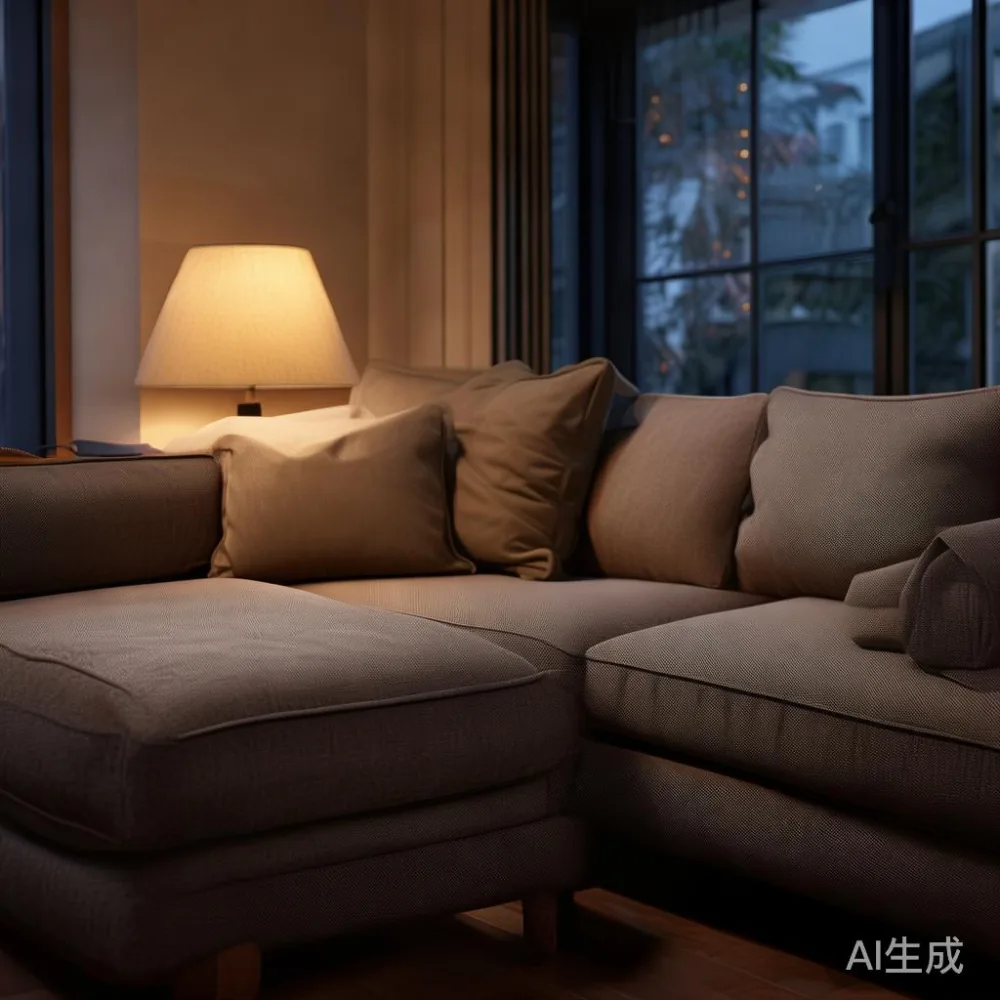
Why Singapore's Climate Is Unusually Hard on a Solid Wood Sofa
Singapore sits squarely on the equator. Outdoor relative humidity in Tampines, Bedok, and Punggol commonly swings between 65% and 92% across the day, and the average annual reading sits near 80%. A solid wood sectional sofa in this climate is not behaving the way the same piece behaves in a Beijing apartment or a Toronto condo. Every 10 percentage points of humidity change moves the moisture content of oak, ash, or walnut by roughly 1.5% — enough for a 220 cm frame to gain or lose around 3 mm across its width. That is the physical reason drawers stick in August and gaps appear between panels in February.
Air-conditioned interiors help, but only partially. A typical HDB bedroom set to 24°C usually holds around 55–60% relative humidity, which is the comfort zone for most hardwoods. The trouble starts the moment you switch the system off for an eight-hour stretch, or when you open the balcony door to dry laundry and let the outdoor air flood in. A solid wood bed frame and a solid wood dining table will respond to that humidity rebound within hours, even if you cannot see it yet.
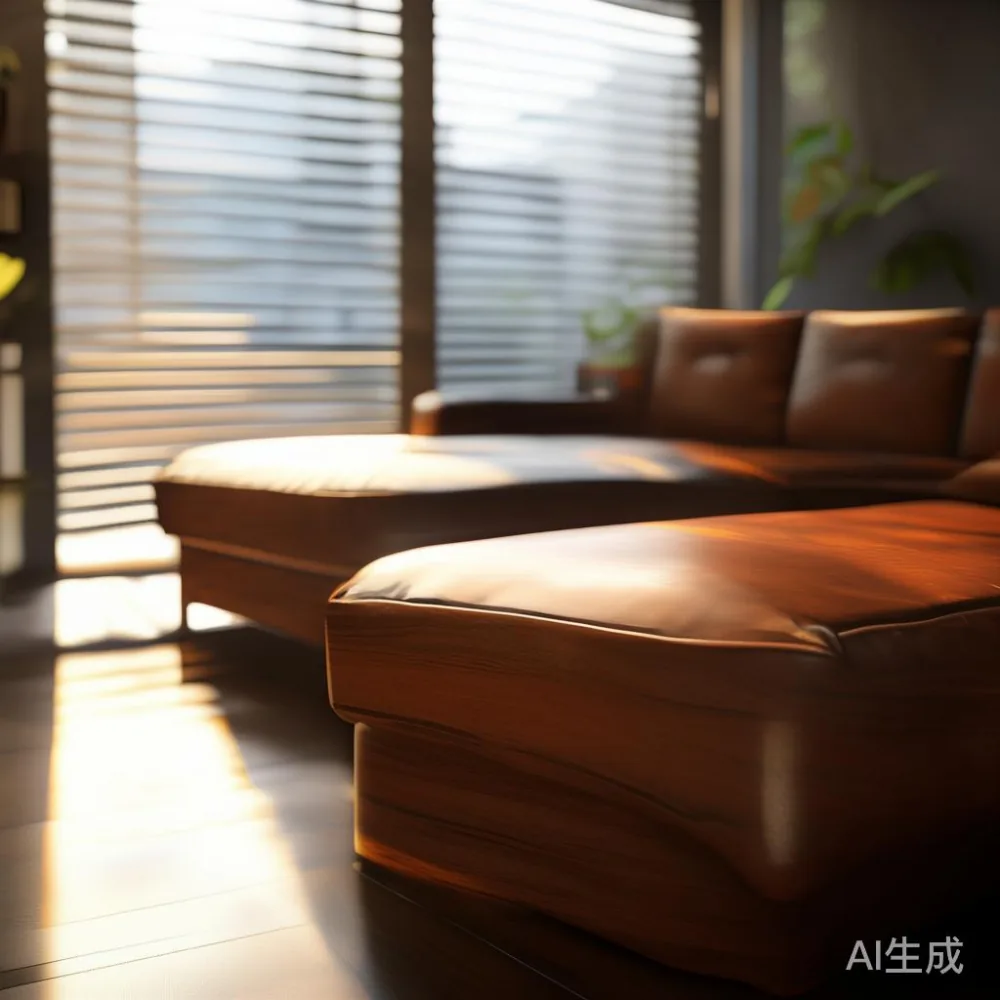
What "Light Luxury" Actually Means for a Wood Piece in the Tropics
Light luxury is a styling idea borrowed from French light luxury and American light luxury interiors — restrained silhouettes, soft neutral palettes, and one or two quiet statement materials. In Foshan workshops that supply MIDHILL and similar makers, the term usually points to a piece that looks delicate but uses substantial joinery underneath: mortise-and-tenon corners, 5 mm solid wood veneers on engineered cores, and finishes that are open enough to let the wood breathe. Post-modern light luxury tends to add curved profiles and brass-toned hardware, which is gorgeous on a marble table or a nightstand, but it still needs the underlying wood knowledge to survive a non-air-conditioned corridor in Punggol.
The practical difference in a HDB context: a 220 cm × 95 cm × 85 cm solid wood sofa with a kiln-dried moisture content of 8–10% will behave predictably for years, while the same dimensions built with air-dried timber at 14–16% moisture content will start to twist the moment the air-con cycles off. That single number — the kiln-dried reading at the factory — matters more than the design language on the showroom floor.
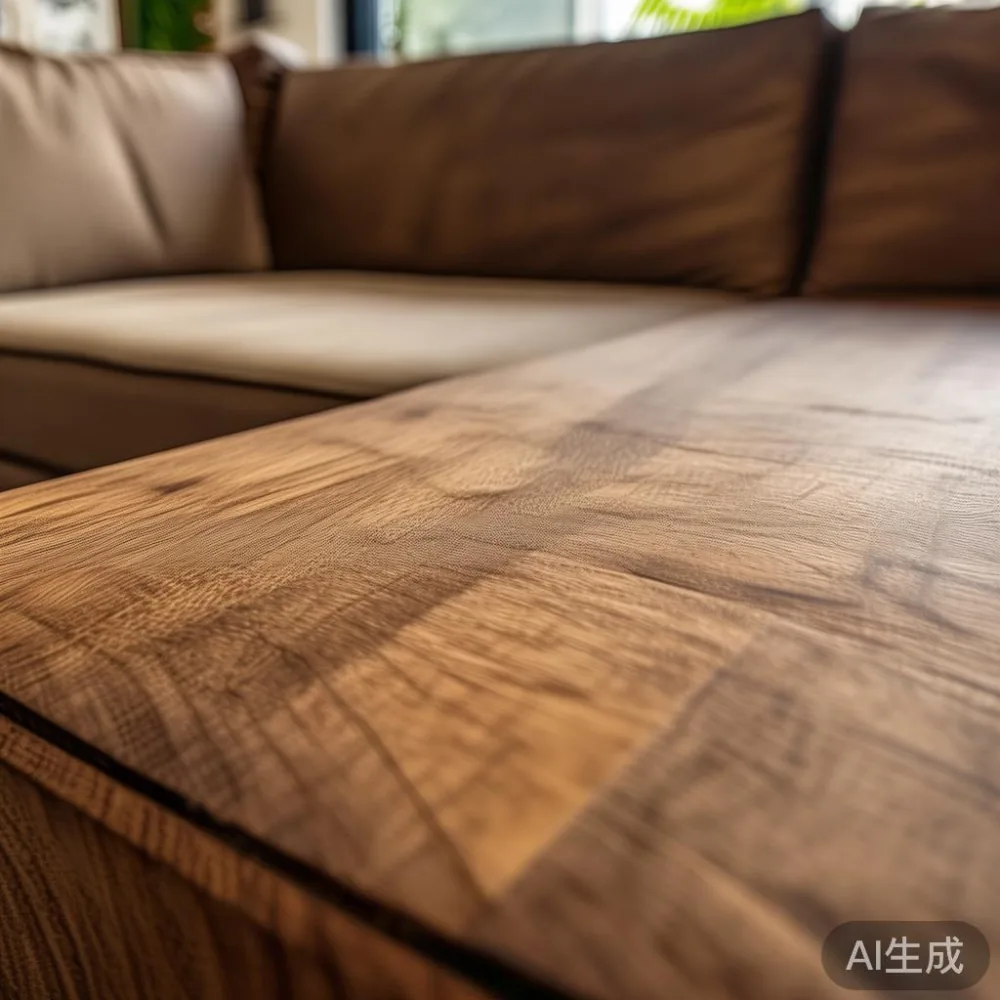
How Big a Sectional Sofa Can Realistically Climb into a HDB Lift?
This is where tropical living turns into geometry. A standard HDB passenger lift is roughly 1.1 m wide × 1.4 m deep × 2.1 m tall, with a door opening close to 0.8 m. A standard HDB cargo lift on newer estates is closer to 1.3 m × 1.7 m × 2.4 m, and the door can stretch to 1.0 m. A four-seat sectional sofa with a chaise typically arrives in two cartons of around 150 cm × 95 cm × 65 cm and 130 cm × 95 cm × 65 cm. The taller carton fits most lifts on its side if you angle it to 12°; the wider one does not, and that is when delivery teams split frames or remove legs.
If you live in a pre-1990s block, your corridor might narrow to 1.05 m at the stair-core junction, and your front door could be a 0.9 m single leaf. I watched a delivery crew in Bedok spend 40 minutes removing four legs from a solid wood bed frame to clear a tight S-bend — they used a 19 mm socket wrench and labelled every bolt. A good supplier will quote you the packaged dimensions before dispatch, and a good one will not charge redelivery fees when a lift fails the geometry check the first time. MIDHILL, for instance, sends the carton spec sheet with the order confirmation so the customer can measure the lift and door before the truck arrives.
What is the difference between American country dressing table and modern furniture?
An American country dressing table is a solid wood dressing table built from oak, pine, or birch with a 45–55 mm top, turned or tapered legs, a single full-width drawer, and a hinged mirror that swivels on wooden pegs — its joinery is exposed, its finish is matte, and its weight usually falls between 28 kg and 42 kg for a 110 cm model. A modern dressing table is a slimmer cabinet (commonly 12–18 mm panels, sometimes with MDF cores), sits on hairpin or sled metal legs, and pairs with a separate wall-mounted mirror or a marble table top. In a HDB bedroom the country piece absorbs and releases moisture slowly because of its mass, which is a plus in our climate, but it also demands 90 cm of clearance to open a full-width drawer; the modern piece gives you that drawer clearance in 60 cm and looks lighter against a 9 m² room, yet it is more sensitive to humidity swings because of the thinner panels.
Both can work here, but the choice changes how often you wipe, oil, or refinish the surface. The country piece asks for a quarterly pass of beeswax; the modern piece asks for a felt pad under every object and a dehumidifier set to 55% in the bedroom. Knowing that difference up front saves you SGD 180–SGD 350 in avoidable repairs over the first five years.
Real Numbers: Warranty, Shipping, and What a Singapore Buyer Actually Pays
Mid-range solid wood furniture shipped from Foshan to Singapore typically runs 18 to 28 days door-to-door, with the longer end covering consolidated sea freight from Yantian to PSA. Free shipping thresholds above US$350 translate to roughly SGD 480 at today's rates, and most solid wood sofas, bed frames, and 6-seater dining tables clear that bar easily. A nightstand or a marble table may not, so suppliers either bundle two pieces or charge a flat SGD 60–SGD 90 top-up fee.
GST is the next line item. Singapore's 9% GST applies to the landed value, and reputable sellers display it as a separate line so you can reconcile against your own customs calc. The 14-day return window only kicks in if the piece is unused and in its original carton, which means a scratched fabric swatch on the floor of your Tampines living room counts as used — the courier will photograph it before pickup. A 10-year structural warranty, by contrast, covers cracks in load-bearing joints and frame separation, but not the 2 mm seasonal movement on a solid wood dining table top, because that is technically the wood doing its job. MIDHILL's 10-year frame warranty is one of the clearer ones I have read on a Singapore-facing storefront, and their lifetime refinishing service — quoted at SGD 45–SGD 90 per piece depending on size — is what makes that warranty useful past year five.
Practical Humidity Habits That Actually Move the Needle
Three habits cover 90% of the problems I have seen in Singapore homes. First, keep a SGD 25 digital hygrometer in the room where your solid wood sofa or bed frame lives, and aim for 50–60% year-round; a 12-litre dehumidifier set to that range costs around SGD 0.45 per hour to run and prevents the 3–4 mm movement that causes seasonal cracking. Second, leave at least 8 cm of space behind a wardrobe or a sectional sofa so air can circulate; pushing the back flat against a HDB wall traps moisture and invites mildew on the wall, not the furniture. Third, oil the tops of dining tables and nightstands every four months with a thin coat of tung oil or hard wax oil — about 30 ml per square metre — and wipe off the excess after 15 minutes.
Rotate your chaise lounge cushions monthly so the foam recovers evenly and the underlying deck breathes; the same rule applies to a chaise lounge for condo owners who want the long seat to keep its shape through two monsoon seasons. Wipe spills within 10 minutes, never use a wet cloth on a marble table without drying the surface afterwards, and keep plants at least 40 cm away from any wood leg — the transpiration alone can push local humidity past 75% right where the grain is most vulnerable.
Where the Furniture Market in Singapore Is Heading Next
The new launches I have walked through in the last six months share a few patterns. Sofas are getting shorter overall — a 200 cm three-seat sectional sofa is replacing the old 240 cm four-seat in 70 m² Punggol condos, and the chaise is shifting from the right-arm to a reversible layout to suit odd room shapes. Dining tables are moving toward 1.4 m extendable tops rather than the old 1.8 m fixed slab, which makes delivery through a 0.9 m HDB door possible without removing legs. Wardrobes are being spec'd at 60 cm depth instead of 65 cm to free up walking room, which trades a little hanging space for a lot of daily comfort.
The most interesting change is in the joinery. Suppliers shipping into Singapore are quietly upgrading to stainless steel concealed hinges, 8 mm solid wood drawer bottoms with a 12 mm engineered core, and finishes rated for 60–70% sustained humidity. None of that is glamorous, but it is what keeps a SGD 2,400 solid wood bed frame looking like new from year one to year ten. If you are browsing a showroom this weekend, ask for the moisture-content reading on the spec sheet, ask for the packaged dimensions in centimetres, and ask whether the warranty covers seasonal movement or only structural failure. The salesperson who can answer all three without a script is the one whose furniture will still look good in your Tampines living room when the next round of monsoon rains rolls through.
Frequently Asked Questions From Singapore Buyers
Will air-conditioning alone protect a solid wood sofa? Yes, as long as you run it 18–22 hours a day and keep the room below 65% RH; in practice most households cycle the system, so pair it with a dehumidifier set to 55%.
How tight is too tight for a lift delivery? If the carton leaves less than 5 cm clearance on every side of the lift floor, the delivery team should not attempt a load-in; ask for a split-frame option or a stair-climb quote instead.
Is a 14-day return enough to find a hidden defect? For movement-related issues like a sticking drawer or a slightly twisted leg, you have 6–8 weeks of seasonal swing to discover it, which is why a 10-year structural warranty matters more than the return window.
What does lifetime refinishing actually include? Usually sanding back to bare wood, re-staining to the original colour, and two coats of finish — quoted at SGD 45 for a nightstand up to SGD 90 for a 220 cm sectional sofa frame.
Can a marble table survive the same care routine? Marble is denser and less humidity-sensitive than solid wood, but it stains from acidic spills within 20 minutes; treat it with a penetrating sealer every 12 months and use coasters without exception.