How Humidity in Southeast Asia Affects Wood Furniture — and What Singapore Buyers Should Know Before Choosing a Sectional Sofa, Bed Frame, or Dining Table
Last March I visited a friend's new 4-room HDB resale flat in Punggol. She had waited eleven months for her BTO keys, scrolled through two years of Pinterest mood boards, and finally bought what she called her dream piece — a 2.4-metre solid wood sofa with a walnut top, a matching bed frame, and a 1.8-metre dining table. Six weeks later, she texted me a photo. The dining table had a faint S-shaped curve along one long edge, the wardrobe door in the master bedroom rubbed against the frame, and a hairline crack had opened at the headboard joint. The air-con had been running. The windows stayed shut. The indoor humidity, measured with a S$28 thermo-hygrometer from a Tampines mall, was sitting at 82% on a rainy afternoon.
That single afternoon explains why this article exists. Foshan, where MIDHILL has built solid wood furniture since 2008, sits roughly on the same latitude as Kuala Lumpur and Jakarta — hot, wet, and humid for most of the year. Singapore sits 2,600 km away on the same climatic belt. When a piece of solid wood crosses the South China Sea in a container, it does not forget the climate it was grown in, and it does not forget the climate it is about to live in.
Why does Southeast Asian humidity warp, crack, and swell wood furniture?
Wood is hygroscopic. It absorbs moisture when the surrounding air is wet and releases it when the air is dry. For every 4% change in its internal moisture content, an oak board roughly 25 cm wide will move about 1 mm across the grain. A 200 cm dining table top made of several glued boards can therefore shift by 2–4 mm through a single humid season, which is more than enough to throw a wardrobe door out of alignment or open a hairline gap in a bed frame joint. Singapore's average relative humidity hovers between 70% and 85% for at least nine months of the year, dipping into the 60s only during the brief February–March dry spell. That range sits well above the 45–55% that European and North American furniture makers calibrate their kilns for.
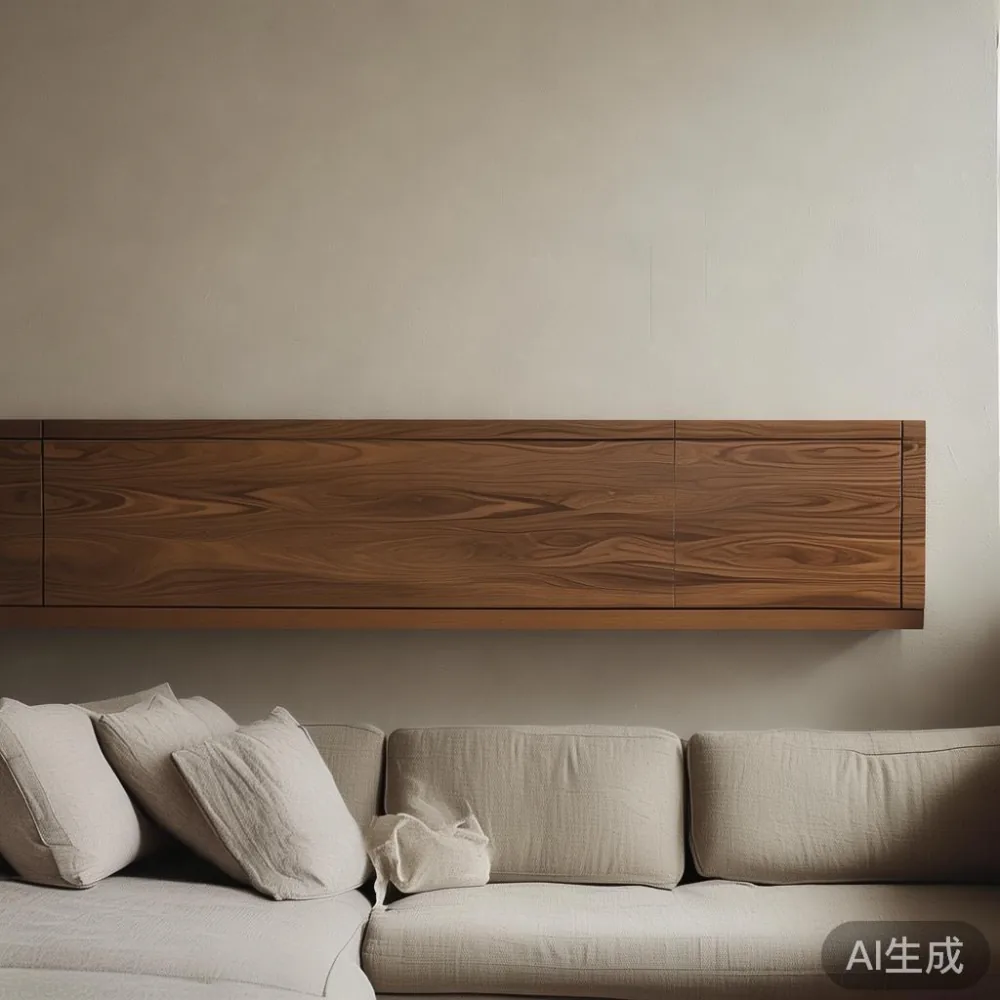
Add Singapore-specific factors. HDB flats and newer condos are built with single-glazed windows that close tightly when the air-con runs. Many owners set the thermostat to 23°C, which cools the air but does nothing to the moisture already trapped inside the room. A 90 sqm flat can hold roughly 1.2 litres of extra water vapour in the air at 80% humidity compared with 50%. That water has to land somewhere, and one of the places it lands is your solid wood sofa frame, your dining table apron, or the floating shelves above your TV console.
What moisture content should I look for when buying a solid wood sofa, bed frame, or dining table in Singapore?
Ask for kiln-dried to 8–12% moisture content, measured with a pin meter, and ask for the reading to be written on the packing list. Anything above 14% is a red flag in this region. A good supplier in Foshan — and MIDHILL falls into this category — will kiln-dry boards to around 10% before assembly, then let the finished piece acclimatise in a ventilated warehouse for two to four weeks before crating. That step costs the factory floor space and money, which is why the cheapest listings on Carousell and Shopee rarely mention it.
If you already own a piece and you are unsure, a S$35 pin-type moisture meter from any local hardware chain will give you a reading in under five seconds. Compare the reading on a hidden face of the piece (the back of a wardrobe, the underside of a dining table) against a freshly cut piece of the same species you can buy as offcut. A difference greater than 3% means the wood is still moving actively and the piece has not finished settling.
Is Japandi furniture furniture worth it for Singapore HDBs and condos?
Yes — if you buy it from a maker who understands Southeast Asian humidity, not just Scandinavian showrooms. Japandi, the calm hybrid of Japanese minimalism and Scandinavian functionality, suits Singapore HDB interiors remarkably well: low silhouettes free up corridor sightlines, pale tones reflect what little natural light enters a north-facing Tampines or Bedok unit, and the lines stay clean even when you later add a sectional sofa or a marble table on top of a solid wood base. The Japandi walnut industrial style — a slightly warmer, more architectural reading of the look — is especially forgiving on small footprints because darker walnut grains hide the small dust film that humid air deposits on horizontal surfaces.
Where owners get hurt is treating Japandi as a finish rather than a construction principle. A light-luxury piece that looks Scandinavian but is built with rubberwood cores under a 0.6 mm walnut veneer will delaminate within two monsoon seasons in a Punggol or Sengkang flat. A genuinely solid piece, by contrast, can be sanded back, re-oiled, and re-finished for decades — which is exactly the lifetime refinishing promise that MIDHILL puts on its sofas, bed frames, dining tables, and wardrobes. The catch: a real solid piece is heavier (a 2.4 m walnut dining table typically weighs 65–85 kg, a queen bed frame 70–90 kg), so you must plan delivery around lift and corridor widths before you fall in love with the photo.
How do I measure lift and corridor widths before a large furniture delivery in an HDB or condo?
Take a metal tape, not a phone estimate. The standard HDB passenger lift in a block built after 2010 measures about 1.1 m wide by 1.4 m deep with a door opening of 0.9 m, and it carries 630–750 kg. Older blocks in Bedok and Toa Payoh sometimes run narrower at 1.0 m by 1.3 m. Condo service lifts are larger — usually 1.3 m by 1.6 m — but they often share a 2.1 m ceiling with the lobby, which matters once you tilt a tall wardrobe on its side.
Corridors add another 15–30 cm of turning difficulty at every right-angle bend, and the fire-rated door into your unit is almost always 0.9 m wide. Subtract 10 cm from every measurement for the crate, the cardboard corners, and the blankets the delivery crew will wrap around the piece. A 2.2 m wardrobe will not enter through a 0.9 m door upright, but it will enter flat if the wardrobe is no deeper than 65 cm and the corridor turn is at least 1.8 m on the outside radius. Write the numbers down before you order. If your supplier offers free shipping over US$350 (roughly S$480 at today's rate) and a 14-day return window, you can still pay S$80–S$150 for a failed delivery attempt that never makes it past the lift lobby.
How should I acclimatise a new solid wood piece in my Singapore home?
Leave the crate in the living room for 48–72 hours before unboxing. Open the top flaps only, so the wood breathes without being exposed to direct air-con drafts. Run a dehumidifier set to 55% in the same room for those three days — a standard 12-litre Meaco or similar unit costs about S$280 and uses roughly S$0.35 of electricity per day. Keep the piece at least 30 cm away from the wall so air can circulate behind a wardrobe or a headboard.
Once unboxed, raise the piece on its feet or casters rather than letting it sit directly on vinyl or tiled floors. Trapped moisture under a flat surface is the single most common cause of black mould spots on bed frame side rails in ground-floor HDB units. If you bought a sectional sofa with a solid wood internal frame, leave the cushions off for the first 24 hours so the frame can breathe, then rotate the cushions weekly for the first month. Cushion foam also absorbs humidity, and a 5-kg cushion at 80% RH weighs around 200 g more than the same cushion at 50%.
What daily care keeps solid wood looking new in a humid climate?
Wipe horizontal surfaces with a barely damp microfibre cloth — not a wet one — once a week. Never use silicone polishes, which seal moisture inside the grain and turn cloudy within a month in this climate. A drop of pure tung oil or a beeswax-based balm, applied once every four months, feeds the wood and slows moisture exchange. Keep a small hygrometer on the same console as your marble table and check it on weekends; if it climbs above 65%, run the dehumidifier for two to three hours.
Avoid the classic mistakes. Do not place a solid wood dining table directly under a ceiling-mounted air-con vent — the cold, dry stream creates a moisture gradient across the top that pulls the surface into a shallow bowl within a year. Do not run an important-oil diffuser 24/7 in the same room as an oiled walnut piece; the citrus oils soften the finish. Do not park a leather sectional sofa flush against a solid wood side panel; leather holds salt from skin and that salt will slowly stain the wood if the two surfaces touch.
What about warranties, returns, and the GST when I order from overseas?
Read the warranty document, not the marketing page. A 10-year structural warranty on a solid wood sofa frame is meaningful only if it covers joint failure, wood splitting, and warping beyond a defined tolerance — usually more than 5 mm over 1 m. Lifetime refinishing sounds generous, but check whether shipping to and from the workshop is included, or whether you pay S$120–S$280 per leg for a single dining table. Free shipping over US$350 roughly equates to S$480 at current rates, and a single queen bed frame plus a dining table plus a nightstand will clear that threshold in one order, which is the smartest way to consolidate freight.
On GST: since January 2023, GST is charged on low-value goods under S$500 imported into Singapore, so even small orders from overseas suppliers now attract the 9% levy, with the rate scheduled to move to 9.5% in 2026 and 10% the year after. A S$480 order therefore lands at S$523.20. Some Foshan factories, including MIDHILL, can arrange DDP (delivered duty paid) shipping that bundles GST into the invoice so you are not surprised at the door.
Quick checklist before you tap "order" on a sectional sofa or dining table
Measure the lift, the corridor, and the front door. Ask for the kiln-drying moisture content in writing. Confirm the species (walnut, white oak, ash, rubberwood) and the construction method (mortise-and-tenon, dowel, or metal bracket). Check the warranty definition of "structural" and "warping". Plan a 14-day settling window with the dehumidifier running. Budget an extra 8–12% for GST and delivery surcharges above the S$350 / S$480 threshold. And keep the original crate for the first month in case a return under the 14-day window becomes necessary.
A piece of solid wood furniture bought properly is one of the few things in a Singapore home that genuinely improves with age — it darkens, the grain tightens, and the joints settle into the silence of a well-built thing. A piece bought carelessly will fight your flat from day one. The difference is almost always decided before the first screwdriver is lifted.