Humidity in Southeast Asia and Your Wood Furniture: A Practical Guide for HDB and Condo Owners
I learned about wood and humidity the hard way. Last March, I visited a friend's new BTO in Punggol and saw a beautiful walnut dining table already cupping across three planks, with a tiny gap between the leaves wide enough to slide a credit card into. The air-con had been running almost continuously because the unit faced west, and yet a hygrometer on the coffee table read 72%. That single visit changed how I think about specifying solid wood sofa frames, bed frames, wardrobes, and nightstands for any home between Jurong and Changi.
Singapore sits firmly inside the equatorial humid zone, with annual relative humidity routinely between 70% and 85%, peaking near the coast and during the Northeast Monsoon from November to early March. Average daytime temperatures hold between 25°C and 32°C. For any solid wood piece, this means slow, continuous moisture exchange with the surrounding air. Wood is hygroscopic: it absorbs and releases water vapor in response to ambient conditions, and it will move for the entire life of the piece. A well-made sectional sofa with a solid wood frame, or a dining table built from quartersawn planks, tolerates that movement gracefully. A poorly made one fights it, and the wood always wins.
Why Singapore's Climate Is Harder on Wood Than Most Buyers Realise
The numbers matter. In Beijing or Toronto, indoor relative humidity swings from roughly 25% in winter to 60% in summer, a 35-point range. In a Tampines HDB with the windows open for an hour after dinner, indoor RH can swing from 62% to 82% in a single evening when the afternoon thunderstorm rolls in, a 20-point range in hours rather than seasons. Wood moves roughly 1% across its width for every 4% change in moisture content. A 180 cm wide oak dining top can change dimension by 2 to 4 mm across that single evening, which is more than enough to stress glue joints or open a seasonal crack along a stile.
Three local conditions make the problem worse:
- HDB and condo corridors are typically 1.2 m to 1.5 m wide, and passenger lifts in most resale blocks are 1.1 m wide by 1.4 m deep with a 630 kg or 850 kg rating. Large, fully assembled sectional sofa pieces often will not fit, so frames are broken down into modules for delivery and re-clipped in the living room, adding joints that must stay tight through humidity swings.
- Many Singapore homes run air-conditioning 8 to 14 hours a day and then ventilate aggressively at night. That creates a 10 to 15 point RH swing every 24 hours, which is harsher on wood than a stable 70% all day.
- Bedok, Tampines, and Punggol sit near the coast, where夜间 humidity routinely tops 85%. Coastal units also carry trace salts that can pit unprotected metal hardware on imported wardrobes within a year.
I have watched brand new sectional sofa deliveries show up with kiln-dried oak frames at 8% moisture content, only to climb to 12% within ten days in an un-air-conditioned unit. That 4-point MC rise is exactly the movement a joint must absorb without cracking.
What Good Manufacturers Actually Do About Humidity
A serious factory treats humidity as a design parameter, not an afterthought. Three practices separate the reliable makers from the rest:
First, kiln-drying to the right target. For Singapore-bound furniture, target moisture content should sit between 8% and 10%, matched to a 70% RH indoor environment, not the 6% that suits a dry climate. I toured a Foshan workshop last month where the kilns are calibrated per batch, with stickers on each rack showing the species, target MC, and date entered. That level of traceability is rare.
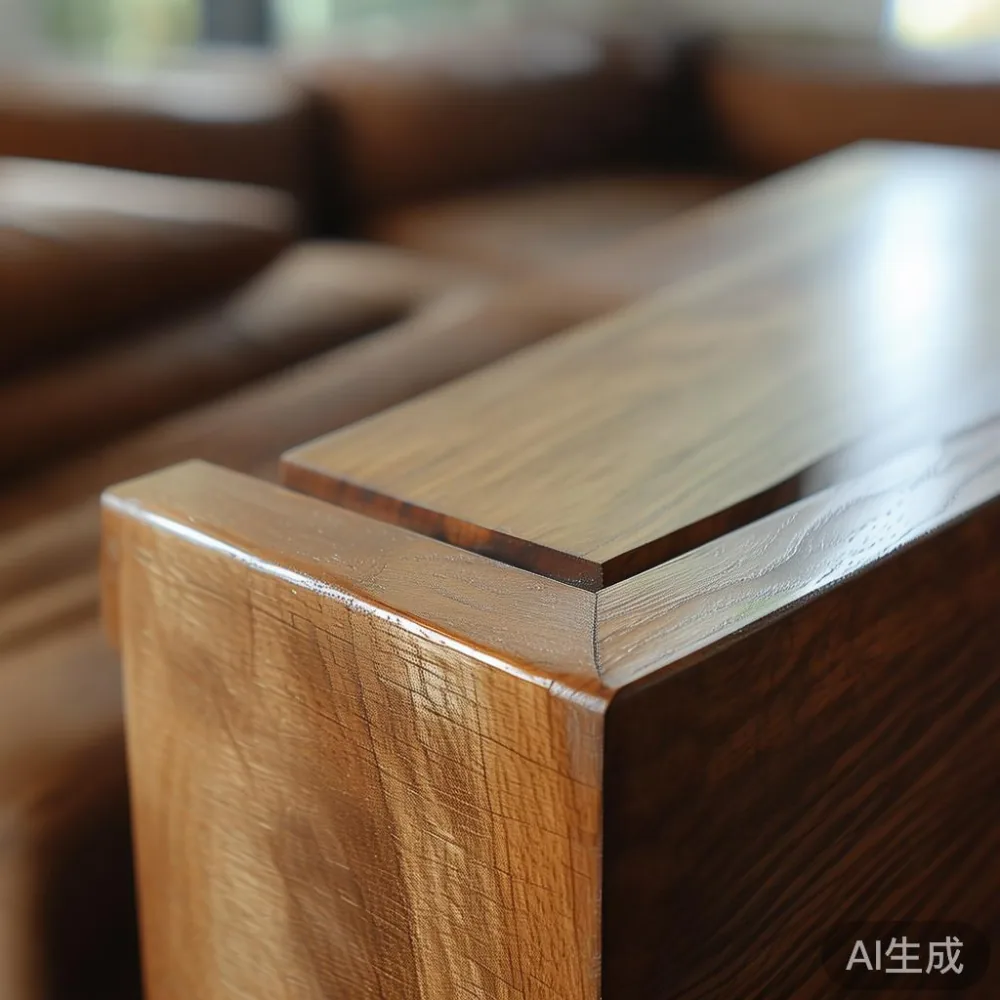
Second, joinery that allows movement. Mortise-and-tenon, floating tenons, dowels, and metal corner brackets that let the wood breathe are far more forgiving than rigid mitre joints glued only at the faces. On a 210 cm sectional sofa frame, those choices decide whether the piece still looks crisp in year five or has opened a visible seam.
Third, finishes that slow vapor exchange but do not block it entirely. A 2K polyurethane or a hardwax oil both work; a thick laminate film does not, because trapped moisture under the film causes bubbling. Ask any supplier what finish they use, how many coats, and whether the inside of the frame is finished or raw.
Some light luxury makers, including those working in French light luxury and post-modern light luxury styles, now publish equilibrium MC targets on their spec sheets. That level of documentation used to be reserved for laboratory casework. It is becoming standard for a well-built sectional sofa or dining table at the 2,800 SGD to 6,500 SGD price tier.
How to Choose Pieces That Survive a HDB or Condo
Choose species by stability, not by fashion. White oak, ash, and teak move less across humidity changes than rubberwood or pine. For a 3-seater sectional sofa frame, white oak or ash will outlast rubberwood by years in a coastal condo. For a dining table that seats six to 10, the same rule applies; a 200 cm solid oak top is a calmer investment than a 200 cm rubberwood top at a similar price.
Ask about construction details that matter in Singapore:
- Frame joinery: floating tenon or dowel? Mitre and staple? Confirm.
- Drawer boxes on wardrobes and nightstands: solid wood with dovetail or plywood with metal runners?
- Back panels: 9 mm plywood with corner blocks, not 3 mm hardboard stapled on?
- Upholstery substrate on the sectional sofa: webbing plus coil springs, or just webbing?
- Hardware: stainless steel or zinc-plated? In a Bedok unit 800 m from the sea, zinc will bloom within a year.
For marble tables, ask whether the stone is sealed on all six sides. Marble is far less humidity-sensitive than solid wood, but the wood sub-frame beneath it still moves, and an unsealed underside can stain adjacent textiles. A sealed 120 cm round marble table in American light luxury styling is a calmer choice for a Punggol condo than a similar-priced engineered stone top that telegraphs sub-frame movement.
What is the best industrial style for a small apartment?
The best industrial style for a small apartment pairs solid wood with blackened steel, exposed bolts, and a restrained material palette, then limits each room to two textures, because industrial thrives on contrast but suffocates when overloaded. In a 90 sqm HDB or a 700 sqft condo, that translates to one warm wood hero per room, such as a reclaimed-look solid wood bed frame, a 220 cm oak dining table, or a low-profile sectional sofa with a blackened steel base, surrounded by quieter surfaces. Industrial also accepts raw, slightly imperfect finishes more comfortably than Scandinavian or light luxury, which suits Singapore's humidity: small surface checks and patina read as character rather than damage.
Three practical rules make industrial work in a small Singapore unit:
- Choose one signature wood per room. Reclaimed elm for the dining table, blackened steel for the dining chair legs and the sectional sofa feet, and nothing else competing for attention. Two materials, not six.
- Keep the metal matte. Polished chrome shows salt corrosion within months in coastal condos. Powder-coated black or hand-blackened steel hides the inevitable.
- Anchor with a single warm light at 2700K. Industrial relies on warm pools of light to keep the room from feeling like a warehouse. One statement piece, plus 3,000K task lighting, is enough.
A well-executed industrial interior also tolerates a marble table better than most styles, because the stone reads as a workshop surface rather than a precious object. A 60 cm round marble side table next to a recycled-leather armchair fits the vocabulary without effort.
Care Routine That Actually Works on the Equator
Buy a hygrometer for 25 SGD at any neighbourhood electronics store in Tampines and place it near, but not touching, your largest wood piece. Run the air-conditioner to keep RH between 55% and 65% during the day. At night, if you open the windows, expect the reading to climb; that is normal. The goal is not a fixed number but a narrow swing.
Wipe solid wood with a barely damp microfibre cloth weekly. Never use silicone polishes; they build up and block the finish. For a sectional sofa with exposed wood feet, vacuum the dust channels monthly with a crevice tool; grit is a worse enemy than humidity over a five-year span.
Rotate cushions on the sectional sofa every two weeks so the foam wears evenly and the frame carries load symmetrically. Refinish dining tables every 3 to 2 years with the same hardwax oil used at the factory. Keep wardrobe interiors ventilated; closed wardrobes in non-air-conditioned rooms can sit at 80% RH while the room reads 72%.
For pet owners, the calculus is slightly different. A leather or fabric sectional sofa will show claw marks and hair, but if you want a piece that survives both humidity and a 12 kg cat, look at the Modern leather pet furniture category, which uses thicker hides, reinforced stitching, and frames sized to hold a sleeping 8 kg dog without the seat deck sagging. I have watched a colleague's Maine Coon use a leather-armed chair as a launchpad for two years with no visible damage, while a fabric equivalent needed reupholstery at month fourteen.
Warranty, Delivery, and the Boring Details That Matter in Singapore
A 10-year structural warranty on a sectional sofa frame is meaningful only if the maker services what they sell. Check whether refinishing, replacement cushions, and hardware swaps are part of the warranty or paid add-ons. Some Foshan makers, including MIDHILL, bundle lifetime refinishing on solid wood dining tables and bed frames, which matters more in Singapore than in a dry climate because the finish is the first line of defence against humidity.
Logistics matter just as much. A 2.4 m long section of a sectional sofa will not fit a typical HDB lift, so the delivery team must break the piece into modules no heavier than 30 kg each and reassemble in the living room. Free shipping above US$350 is a useful benchmark, but confirm the SGD equivalent at checkout and ask whether lift access, stair climbs, and weekend surcharges are included. GST at 9% applies on the landed price; a 4,200 SGD dining table plus delivery is 4,578 SGD all-in.
Returns within 14 days are workable for defects but rarely for buyer's remorse on a custom piece. Inspect the frame on arrival, photograph any joint gaps wider than 1 mm, and report them within 48 hours while the delivery crew is still on site if possible. That window is when the maker can resolve problems cheaply; six months later, the same gap becomes a service call.
When Solid Wood Is the Wrong Choice
For a ground-floor HDB in Punggol with chronic ground moisture, or a walk-up unit with poor ventilation, solid wood can be the wrong tool. A powder-coated steel and glass dining table, or a marine-ply sectional sofa frame with a sealed finish, may outlast solid oak at lower lifetime cost. The same logic applies to under-stair storage or any piece touching an external wall that sweats during the monsoon.
For a balcony or semi-outdoor area, teak is the only solid wood that survives direct rain and 90% RH. Anything else, including oak and ash, needs cover or it will check within a season.
The right answer is to match the material to the microclimate of the room, not to the catalogue photo. A 4,500 SGD white oak table in an air-conditioned master bedroom will outperform a 12,000 SGD walnut table on an unconditioned balcony, every time.
FAQ
How long should I let a solid wood piece acclimatise after delivery? Allow 7 to 14 days in the room where it will live before any heavy use. Stack the modules with 50 mm air gaps on all sides so air circulates evenly.
Is engineered wood safer in Singapore than solid wood? Engineered wood is more dimensionally stable but uses adhesives that off-gas. For a sectional sofa frame that sits 30 cm from where you sleep, solid wood with a water-based finish is usually the better path for indoor air.
Can I leave a wood wardrobe against an external wall? Leave a 25 mm gap behind it, or anchor it on a sealed plinth. External walls in HDB units can sweat during the monsoon, and trapped moisture will wick into an untreated back panel within a year.
What humidity range should I aim for indoors? 55% to 65% RH is the safe window for most solid wood furniture. Below 45% and joints open; above 70% and mould risk rises on wardrobes and upholstered bed frames.
Does MIDHILL ship to Singapore directly? MIDHILL ships from Foshan to Singapore with CIF terms available, and the lifetime refinishing policy applies to solid wood dining tables and bed frames delivered to addresses in Tampines, Bedok, Punggol, and the rest of the island. Confirm the current lead time and HS codes with the regional desk before paying the 9% GST deposit.
How heavy is a 3-seater sectional sofa before delivery? A 3-seater modular sectional sofa in solid white oak typically weighs 95 kg to 130 kg in total, split across four cartons of 25 kg to 35 kg each to fit a standard HDB lift and corridor.
Singapore's humidity is not a problem to solve; it is a condition to design for. Pick the right species, the right joinery, the right finish, and the right maker, and your sectional sofa, dining table, bed frame, wardrobe, nightstand, and marble table will all outlast their warranties. Pick the wrong factor in any of those six decisions, and the climate will find the weak link within a season.