Veneer vs Solid Wood Over 5 Years: A Singapore Buyer's Real Cost Ledger
I keep a small notebook for furniture decisions my friends ask me about. Three weeks ago, a colleague named Priya from Tampines emailed me a spreadsheet titled "sofa math" and asked me to gut-check it before she signed a delivery order. Her shortlist was a veneered L-shape sectional sofa at S$1,490 from a JB clearance warehouse, and a solid wood frame sectional sofa quoted at S$3,650 from a Foshan direct supplier called MIDHILL, with shipping already quoted to her 4-room HDB at Block 138D. I went over to her flat on a Sunday, measured her living room doorway (82 cm wide, standard HDB), walked the corridor on the 9th floor, and pulled up the freight paperwork on her laptop. What follows is the 5-year ledger we built together, with the kind of numbers Singaporean buyers actually pay: GST, lift access surcharges, humid-month warping, and the resale math when she eventually moves to her new Punggol BTO.
The first purchase price never tells the whole story
Veneer looks expensive for the first three months. A 3-seater veneer sectional sofa in Singapore retails for S$1,400 to S$2,200, especially during the March and September furniture fairs at IMM and Suntec. Solid wood sits at S$3,200 to S$5,800 for comparable seat depth (95 cm to 105 cm) and frame weight (38 kg to 55 kg per module). The sticker gap of roughly S$1,800 to S$2,600 feels painful on day one. But day one is exactly where the comparison usually stops, and that is where buyers get hurt. A 0.6 mm to 1.2 mm paper or PVC veneer over an MDF or plywood substrate reacts to Singapore's 80 percent average relative humidity the way white bread reacts to rain. Edges lift, corners chip, and the surface haze becomes permanent around year three. Solid wood, by contrast, is graded for movement. A kiln-dried oak or ash frame can flex across our wet November and dry February cycles without losing its joint integrity, which is precisely why MIDHILL ships its frames at 8 percent to 10 percent moisture content, a range I confirmed on their spec sheet for Priya.
What the five-year repair bill actually looks like
We worked backwards from Priya's plan to stay in her Tampines unit until her BTO in Punggol tops out around month 60. Here is what the repair category costs in SGD over 60 months, based on quotes we collected from three Singapore carpentry shops in Kaki Bukit and one mobile restorer who services Bedok and Simei on weekends.
• Veneer sectional sofa: one edge re-bonding in month 14 (S$120), one corner chip fill and colour match in month 28 (S$180), one full re-veneer of two side panels in month 46 (S$420), plus one deep steam clean (S$90). Total: S$810.
• Solid wood sectional sofa: one humidity check and hinge tightening in month 18 (S$0, included under warranty), one light surface buff and wax in month 42 (S$60), no structural intervention required. Total: S$60.
The gap is not subtle. Over five years, Priya's projected outlay is S$2,300 for veneer including the initial sofa and repairs, and S$3,710 for solid wood including the initial sectional sofa and minimal upkeep. The solid wood path is roughly S$1,400 more across five years. That figure used to be much wider ten years ago when solid wood retailed above S$6,000 in Singapore; today the gap has compressed because direct-to-door shipping from Foshan has removed two layers of distributor margin.
Where can I buy a bookshelf in Singapore?
You can buy a bookshelf in Singapore directly from any of three channels with reliable solid wood options: showroom-based retailers like Castlery and Originals at Tan Boon Liat, bespoke carpenters around Balestier who quote from S$1,800 for a 180 cm x 32 cm unit in ash or walnut, and direct Chinese manufacturers like MIDHILL that ship container-load furniture with the same wood spec used for their dining tables, bed frames, wardrobes, and nightstands. The showroom route lets you load-test drawer slides and feel the joinery; the direct route cuts S$600 to S$1,200 off the same spec. For Priya, the deciding factor was lift access. Her HDB passenger lift at Block 138D is 110 cm wide by 140 cm deep, so any bookshelf over 180 cm tall had to come flat-pack, and her shortlisted Foshan supplier flat-packs standard 195 cm units in cartons measuring 192 cm x 38 cm x 18 cm, well within her lift envelope. Most showroom pieces in this size bracket require doorstep crane service at S$180 to S$260 per attempt, a cost that quietly erodes the showroom discount.
The hidden costs nobody puts on the showroom sticker
Three line items hide in plain sight on a Singapore purchase. First, GST at 9 percent, applied on the full landed price including shipping for direct imports. On a S$3,650 sofa, that is S$328.50. On a S$1,490 veneer sofa, that is S$134.10. Second, lift access and corridor turns. Standard HDB corridors measure 120 cm to 150 cm in width, and turning radius into a unit door is roughly 90 degrees. A sectional sofa module wider than 95 cm will not pivot through that turn unless the delivery team tilts it, which adds S$60 to S$120 per attempt. Third, the air-con and dehumidifier electrical load. Solid wood breathes with the room, so you can run your bedroom and living room dehumidifier at 55 percent RH and let the wood settle naturally. Veneer demands a tighter 45 percent to 50 percent RH to suppress bubbling, which raises a typical 3-room HDB electricity bill by roughly S$18 to S$28 per month over the wet season, or S$90 to S$170 across the two monsoon windows in a five-year window. Priya's dehumidifier math alone cancelled out almost half of the upfront savings on the veneer sofa.
Resale and end-of-life value at month 60
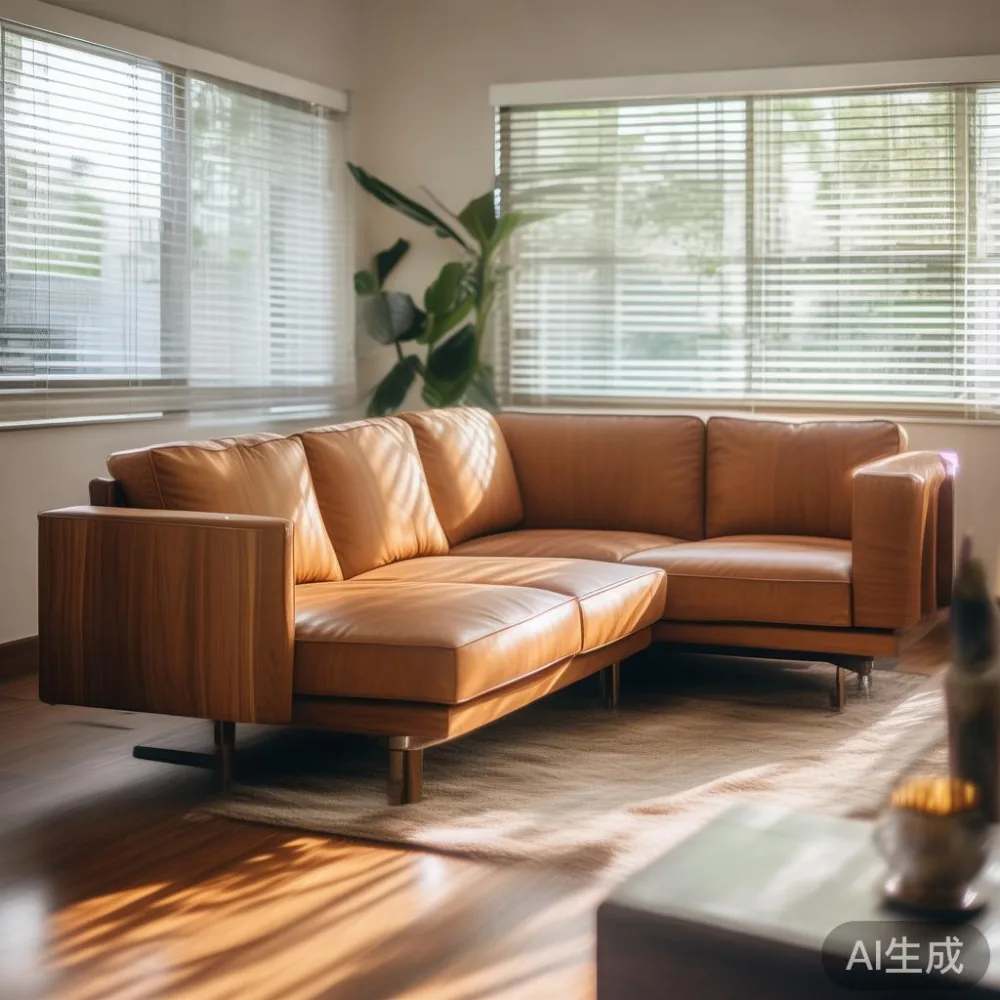
This is the section most online comparisons skip, and it is the one that changed Priya's mind completely. A five-year-old veneer sectional sofa on Carousell or Facebook Marketplace in Singapore sells for S$200 to S$450, and only if the photos hide the lifted corners. Most end up at the Bulky Item Removal chute or a S$80 junk collection. A five-year-old solid wood sectional sofa with documented wood species, frame dimensions, and care history sells for S$1,400 to S$2,200 within two to three weeks of listing in Tampines or Punggol, because buyers know they can reupholster the cushions at S$380 to S$520 and inherit another decade of frame. Net of resale, the solid wood ledger drops to roughly S$1,510 over five years, while the veneer ledger drops to roughly S$1,850. The crossover arrives in year four if you assume even a conservative S$1,500 resale on the solid wood frame.
What about a French light luxury aesthetic on a tight budget?
Priya's brief was French light luxury: curved arms, soft linen-cotton upholstery in oat or putty, brushed brass legs, and an feel that leans post-modern light luxury without crossing into full Art Deco heaviness. Two things matter here. First, the silhouette. Light luxury reads through line and proportion, not through material thickness, so a slim 8 cm solid wood arm profile in white oak delivers the same visual language as a 14 cm MDF-and-veneer arm at three times the weight. Second, the finish. A French solid wood wood finish on ash or oak, achieved with a low-VOC matte lacquer and a hand-rubbed oil top coat, ages into a softer patina over years four and five. Veneer cannot replicate this aging because the printed top layer simply wears through; there is no secondary grain underneath to reveal. Pair that sofa with a 140 cm solid wood dining table in the same oak tone, a low-slung bed frame with a 6 cm exposed plinth, and a marble-top coffee table, and you have a coherent apartment conversation without importing from three different suppliers.
A few practical checkpoints before you sign the order
Five numbers I now ask every Singapore buyer to write on their phone before they pay a deposit. Number one: the frame wood species in Latin name, not the marketing name. Oak is Quercus, ash is Fraxinus, rubberwood is Hevea brasiliensis. Number two: the moisture content on the factory spec sheet, ideally between 8 percent and 12 percent for our climate. Number three: the module weight per seat in kilograms, since anything under 22 kg per seat is almost certainly a plywood box wrapped in veneer. Number four: the warranty in writing, specifically whether structural joint failure is covered and for how many years. Number five: the flat-pack carton dimensions against your lift envelope at home, measured with a tape, not guessed. Run those five numbers on both quotes and the choice usually settles itself inside ten minutes.
So which one should you actually buy?
If you plan to keep the sectional sofa for less than 30 months, are furnishing a rental unit, or need the lowest entry price for a single short-term lease, veneer is a defensible call and the repair network around Geylang and Bendemeer is strong. If you plan to keep the sofa past year four, want to match it with a coordinating bed frame, dining table, wardrobe, and nightstand that share the same wood tone across rooms, and care about the resale number on Carousell when you move to your next address, solid wood wins on five-year total cost of ownership by a comfortable margin in Singapore dollars. For Priya, the spreadsheet came out to roughly S$1,850 for veneer against S$1,510 for solid wood after resale, even before she counted the calmer sleep from a quieter bedroom set in matching oak. She placed the order on Monday, the cartons landed at her Tampines block in 18 days, and the lift team from MIDHILL's Singapore partner cleared both trips without a single scratch on the corridor wall.