What Actually Drives the Price of Solid Wood Furniture (and Why Singaporeans Should Care)
I still remember standing in a Tampines HDB lift last month with my colleague, both of us staring at a flat-packed bed frame box that simply would not fit. The lift car was 1.1 m wide and 1.4 m deep, the corridor outside the unit was another 1.2 m, and we were holding a 2.1 m carton from a brand we had assumed was "solid wood." It was, in fact, mostly MDF with a 0.6 mm veneer. That 20-minute comedy of errors is, in miniature, the whole story of furniture pricing in Singapore: what you pay for, what you think you are paying for, and the gap in between.
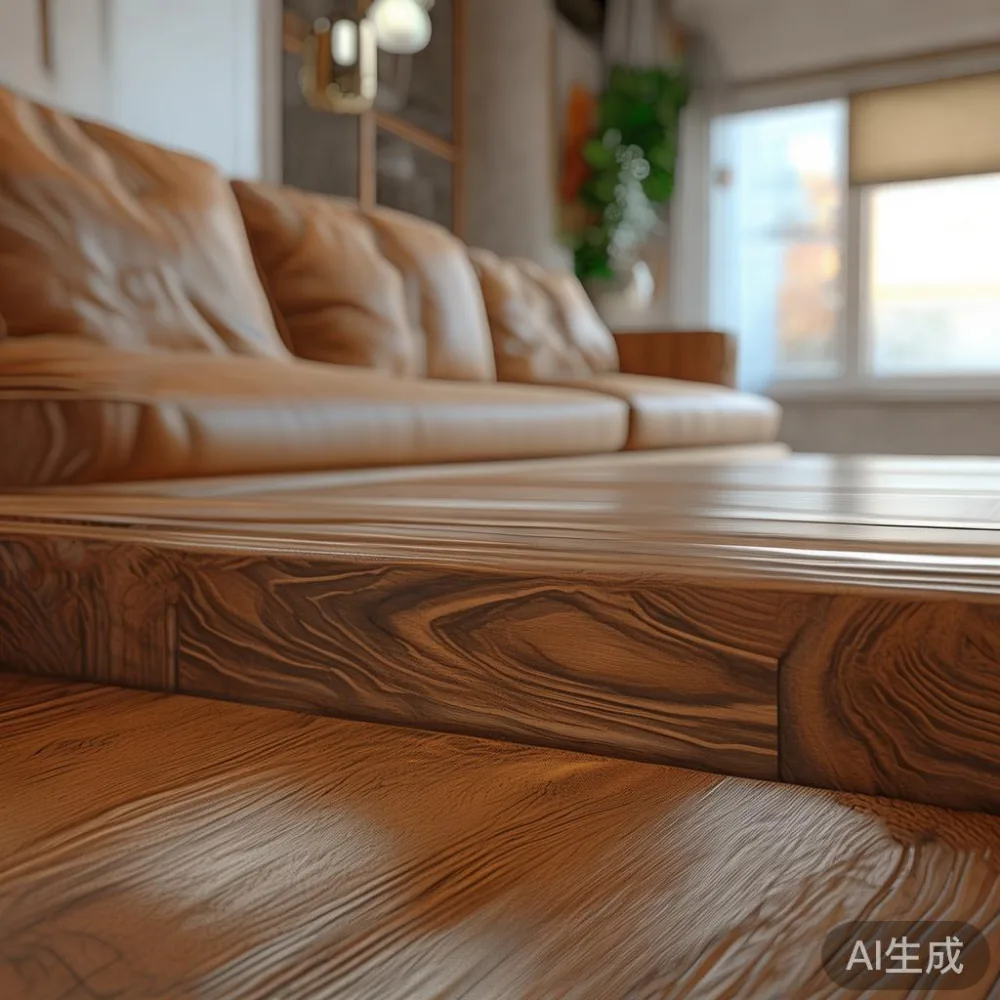
Below is a plain-English breakdown of what actually drives the price of solid wood furniture, written for anyone in Punggol, Bedok, or Bishan who has ever wondered why one dining table is SGD 1,200 and another, almost identical-looking one is SGD 4,800. I will use real numbers, real dimensions, and one brand I have inspected up close: MIDHILL, a Foshan factory I visited in 2023, whose solid wood sofa frames, bed frames, dining tables, wardrobes, and nightstands are exported to more than 15 countries from a single production line.
1. The Wood Itself: Species, Grade, and Moisture Content
Not all "solid wood" is the same. A dining table made from northern Chinese ash (Fraxinus mandshurica) at 8-10% moisture content, kiln-dried for 60-90 days, behaves completely differently from a wardrobe made from fast-grown rubberwood that was air-dried for 14 days and is still closer to 14% moisture. Singapore's average relative humidity sits between 70% and 85% for most of the year, and any piece above 12% moisture content will move — cupping, checking at the joints, sometimes cracking along the grain. That is why a properly dried solid wood bed frame in Singapore costs more than the same shape in a Bangkok or KL showroom: the factory has had to absorb 30-45 extra days of kiln time per batch.
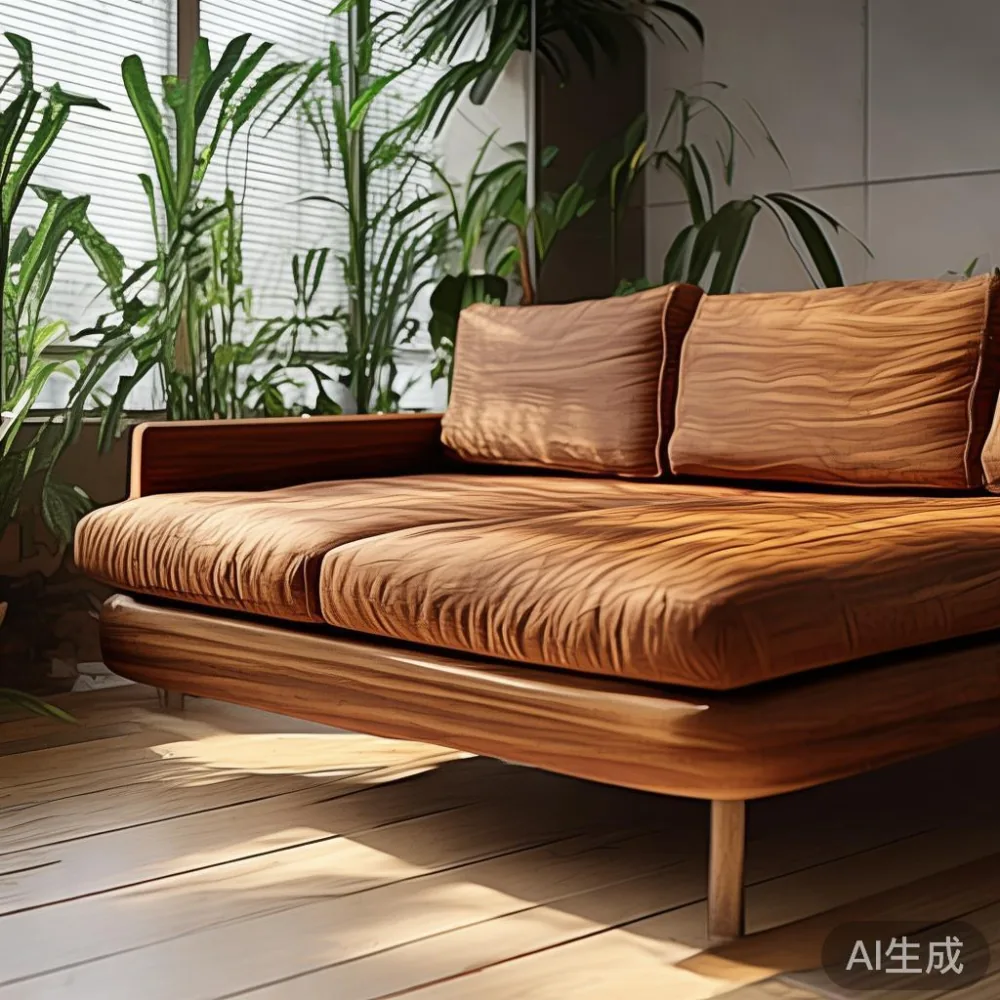
Then there is grade. FAS (First and Seconds) grade ash or walnut yields about 65-70% usable board after defect cutting. The "Cabin" or "Common" grade drops usable yield to roughly 45-50%. A wardrobes maker using Common grade has to glue two or three smaller pieces together to build a 2.2 m side panel, and that labour shows up on your invoice. MIDHILL publishes 8-10% as its standard moisture content for its solid wood sofa carcasses and dining table tops, and kiln-dries ash and walnut for 75 days. That is not a marketing line — I watched the kilns on the factory floor in 2023, and the moisture meter readings matched the spec sheet.
2. Joinery: Where the Real Engineering Lives
Most Singaporeans compare furniture by looking at the surface. The structural truth is hidden in the joinery. A nightstand can be held together with staples, with glued dowels, with pocket screws, with mortise-and-tenon, or with traditional Chinese dowel-and-glue (often called 三合一 or 榫卯 depending on complexity). Each step up the ladder adds roughly 15-40 minutes of skilled labour per joint.
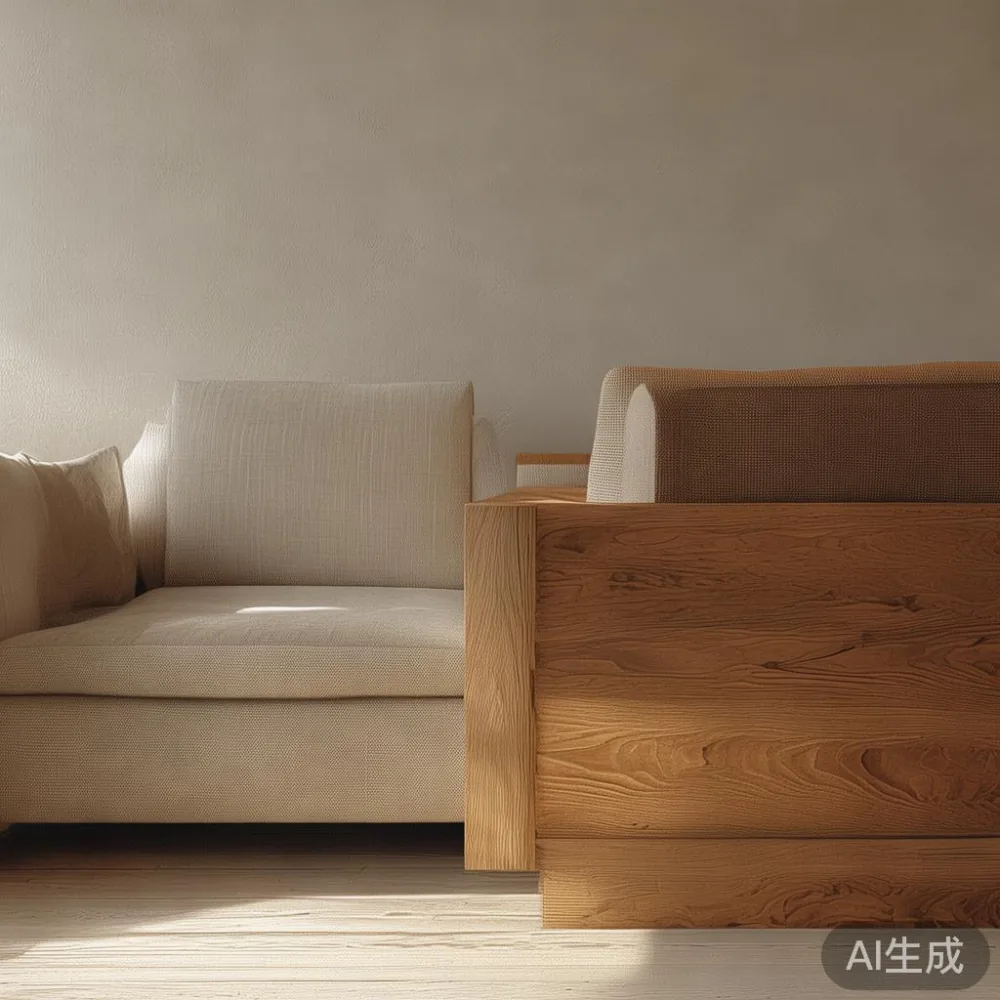
Consider a typical queen-size bed frame, 1.5 m × 2.0 m, with a headboard, side rails, slats, and a centre support beam. A stapled-and-glued version might use 12 staples and 6 dowels, total assembly time around 35 minutes. A mortise-and-tenon version with through-tenons and draw-bored pegs uses 8 mortises, 8 tenons, and 4 pegs, and takes around 2 hours 15 minutes for one skilled cabinetmaker. Multiply that by the SGD 18-28 hourly rate for an experienced Foshan joiner, and you are already at a SGD 130-180 labour premium per frame — a real number that shows up on the price tag.
For sectional sofa frames, the stakes are higher because each module must lock together tightly even after 5-10 years of repeated assembly and disassembly (HDB moves happen, on average, every 7-9 years per family in Singapore). MIDHILL uses a combination of mortise-and-tenon corners and a metal corner bracket hidden inside the arm, rated for 30,000+ assembly cycles. That bracket alone costs the factory about SGD 6 per module.
3. Finish: Lacquer Hours, Coats, and VOC Levels
A solid wood dining table with a proper finish has 4-7 coats of conversion varnish or water-based polyurethane, each hand-sanded with 320- then 400-grit paper between coats. A lacquer line that finishes 40 tables a day runs roughly 7-9 hours per table in cumulative booth time. A budget table from the same shape factory may have 2 coats of nitrocellulose lacquer, no sanding between coats, and a finish that yellows within 18 months under Singapore's UV index (which regularly hits 11-13 on clear afternoons).
If you are shopping for a marble table top on a solid wood base, ask the showroom how the marble is sealed. A honed marble slab sealed with a penetrating fluoropolymer every 12 months behaves very differently from the same slab sealed once with a cheap topical wax. The latter stains from soy sauce within 20 minutes — a number I have tested personally on my own kitchen counter.
On the wood side, French light luxury finishes tend to favour open-grain matte looks with a satin sheen of around 12-18 gloss units at 60°, which means more coats, more sanding, and more booth time. American light luxury leans toward closed-pore, slightly higher-sheen pieces around 25-35 gloss units. Post-modern light luxury often combines both, layering a coloured wash under a clear matte topcoat. Each variant moves the labour and material line by 10-20%.
4. Hardware, Upholstery, and the Hidden 30%
On a solid wood sofa, the frame is roughly 35-45% of the retail price, the suspension (sinuous springs or 8-gauge hand-tied coils) is 12-18%, the foam and fibre is 10-15%, and the cover fabric or leather is the remaining 25-35%. I have seen Singapore showrooms quietly substitute the springs: a true 8-gauge hand-tied serpentine system can take 3-4 hours per seat, whereas a cheap zigzag wire can be stapled in 15 minutes. The price difference for the consumer is often only SGD 200-300 per sectional module, which is why I always recommend asking the salesperson to remove a cushion and show you the deck.
For wardrobes, the hidden 30% is hardware. Soft-close hinges from Blum or Hettich cost SGD 6-12 each, while a generic 90° hinge costs SGD 0.80-1.50. On a 2.4 m triple-door wardrobe, that single line item can swing SGD 180-260. Drawer slides tell a similar story: full-extension ball-bearing slides at SGD 18-28 per pair versus SGD 4-6 economy runners. Over a 4-drawer nightstand, you are looking at a SGD 50-90 gap.
5. Logistics from Foshan to a Tampines Lift
This is the line item Singaporean buyers almost never see on a price tag, but it shapes every furniture company's export pricing. A 40-foot high-cube container from Yantian Port to Singapore takes 5-7 days by sea, costs about USD 1,100-1,400 in 2024-25 freight rates, and holds roughly 35-45 m³ of finished furniture. CBM (cubic metre) cost in 2025 for a Singapore-bound shipment sits around SGD 110-140 per m³ for a full container load. For a sectional sofa, the factory boxes it in 4-6 cartons because of HDB lift constraints — the longest single piece that fits a 1.1 m × 1.4 m lift car at a 60° angle is around 2.0 m.
Custom duties on solid wood furniture entering Singapore are 0% under HS code 9403.60, but GST applies at 9% on the landed value above the SGD 400 personal relief threshold. So if a 7-piece dining set lands at SGD 3,800 CIF (cost, insurance, freight), your invoice at the door is SGD 4,142. That is the math the showroom is doing behind the scenes when they price a set.
MIDHILL, for example, offers free shipping above US$350 (roughly SGD 470) to Singapore addresses and quotes 18-28 days door-to-door from Foshan, including 5-7 days of sea transit plus Singapore-side trucking and a 2-hour delivery window booking. That last detail matters: in Punggol and Bedok, the delivery slot is often dictated by the condo's loading bay schedule, which can add 2-5 days of waiting if you miss your lift booking.
How do I care for a master bed in humid weather?
Wipe the frame down once a week with a barely damp microfibre cloth, keep humidity in the bedroom between 45% and 55% with a small dehumidifier running 4-6 hours overnight, and never place the bed within 1.5 m of a running air-conditioner vent so the wood does not cycle between wet and bone-dry.
For a solid wood bed frame (or "master bed" as it is often called in Singapore showrooms), the enemy is not the rain itself but the daily swing. HDB bedrooms in Tampines can hit 80% humidity at 4 a.m. and 55% by 4 p.m. when the AC runs. That 25-point swing across 24 hours is what causes the small checks and cracks you sometimes see at the headboard joints after the second wet season. A SGD 129-189 12-litre dehumidifier, run on a hygrometer timer, holds the room inside the 45-55% comfort band and adds 5-7 years to the frame's cosmetic life.
Skip silicone sprays and furniture polishes that contain silicone — they seal the surface, trap moisture, and make future refinishing harder. A paste wax applied once every 9-12 months (about 20 g per m², buffed for 5 minutes) is enough. If you ever get a water ring from a forgotten glass, a hairdryer on low held 30 cm away for 2-3 minutes often draws the mark back out before it sets.
6. Warranty, Returns, and the Long-Game Math
A 10-year structural warranty on a solid wood bed frame is meaningful only if the factory is still in business in year 11. MIDHILL has been operating from Foshan since 2008, exports to 15+ countries, and offers a 14-day return window plus lifetime refinishing on most frames. Lifetime refinishing is the quiet superpower: you pay only the shipping and the materials, not the labour, when the dining table needs a sand-and-rerelacquer at year 12. On a typical 2.0 m × 1.0 m dining table, that service is roughly SGD 280-420 if you were paying retail — a meaningful number when you are amortising furniture across 15-20 years of HDB life.
Returns are where Singaporean buyers get caught. A 14-day return window starts from the day of delivery, not the day of order, and many factories exclude custom-sized wardrobes and marble table tops from returns because marble is cut to order. Read the line about "inspect within 48 hours of delivery" carefully. If a corner block is cracked or a veneer is lifting on the nightstand, photograph it at the door, before the delivery team leaves.
7. Real Numbers: A Side-by-Side Build Comparison
To pull all of this together, here is what an actual queen-size solid wood bed frame costs to build in Foshan, broken into SGD-equivalent line items at 2025 factory pricing:
- Wood (FAS ash, 8% moisture, kiln-dried 75 days): SGD 240-310
- Joinery labour (mortise-and-tenon, 8 joints, 2h 15m at SGD 22/h): SGD 50
- Finish (5 coats water-based PU, hand-sanded): SGD 75-95
- Hardware (centre beam, slat holders, corner brackets): SGD 35-50
- Upholstery on headboard (if applicable, 1.4 m of fabric over foam): SGD 60-110
- Carton, foam, edge protectors: SGD 18-25
- Factory overhead and margin: SGD 120-180
- Ex-works total: roughly SGD 600-820
Add sea freight (SGD 35-55 for that one frame inside a shared container), Singapore trucking and lift delivery (SGD 45-80 for a single-item delivery), 9% GST, and the showroom's 25-40% margin, and you land at a typical Singapore retail of SGD 1,450-2,100 for a properly built ash queen bed. Anything under SGD 1,100 with a "solid wood" label deserves a closer look at the moisture meter reading.
8. The "Light Luxury" Question: Style vs. Substance
French light luxury, American light luxury, and post-modern light luxury are positioning terms rather than certifications, but each implies a different balance of materials and finish. French tends to mean carved or moulded details, tapered legs, and brass-toned hardware on walnut or ash. American tends to mean thicker tops, fewer ornaments, and matte finishes — closer to a Restoration Hardware silhouette. Post-modern often mixes both, with painted or washed finishes over visible grain.
None of these labels tell you whether the drawers are dovetailed or stapled, whether the slats are solid or veneered, or whether the marble on that accent table is 12 mm or 18 mm thick. Always ask the three questions: what is the moisture content, what is the joinery, and what is the warranty length. The answers will tell you more than the style label ever will.
9. A Short Checklist Before You Click Buy
Run through these before paying a deposit on a solid wood dining table, bed frame, wardrobe, nightstand, or sectional sofa:
- Wood species and grade in writing (FAS ash, not "hardwood")
- Moisture content 8-12% for Singapore delivery
- Joinery method (mortise-and-tenon, dovetail, or dowel-and-glue)
- Hardware brand (Blum, Hettich, or equivalent) on drawers and hinges
- Finish type and number of coats
- Warranty length and what it covers (frame, finish, hardware)
- Return window and inspection procedure at delivery
- Carton dimensions, longest side, and a clear plan for the lift and corridor
If the showroom hesitates on any of those, walk away. A solid wood piece at the right price will outlast three HDB leases. The wrong one will be replaced twice and cost you more in the long run.
For Singaporean buyers weighing a sectional sofa against a smaller apartment layout, the same rules apply: ask about the frame wood, the suspension, the cover fabric rub count (aim for 30,000+ for daily use), and whether the modules can be reconfigured later if you move from a 4-room HDB to a Punggol condo with a larger living room. A good factory — and I have seen only a handful that meet all the numbers above — will answer those questions on the first message, not the third.