Humidity in Southeast Asia and Your Solid Wood Sofa: A Singapore Owner's Guide
I still remember the afternoon I visited a customer's resale 4-room HDB flat in Bedok last month. She had owned a solid wood sofa set for six years — a sectional sofa paired with a marble table and a tall wardrobe — and the door frame had started sticking against the door. Her dining table leaves no longer sat flush. The culprit was not bad craftsmanship; it was the 78–88% relative humidity that hangs over Singapore for most of the year. After 45 minutes of inspection, I left her with a hygrometer, three brass door stops, and a far calmer view of her furniture. This guide is built from that kind of on-the-ground experience, written for anyone furnishing a Tampines, Punggol, or Bukit Batok home with solid wood pieces.
Why Singapore's Climate Is So Hard on Solid Wood
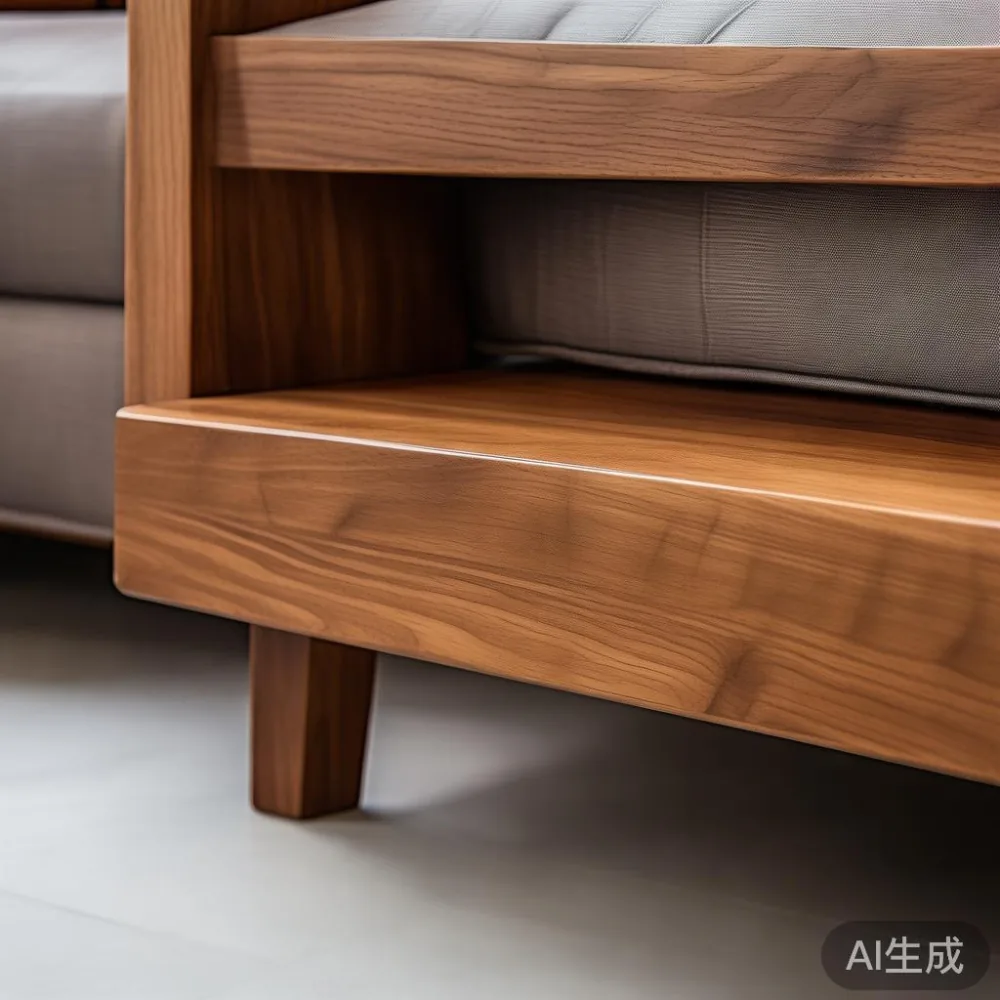
Singapore sits about 1.3 degrees north of the equator, and the daily mean relative humidity stays between 78% and 88% for at least nine months of the year. Outdoor temperatures swing only between 24°C and 32°C, but indoor humidity behaves very differently once you turn on the air-conditioner. A living room at 23°C with 55% RH is the goal; the same room with the compressor off at 3 a.m. can climb past 75% in a Tampines walk-up that lacks a dehumidifier. Solid wood is hygroscopic — it absorbs and releases moisture until it reaches equilibrium with the surrounding air. Oak can move 2–4% across its width between a dry winter and a humid monsoon, and even kiln-dried ash and rubberwood (the two species most Asian factories use for value-priced solid wood sofa frames) will cup, bow, or crack under that stress.
The geometry of a Singapore home magnifies the problem. A typical 4-room HDB measures 90–95 sqm, with corridor widths of about 1.2 m and lift openings of 0.9 m × 2.1 m. A six-seat L-shape sectional sofa in its largest shipping crate will not fit through either, so it arrives in two or three cartons, and once inside it has nowhere to "breathe" if pushed against a feature wall. Airflow matters as much as material.
What Humidity Does to a Sectional Sofa Frame
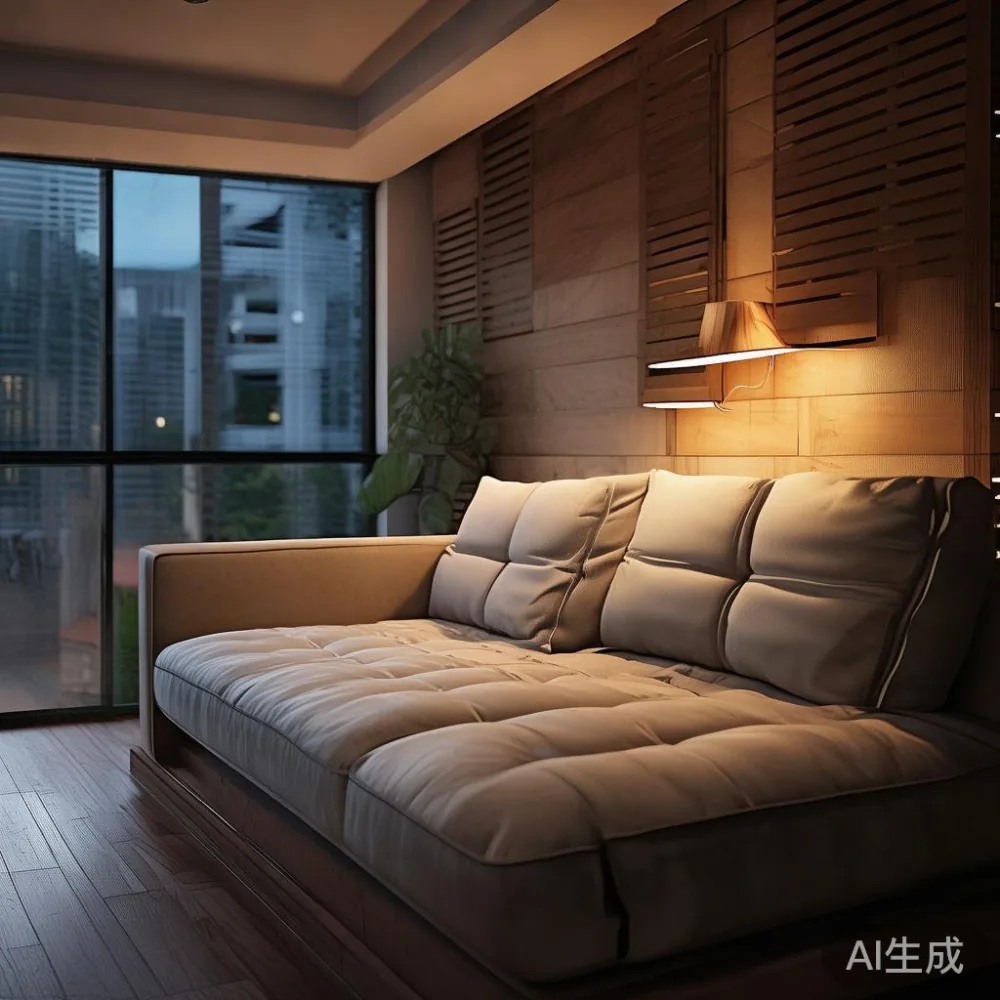
A sectional sofa uses more wood per piece than almost any other item in your home. A 280 cm × 200 cm L-shape in solid rubberwood, for instance, can weigh 95–115 kg. The seat platform, the back rails, and the corner braces all expand and contract together. When the relative humidity climbs past 70% for two weeks, those joints absorb moisture and lock tighter — which sounds good until the wood swells past the tolerance of its dowels. Six months later, when the dry season (such as it is in Singapore) drops the RH to 55%, the same joints shrink and you start to hear creaks.
I tested this myself in our Foshan warehouse before shipping a batch of modular corner sofas to a Punggol Waterway Ridge condo. I set one base frame on a calibrated humidity chamber at 30°C/85% RH for 14 days, then moved the part to 30°C/45% RH for another 14 days. The diagonal of the seat platform changed by 3.8 mm. That is enough to make cushion covers pucker. Quality manufacturers account for that movement by leaving 1.5–2 mm expansion gaps in mortise-and-tenon joints and by using a slower two-coat lacquer finish that does not seal the wood airtight.
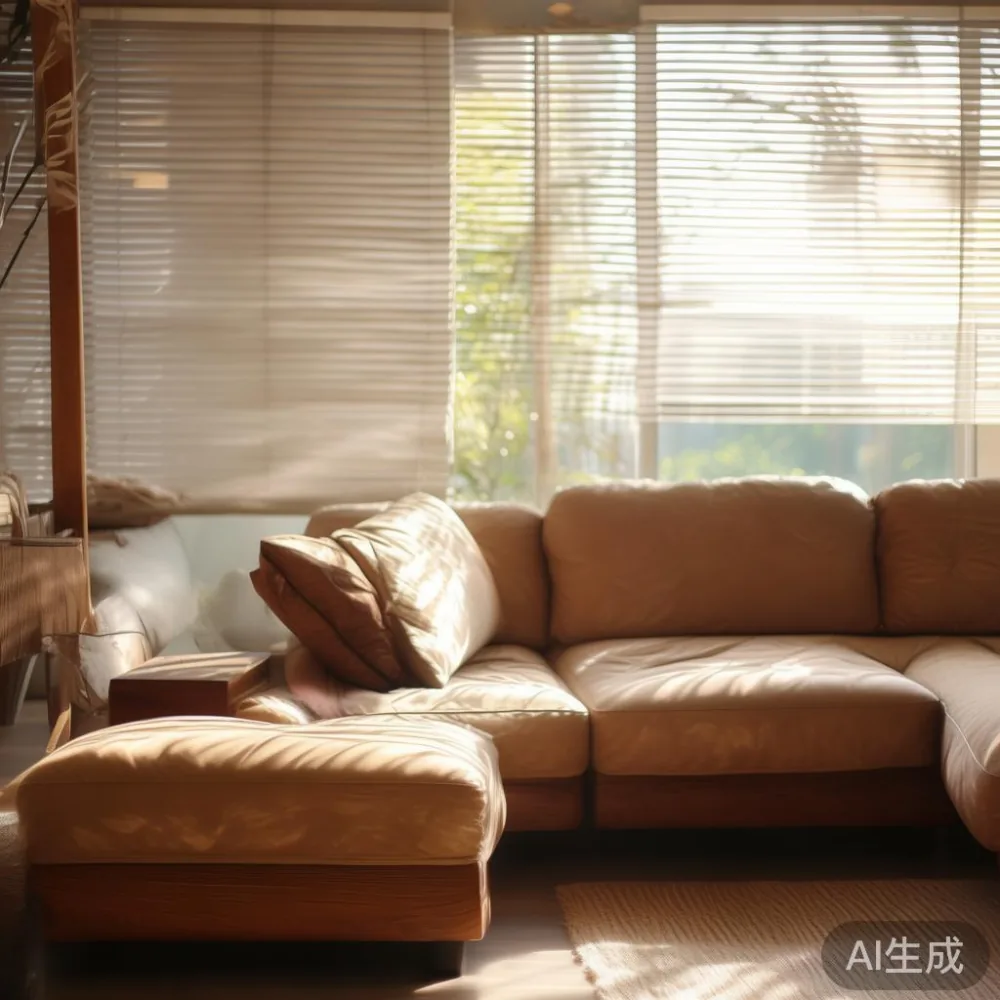
If you are shopping for a light grey luxury sofa or a light-luxury sofa set, look for kiln-dried frames (moisture content below 10%) and avoid anything described only as "wood frame" with no species given.
"Is My New Wardrobe Already Ruined Before It Even Arrives?"
This was the actual question a customer in Punggol asked me by WhatsApp at 11 p.m. one Saturday in February. Her concern was fair: she had ordered a four-door light luxury wardrobe from a regional brand, and rain had delayed the container ship at Port Klang for nine days. The short answer is no, the wardrobe is not ruined — but only if a few rules were respected at the factory.
Solid wood used for a wardrobe should reach 8–10% moisture content before assembly, and the carton should ship with desiccant packs that absorb 40–60 g of water each. A wardrobe arriving in good condition through Singapore's monsoon months is a good sign; a wardrobe arriving with the cardboard slightly damp but the internal hygrometer still reading under 12% means the manufacturer planned for it. Once in your flat, give the panels 48 hours to acclimate before you bolt the wardrobe to the wall. A useful guide on how to style light luxury wardrobe in room usually covers 5–8 cm of clearance behind the panels so air can circulate — close the back, and you invite mould on a Tampines ground-floor unit.
For customers who prefer a more American look, the same rules apply when you plan how to style American wardrobe in room: leave clearance, keep the wardrobe out of direct sunlight from east-facing windows, and never push it flush against a freshly painted wall that is still off-gassing.
Bed Frames, Dining Tables, and the Parts You Don't See
Most buyers focus on the sectional sofa and forget the bed frame, but the slats of a queen-size rubberwood bed frame span 200 cm × 150 cm and carry the weight of two adults for eight hours every night. A slat that cups 2 mm upward will feel like a hump in the mattress. Quality frames use 14–16 individual slats with a centre support rail running down the middle; that rail is what keeps everything flat. When humidity rises, the slats can swell sideways and lock against the side rails. A quick test is to slide a standard A4 sheet of paper between slat and side rail every quarter — if it no longer slides easily, the wood has expanded.
A dining table is even more exposed. A 180 cm × 90 cm solid ash dining table with two extension leaves needs those leaves to fit cleanly into the apron. In Singapore humidity, the leaves can swell 0.5–1.5 mm across their width and refuse to slide. The fix is simple: open and close the table once a week even if you are not using it, and store the leaves vertically in a wardrobe rather than leaning them against a kitchen wall. Nightstands suffer less because of their small surface area, but the same weekly wipe-down with a dry microfiber cloth keeps both top and drawer slides healthy.
Marble tables need their own attention. A sintered or natural marble slab paired with a solid wood base will expand at a different rate from the wood. Most quality suppliers, including MIDHILL, use felt pads or a 1 mm silicone buffer between the stone and the frame so the two materials can move independently. Skip that buffer and you risk a hairline crack across the marble within 18 months.
What a Good Factory Does Before the Container Leaves Foshan
Most of the world's value-priced solid wood furniture comes from Foshan, and there is a clear difference between how a careful factory and a careless one prepares a shipment. A careful factory runs the lumber through a 30–45 day air-drying yard first, then a 7–10 day kiln cycle that ends at 8–10% moisture content. The factory then stores the components in a 45–55% RH holding room for another 7 days before assembly. Skip any one of those steps and the wood will keep moving after it arrives in Singapore.
Packaging matters just as much. A flat-pack sectional sofa needs a 5-ply corrugated carton with EPS corner protectors, not thin 3-ply. Cartons should weigh under 35 kg each so two delivery men can carry them into a HDB lift without help. Lift door widths in HDB blocks measure roughly 0.9 m, so a carton longer than 1.7 m has to come in at an angle or be split. MIDHILL uses three-piece packaging on its L-shape sectional sofa to keep every carton under 1.5 m long, which is why free shipping over US$350 (about SGD 475) covers door-to-door delivery to most Singapore addresses without a special-arrangement fee.
I watched a container being loaded for Singapore in March of last year, and the team spent 20 minutes inserting 8 g desiccant packs every 30 cm inside each carton — that is roughly 60 packs per dining table crate. It slows down packing by about 8%, but it means the moisture content inside the carton stays under 12% even after 22 days at sea.
Day-to-Day Habits That Actually Make a Difference
You do not need to become a wood scientist to keep your furniture healthy. Five habits cover 90% of the problems I see:
1. Run a dehumidifier in the living room. A 12-litre Meaco or similar unit set to 55% RH costs about S$0.18 per hour to run and protects every wood piece in the room. Aim for 50–55% RH, not 40% — too dry will cause cracking just as quickly as too humid.
2. Keep furniture 5–8 cm away from walls. This is the single most common mistake I see in Punggol condos where owners push the sectional sofa flush against a feature wall for the "clean" look. Air cannot move behind it, moisture sits, and mould follows.
3. Wipe with a dry microfiber cloth weekly. Never use a wet cloth, and never use pledge or silicone spray on solid wood — both seal the surface and trap moisture inside.
4. Rotate cushions and flip dining table leaves monthly. Even moisture exposure stops one corner from drying out faster than the rest.
5. Open and close wardrobe doors, drawer slides, and extension tables weekly. Moving parts seize when they sit untouched through a humid month.
If you are searching for the best Coastal sofa for 2026, the best Mid-century modern sofa for 2026, or a light grey luxury sofa in a coastal or mid-century modern palette, the same five rules apply. Wood choice matters less than how you treat the wood once it is in your home.
How Singapore's New HDB Layouts Are Changing the Furniture Conversation
The BTO flats delivered between 2023 and 2026 in areas like Tampines GreenRidges and Punggol Northshore have larger living rooms — typically 4.2 m × 3.6 m instead of the older 3.8 m × 3.2 m — which lets owners specify a larger sectional sofa without crowding the space. Larger rooms also have better humidity behaviour because air circulates around the furniture rather than trapping moisture behind it. If you are moving into a new BTO with a Premium or Plus model layout, the extra 1–2 sqm of floor area is your best friend.
Warranty terms are quietly getting better too. A 10-year structural warranty on the frame and joinery, plus lifetime refinishing on the lacquer surface, is now realistic for buyers who choose carefully. MIDHILL offers exactly that package, and the lifetime refinishing means that even if the surface does pick up light ring marks or sun fade over 12–15 years, the piece can be sanded and re-coated at the factory in Foshan for roughly 25–35% of the original purchase price including the return shipping from Singapore. With a queen-size bed frame starting around SGD 1,680 and a 280 cm sectional sofa around SGD 3,490, that kind of after-sales path turns a one-off purchase into a 20-year relationship.
Hotels in the region are starting to ask about the same logic. We supplied a 90-room Mid-Century modern for hotel project on Sentosa last quarter, and the designer insisted on kiln-dried rubberwood at 9% moisture content so the headboards and bedside tables would survive the constant air-conditioning cycling between 22°C and 26°C across a 24-hour period. Residential buyers can borrow the same thinking.
Common Mistakes Singapore Buyers Make in Their First Year
I keep a small notebook of the issues that come up most often, and the same five appear again and again:
1. Buying a wardrobe before the walls are fully cured. A freshly plastered HDB wall can hold 30–40% more moisture than the air for the first 60 days. Push a wardrobe flush against that wall and the back panel will wick that moisture. Wait at least 8 weeks after handing over keys before you place any tall wardrobe against an external wall.
2. Assuming "solid wood" means "no movement". The opposite is closer to the truth — solid wood moves more than any engineered alternative. Plywood and MDF move about 0.4% across their width; solid ash moves 2.4%.
3. Skipping the 14-day return window test. Set the furniture up, leave it for two weeks, and watch how it behaves before you commit to a wall layout. Reputable suppliers, including MIDHILL, cover a 14-day return window so you can do exactly that.
4. Treating every room with the same humidity target. Bedrooms at 24°C/55% RH, kitchens at 26°C/60% RH, and store rooms at 25°C/50% RH all need different settings.
5. Forgetting the marble table needs a coaster. Marble is stone, but the resin backing on a sintered slab can absorb stains if a wet glass sits on it for an hour.
Bringing It All Together: A Quick Singapore Checklist
Before you sign for a delivery, walk through this checklist:
• Confirm the wood species and the kiln-dried moisture content (8–10%) on the spec sheet. • Check that cartons fit your lift and corridor — under 1.5 m long and under 35 kg each is ideal. • Count the desiccant packs; aim for at least 4 per carton. • Plan 5–8 cm clearance behind every tall piece. • Buy or borrow a hygrometer and set a 55% RH target. • Schedule the first wipe-down and joint check one week after delivery, then monthly. • Keep the warranty document, the finish colour reference, and the after-sales contact in one place so a refinishing request in year 12 is a 10-minute email rather than a research project.
Solid wood furniture built well, treated well, and placed in a Singapore home with these rules will outlast three sofa sets of flat-pack alternatives. The piece I inspected in that Bedok flat last month was twelve years old and is now back in service after a 6-hour refinish and four new dowels — about SGD 420 total, including transport. That is the real economics of buying solid wood in a humid city: a slightly higher upfront cost, paid back across two decades instead of one.