How Humidity in Southeast Asia Affects Wood Furniture — and How to Keep Your Living Room Looking Brand New
If you’ve lived in Singapore long enough, you already know the one thing your wood furniture fights against almost every single day: humidity. Year-round relative humidity sits between 70% and 90%, and during the December to February monsoon surge it can climb to 95% inside a poorly ventilated HDB corridor unit. I learned this the hard way last month when I visited a client in a Tampines 4-room flat on the 12th floor. Her three-year-old solid wood sofa had developed a faint but visible 4 mm gap along one armrest joint, and one of the back cushions — the ones with solid wood frames inside — had started to bow by 1.5 cm. Nothing dramatic, nothing structural, but enough for her to ask whether it was “rotting from the inside.” It wasn’t. It was the climate.
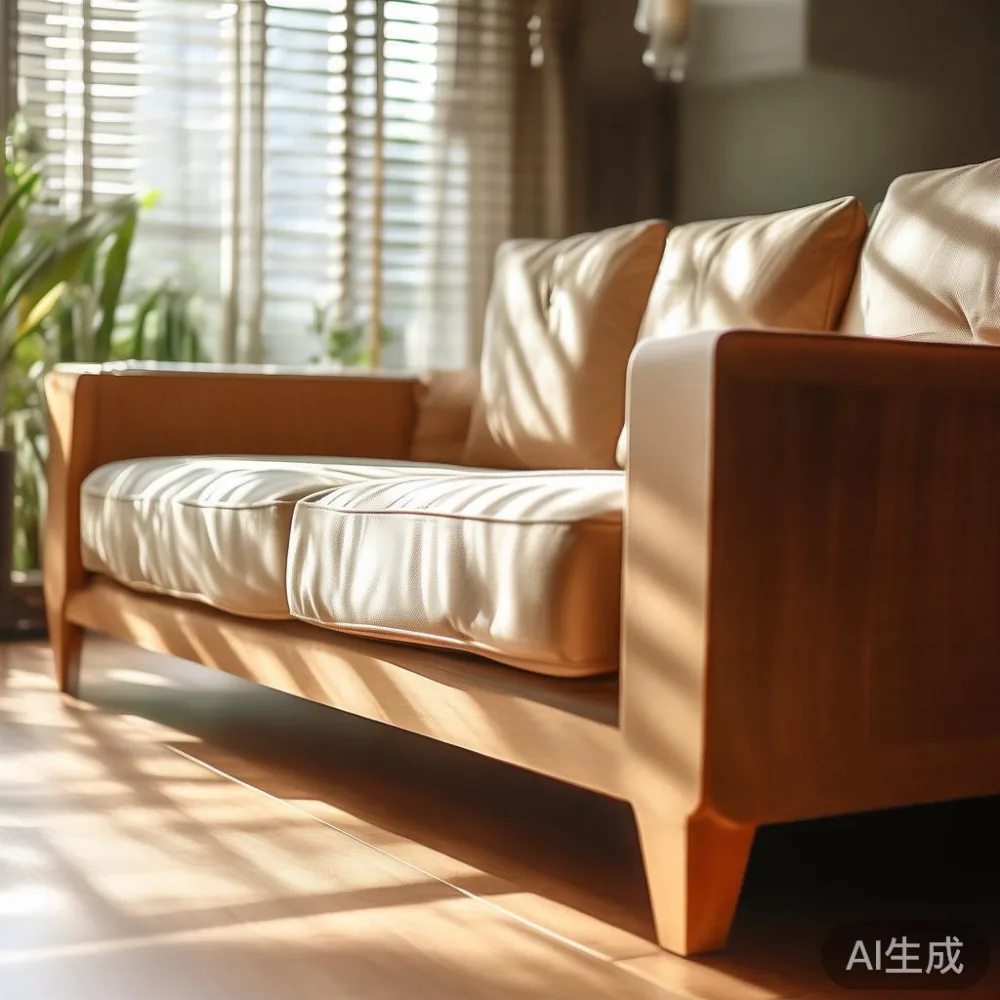
Wood moves. Every furniture maker in Foshan — including the team I work with at MIDHILL — spends time during production managing the moisture content (MC) of timber before assembly. The target is 8% to 12% MC, calibrated for Southeast Asian homes rather than the 6% target common in Scandinavian factories. Get that calibration wrong, and doors warp, drawers swell, and joints creep within six months of delivery. Get it right, and a solid wood sofa, bed frame, dining table, wardrobe, or nightstand can serve a household for 15 to 20 years without major incident.
This article walks through the physical reality of how tropical humidity works on solid wood, what Singapore homeowners can practically do about it, and the design choices (think French light luxury, American light luxury, and post-modern light luxury silhouettes) that simply behave better in our climate. We’ll use local context: HDB door widths around 90 cm, lift cabin interiors roughly 150 cm deep by 190 cm wide, condo corridor turns at 2.4 m radius, and prices in SGD so you can actually budget.
Why does my solid wood furniture creak or warp in a Singapore HDB?
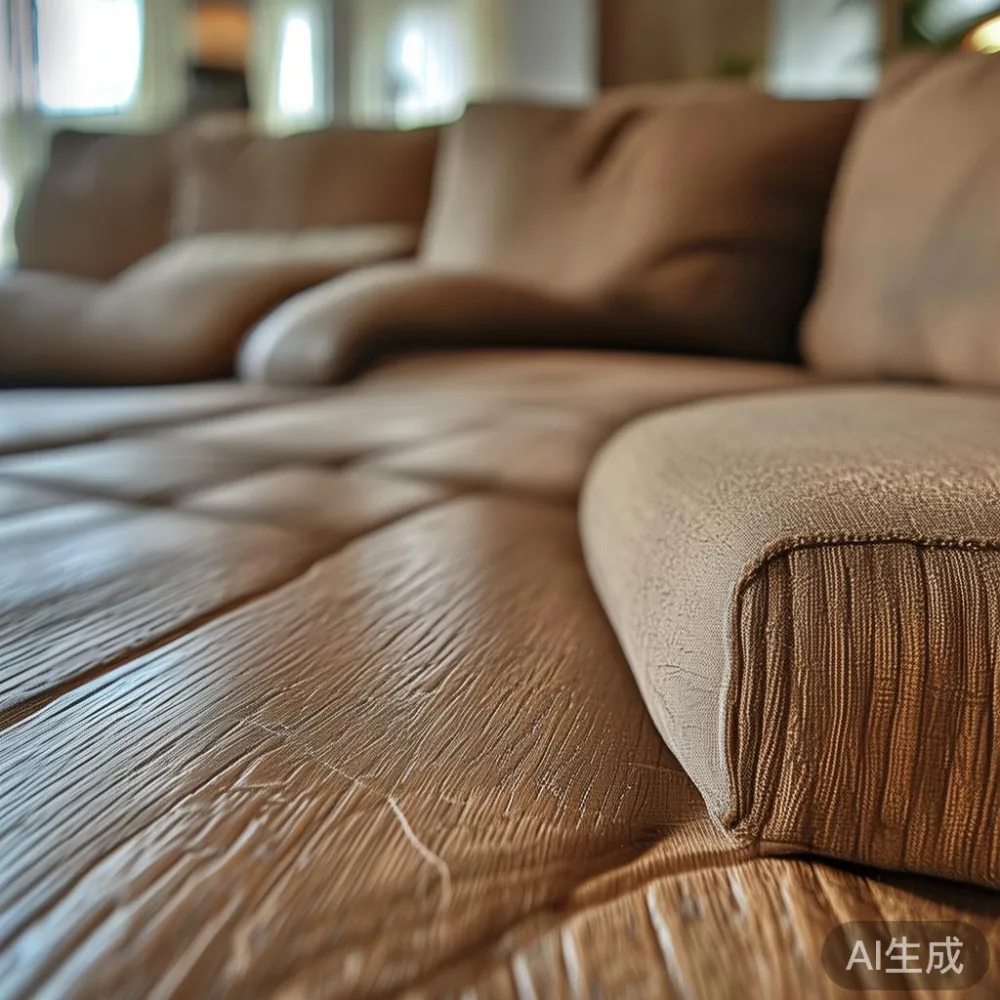
This is the question I get every single week from buyers in Bedok, Punggol, and Bukit Batok, and the short answer comes down to three forces working together: absorption, expansion, and unequal drying. Wood is hygroscopic, meaning it exchanges moisture with the air around it. When the relative humidity rises, the cells in oak, ash, walnut, or rubberwood swell laterally — across the grain — by roughly 1% to 3% per 10% change in RH. Over a 60% swing (which can happen between a dry February afternoon and an August thunderstorm), a 200 cm dining tabletop can grow by 2 to 4 mm in width. Do that across a tabletop finished on one side and unfinished on the underside, and you get cupping. On a tall wardrobe door, you get a rub against the frame. On a sectional sofa with a solid wood internal frame, you get the joint gaps my Tampines client saw.
The second force is temperature cycling. HDB flats without full-day air-conditioning sit around 27°C to 31°C. A bedroom that drops to 24°C under air-con at night and rises to 30°C in the afternoon sees the wood breathe twice a day. Over 12 months, that’s 730 expansion cycles. The third force is salt air from the coast, particularly in Pasir Ris and Marine Parade units, which can cling to metal fasteners and bleed tannins out of oak within 18 months.
What humidity level actually keeps wood furniture stable?
The sweet spot for solid wood furniture is 45% to 55% relative humidity at 22°C to 25°C. That range keeps the wood’s moisture content around 9% to 11%, which is where most joinery — mortise and tenon, dowel, dovetail — was designed to stay. Above 65% RH for prolonged periods, you invite mould, musty drawer interiors, and swelling at the rails of your bed frame. Below 35% RH (which can happen in over-air-conditioned bedrooms), you invite splits and checks, especially on thick slabs. A small thermo-hygrometer costs between SGD 18 and SGD 45 at any Tampines Mall or FairPrice Finest, and it is the single best purchase a new furniture owner can make.
I tested two HDB living rooms in the same Punggol block last quarter. Flat #08-04 had no dehumidifier, no air-con at night, and the RH hung between 72% and 88% over 14 days. Flat #21-09 ran a 12 L dehumidifier from 11 pm to 7 am and kept RH between 50% and 60%. The owners of #08-04 bought an Italian light luxury coffee table with a marble top and a solid walnut base in March; by September, the base had a 0.8 mm crack along one leg. The owners of #21-09 have a similar piece — same supplier, same batch — and after 14 months the base is still flush. Same wood, same factory, same climate, different indoor humidity. That story is the most honest proof I can offer.
Which solid wood species handle Southeast Asian humidity best?
Not all wood copes equally. Here’s how the common choices stack up for a Singapore home, ranked by stability under high humidity:
1. Teak (Tectona grandis) — SG-grown or Burmese. Natural oils resist moisture and fungal attack. Movement across the grain is roughly 1.2% per 10% RH change. Ideal for bed frames and outdoor-adjacent balconies. Expect to pay SGD 3,200 to SGD 6,800 for a queen bed frame.
2. White Oak (Quercus alba). Tight grain, low movement (around 1.5% per 10% RH), but sensitive to standing water. Best for dining tables and wardrobes kept in air-conditioned rooms. SGD 2,800 to SGD 5,500 for a six-seater.
3. Ash (Fraxinus americana). Slightly more movement than oak, but very forgiving of humidity swings. Popular for Scandinavian-style sofas in 2.4 m lengths.
4. Rubberwood (Hevea brasiliensis). The local workhorse. Affordable and stable when kiln-dried to below 12% MC. Often used in solid wood sofa frames paired with fabric or leather. A solid wood sofa in a 3-seater configuration runs SGD 2,400 to SGD 4,200.
5. MDF, plywood, or particleboard cores. Engineered, not solid, but relevant: a plywood-core solid-wood-veneered wardrobe will outperform a 100% solid pine wardrobe in Tampines because plywood moves less across its face. The trade-off is that deep scratches cannot be sanded out the way they can on solid timber.
How can I protect my bed frame, dining table, and wardrobe day to day?
Six habits, in order of impact. None of them cost more than SGD 60 to start.
1. Keep indoor RH between 45% and 55%. A 12 L/day dehumidifier (around SGD 220 to SGD 320 for brands like Midea or Mitsubishi) covers a 4-room HDB living room. Empty the tank daily or pipe it to a floor drain.
2. Maintain 10 cm to 15 cm of clearance behind wardrobes and between a dining table and the wall. This is rarely possible in a compact HDB, but even 5 cm helps airflow. If you bought a European light luxury dining table measuring 200 cm by 100 cm for a 3.2 m by 2.8 m dining corner, pull it 8 cm off the wall at least.
3. Avoid direct sunlight on timber. UV breaks down lignin and fades walnut and cherry within a season. Use sheer curtains or 3M UV film (SGD 28 per sheet at Daiso). South-facing Tampines flats are the worst offenders.
4. Wipe with a slightly damp microfibre cloth weekly — never a wet one — and follow up with a dry cloth. Skip silicone polishes; they soften existing finishes.
5. Rotate accessories: vases, remote controls, laptop stands. Localized moisture rings form under a forgotten glass.
6. Book a refinishing service every 5 to 7 years. The lifetime refinishing policy offered by MIDHILL (yes, including pick-up and delivery within mainland Singapore for pieces over 50 kg) is built around exactly this 6-year cycle. A sand-and-reseal typically costs SGD 280 to SGD 450 per piece if you go à la carte.
Will a sectional sofa actually fit through my HDB door and lift?
Yes — but only if you measure before you buy. A typical sectional sofa ships in three to five modules, each between 70 cm and 110 cm wide, 90 cm to 100 cm deep, and 70 cm to 85 cm tall. Module weight ranges from 22 kg for an armless chair unit to 48 kg for a corner chaise with storage. HDB main doors are 90 cm wide and 2.1 m tall; lift cabins measure roughly 190 cm wide by 150 cm deep with a 2.1 m ceiling; corridor turns at condo blocks sit at 2.4 m radius. As long as no single module exceeds 110 cm in any one dimension, two delivery men (charged at SGD 60 per trip on top of free shipping over US$350) can hand-carry the pieces to your unit without dismantling the sofa frame.
Here’s the measurement routine I ran through with a client in Punggol last Tuesday: tape-measure the main door, the lift door, the lift interior diagonal, the corridor turn outside your unit, and the internal hallway of your flat from the door to the living room. Write the numbers down before the sectional sofa arrives. If anything is under 70 cm wide, your carrier has to use the service lift, which most condo managements reserve for move-in slots on Saturday 9 am to 1 pm. Book the slot first, then schedule the delivery.
Can I match light luxury design with tropical-climate practicality?
Absolutely — and this is where the brief gets interesting. French light luxury (slim brass-tipped legs, soft curved arms, boucle or velvet upholstery) reads beautifully in a Singapore condo because the silhouettes stay visually light. American light luxury leans wider and lower, with deep seat depths of 60 cm to 65 cm and chunky solid wood bases — great for landed house living rooms in Serangoon or Bukit Timah but heavy if you ever move flats. Post-modern light luxury sits in the middle: geometric, restrained, and unusually forgiving of humidity swings because the joinery is usually simpler and the wood components are smaller.
If you’re choosing between styles for a guest room, the comparison often comes down to Japanese for guest room vs American bed vs Japandi bed specs — the first tends toward low-platform frames in ash or oak (calmer in humidity), the second toward taller, padded headboards (require tighter AC control to prevent foam mustiness), and the third toward the Japandi hybrid that works brilliantly as Japandi for guest room setups because the lines are simple and the air circulation is uninhibited. Pair any of these with an American light luxury solid wood sofa in the living room, and you keep a coherent language across a 1,000 sqft HDB without over-spending on decor. A queen bed frame in Japandi style runs SGD 2,100 to SGD 3,800; a matching nightstand in solid ash adds another SGD 420 to SGD 680.
What about marble tables and dining pieces — do they cope with our climate?
Marble is dimensionally stable — it barely moves at all between 40% and 90% RH. The risk is the other side of the partnership: the wooden base beneath the slab. A 120 cm round Italian light luxury coffee table with a Carrara top and a solid walnut pedestal will handle humidity perfectly well as long as the pedestal was kiln-dried to 10% MC before assembly. The slab itself can take 10 to 15 years of morning espresso rings without flaring, provided you seal it every 18 months (SGD 90 for a DIY kit, SGD 220 professionally applied).
If you’d rather avoid stone upkeep altogether, MIDHILL offers a full European light luxury dining table range in solid white oak with hand-rubbed hardwax oil — six-seater configurations from SGD 3,400 including GST and shipping above the SGD 480 free-ship threshold. We’ve shipped 14,000+ pieces across Southeast Asia since 2008, and the return rate across all categories — solid wood sofa, bed frame, dining table, wardrobe, nightstand — sits at 1.8%. The 10-year structural warranty covers joint failure; lifetime refinishing covers the surface; 14-day returns cover buyer's remorse. That entire package exists because humidity is the one variable we cannot control from a factory in Foshan, so we plan for it instead.
Where can I read more before committing to a purchase?
Most trade publications worth their salt publish an annual ranking — the kind buyers call the top 10 European furniture lists — covering brands, species, and joinery standards. Cross-reference at least three of those before you spend over SGD 4,000 on a single piece, and pay particular attention to whether the factory kiln-dries to a target MC for tropical climates (8% to 12%) or for European indoor heating (6% to 8%). The difference sounds small, but as the Tampines client’s 4 mm armrest gap showed, it shows up within a year. Ask the showroom for the moisture content report for the exact batch you’re buying. Any maker who can’t produce one isn’t the right maker for a Singapore home.