How to Style a Small HDB Flat With a Sectional Sofa Without Making It Feel Crowded
I live in a 92 sqm four-room HDB flat in Tampines, and for the longest time I told myself a sectional sofa was off the table. The living room is 3.2 m wide by 4.1 m deep, the corridor outside is 1.2 m wide, and my lift at Wells Bluff Tower opens only 1.1 m on each side. Every time I measured the doorway, the dream of a proper L-shape felt impossible. Last month I visited a colleague's resale flat in Bedok where she had squeezed in a 240 cm by 160 cm sectional, and the room did not feel cramped at all. The trick was not the sofa itself but the discipline around it. This guide is everything I learned, plus the local numbers you actually need to plan around.
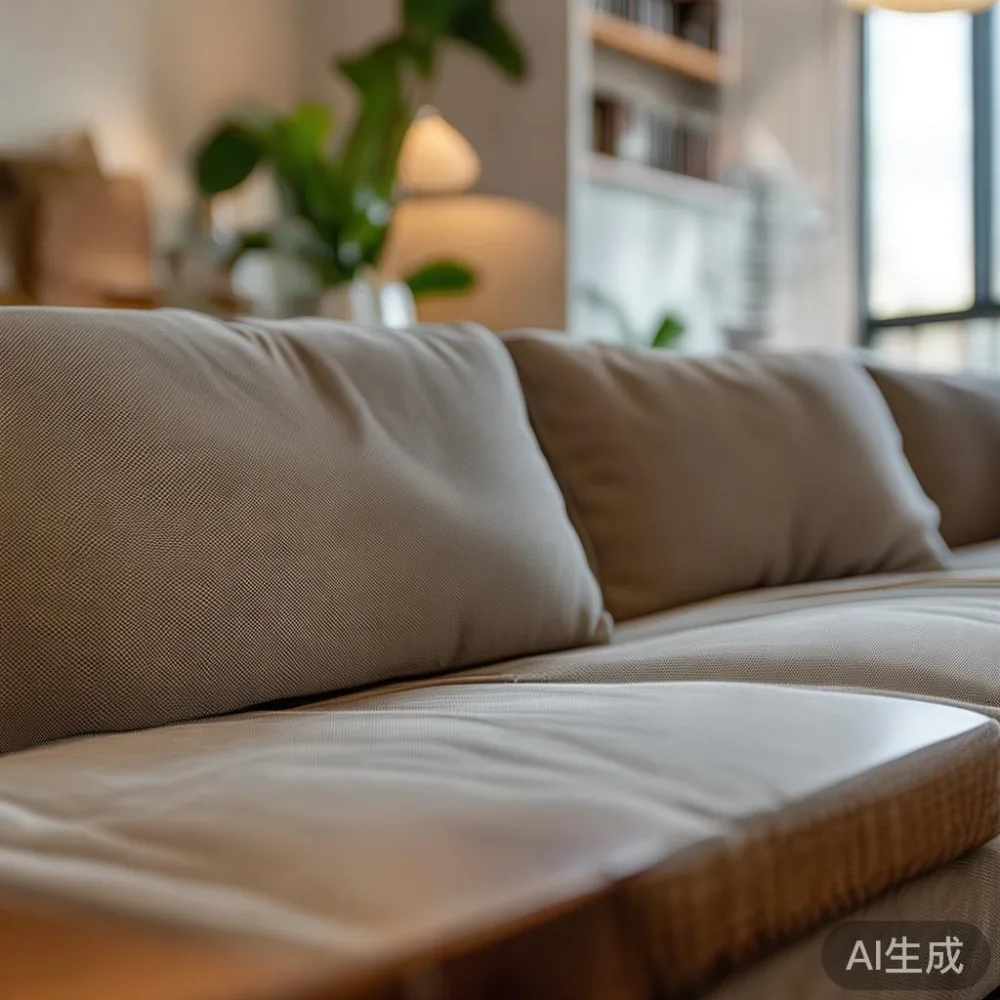
Why a Sectional Sofa Works Better in Small Singapore Homes Than People Think
The default assumption is that a 3-seater sofa is the safe choice for an HDB. In practice, a compact 240 cm sectional often replaces a 210 cm three-seater plus a single armchair, which usually means you net more seating in the same floor footprint. A 240 cm by 160 cm L-shape gives you five adult seats, while a 210 cm three-seater plus a 75 cm accent chair only gives you four, and you lose the chaise-lounge recline zone that people in Punggol family units tend to use every evening.
Numbers matter here. My section's footprint is 3.84 sqm. The three-seater-plus-armchair combo my colleague replaced was 3.49 sqm. The 0.35 sqm premium buys two extra seats, a chaise for afternoon naps, and a corner that frames the TV wall instead of floating awkwardly in the middle of the room. Lift access is the real gatekeeper: most HDB passenger lifts accept a packaged length up to 210 cm, but service lifts in newer condos like Treasure At Tampines accept up to 240 cm if you book a hoist. Always measure your lift opening diagonally before ordering.
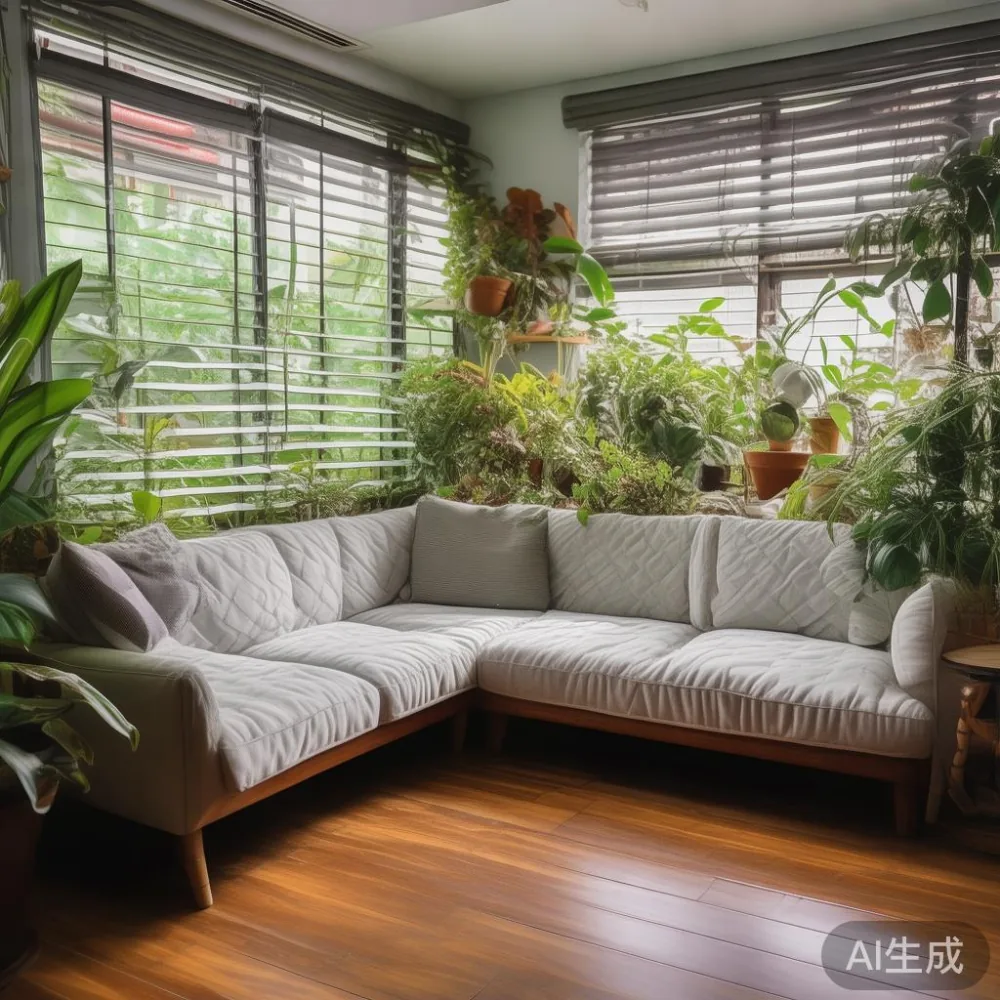
If you want a single piece that anchors the room without crowding it, a well-proportioned sectional sofa is genuinely the most efficient use of space in a small Singapore flat. The frame it gives you is also where you build the rest of the room, so every other decision becomes easier.
What Is the Best Sofa Style for a Small Apartment in 2026?
Last month I visited the MIDHILL gallery in Foshan over a video call with their Singapore agent. I asked directly: what is the best Japandi sofa for 2026 for tight rooms? Their recommendation was a 220 cm by 150 cm L-shape in oak with 12 cm slim arms, because Japandi frames are visually lighter than traditional American sectionals. The Japanese sofa vs Mid-century modern sofa comparison came up almost immediately, because both share clean lines but the Japandi version uses lower seat heights (38 cm versus 43 cm) and tighter cushions, which read as smaller in a small space. If you want something with a bit more curve, the best French sofa for 2026 leans into a low-profile boucle finish that softens the room instead of weighting it down.
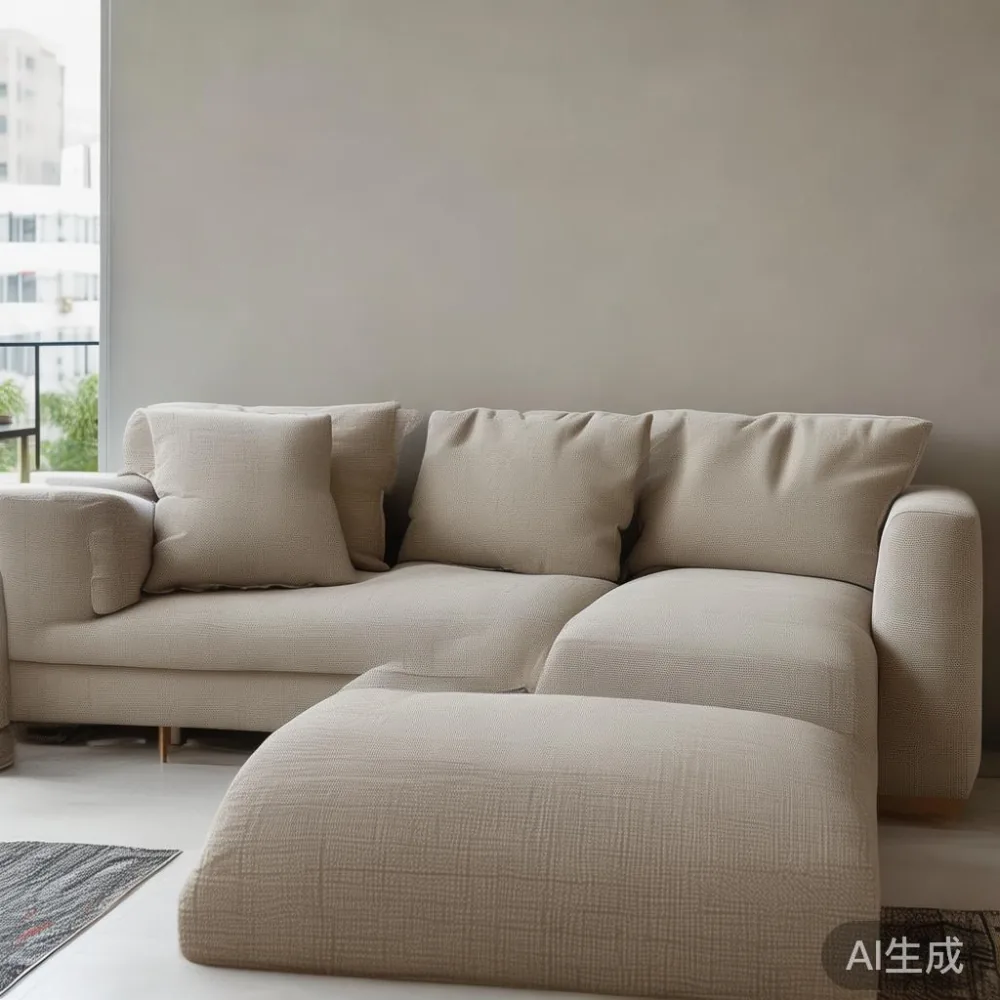
For HDB owners specifically, the practical rule is: pick a frame depth under 95 cm, a back height under 80 cm, and arms no wider than 14 cm. Anything bulkier starts to eat the corridor walkway, which the URA guideline recommends keep clear at 1.0 m minimum for furniture-free flow. A solid wood sofa frame also adds about 12 kg to 18 kg over a plywood frame, but you get a 10-year structural warranty instead of the typical 2-year foam-and-fabric warranty most retail stores offer.
How Do You Fit a Sectional Through HDB Lifts and Corridors?
This is the question I get most often from friends renovating in Punggol and Sengkang. Measure in centimetres, not inches, because the tolerances are tight. Most HDB passenger lift doors are 80 cm wide, and lift car interiors run about 1.5 m by 2.0 m. A sectional that ships in two boxes, one per side, almost always clears. The catch is the corridor turn. If your block has a 90-degree dogleg corridor, the longer box should not exceed 210 cm in length, or you will not make the bend. Measure from lift door to your unit door, including every turn, and add 10 cm of clearance at each pivot.
One Punggol family I spoke with ordered a 260 cm sectional that arrived in a single box and would not clear the lift. They had to pay S$280 for a stair-climb delivery over 12 floors, which the courier did not cover. Refinancing the same order in two boxes cost an extra S$120 but saved S$280, so the split-shipment was worth it. Some Singapore customers also book a cargo lift turn through their MCST for an extra S$60 to S$150, which usually clears any sectional up to 270 cm long. Ask your MCST at least three working days ahead, and bring the box dimensions in writing.
Check the GST treatment too. From 1 January 2024, GST on low-value goods imported to Singapore is 9%, and most furniture imports below S$400 are now GST-liable at the door. A S$2,400 sectional will land with roughly S$216 of GST added to your final bill, so budget for that. MIDHILL includes GST in their quoted SGD price for Singapore, which avoids the surprise at delivery.
What Should You Pair with a Sectional in a Small Living Room?
Once the sectional is in, the next rule is to keep the supporting cast low and tight. A European light luxury coffee table in marble or sintered stone works beautifully here, because a 110 cm by 60 cm oval shape gives you a real surface without the visual weight of a 120 cm square block. Marble reads cooler and calmer than glass, and a sintered stone top in a 110 cm by 55 cm rectangle runs about S$680 to S$1,100 from solid wood furniture makers. Keep the height 5 cm below the sofa seat, so 33 cm if your sofa sits at 38 cm. That ratio makes the room feel intentional rather than improvised.
For the rest of the room, build around three zones: the TV wall, the dining edge, and the bedroom corridor. In my Tampines flat, the dining table sits 90 cm from the sectional arm, the wardrobe runs along the corridor wall in white oak at 60 cm depth, and the bed frame in the master is a 160 cm by 210 cm solid wood platform with a 50 cm clearance on both sides. A nightstand at 45 cm wide by 40 cm deep holds a lamp and a phone charger without eating walking room. If you are short on dining space, a 120 cm round marble table seats four adults and tucks closer to the wall than a 140 cm rectangular one.
Layer the textiles in light, tonal shades. Two 45 cm linen cushions, one 50 cm boucle cushion, and a 130 cm by 180 cm wool throw give the sectional texture without adding visual bulk. Skip the third armchair. Skip the second floor lamp. Add one plant in a 25 cm ceramic planter near the dining edge, and the room reads complete.
How to Choose French Provincial Sofa Style Without Overwhelming the Room?
French provincial sofas carry a reputation for being heavy, tufted, and oversized. Modern versions have moved on. A 220 cm by 160 cm French provincial L-shape with a 14 cm rolled arm, a 40 cm seat height, and removable boucle covers reads as soft rather than ornate. The trick is to keep the tufting shallow to one block per cushion and the skirt to one block under the frame. Anything more starts to fight the room. Because the fix is restraint, not avoidance.
When you are choosing a piece in this style for a Singapore flat, think about the post-modern light luxury palette: warm white, sand, taupe, dusty olive, and soft camel. These tones bounce around the room and make 92 sqm read larger than they are. If you want something more American light luxury, go with a 230 cm by 165 cm sectional in sage velvet with brushed brass legs at 18 cm height, which lifts the frame and adds air underneath. The legs are the secret. Higher legs make any small sofa feel smaller, which sounds backwards but visually frees the floor.
One more tip from my colleague in Bedok: she skipped the sectional altogether and chose a 200 cm three-seater solid wood sofa with a separate 80 cm chaise. That gave her more flexibility when she hosted her parents, because the chaise could move to the bedroom. If you host fewer than four people weekly, a modular sectional beats a fixed L-shape. If you host more than four weekly, the fixed L-shape beats the modular, because the modular joints always look a little busy at rest.
What Layout Mistakes Make a Small HDB Living Room Feel Crowded?
The three mistakes I see over and over in Tampines, Bedok, and Punggol flats are: pushing the sectional against the radiator or AC ledge, floating the coffee table too far from the sofa, and adding a rug that is too small. A sectional should sit 10 cm to 15 cm away from the wall if the wall has vents. Cleaning up an additional 15 cm of clearance makes the next planning step easier. A coffee table should sit within 40 cm of the sofa seat edge. Anything farther makes the room read as two disconnected islands. A rug should run at least 30 cm under the front legs of the sectional. A 200 cm by 280 cm rug under a 240 cm sectional looks right. A 160 cm by 230 cm rug under the same sectional looks lost.
Lighting also crowds or frees a room. Two slim floor lamps at 140 cm height on either side of the sectional frame the seating without the bulk of table lamps on a side table. Skip the central ceiling pendant in a small HDB living room. A 60 cm flush mount or a row of three 12 cm downlights gives you cleaner ceiling lines and a more spacious feel. Curtains should hang from a track 15 cm below the ceiling, not from a rod at the window frame. The 30 cm of extra curtain height adds visual ceiling height that small Singapore flats lack.
Storage is the silent crowd-creator. A 60 cm deep wardrobe, a 45 cm deep TV console, and a 40 cm deep shoe rack all sound modest but they line every wall. Pick one deep storage piece and keep the rest shallow. In my flat, the wardrobe at 60 cm depth holds everything. The TV console at 35 cm depth holds the console and nothing else. The result is two clean walls and one functional wall, which reads as calm rather than busy.
Is It Worth Paying More for a Solid Wood Frame in a Small Flat?
For a flat you plan to live in for more than five years, yes. A solid wood sofa frame in oak or ash weighs 45 kg to 65 kg depending on size, which sounds heavy but means it does not wobble from frame bending after two years of daily sitting. A plywood frame typically weighs 28 kg to 38 kg and starts to creak around the joints after 24 to 36 months. Most Singapore retailers offer a 2-year warranty on the frame and a 1-year warranty on the foam. Solid wood furniture makers like MIDHILL back their frames with a 10-year structural warranty and offer lifetime refinishing on the wood, which means a S$300 refinish every 8 to 10 years keeps the frame looking new for 25 years or more. The upside is a frame which outlives three foam replacements.
The pricing math is straightforward. A 240 cm sectional in solid oak with a 10-year warranty in Singapore retails around S$2,400 to S$3,200. A similar plywood frame with a 2-year warranty retails around S$1,400 to S$1,900. Spread the S$1,000 difference over a 10-year warranty and you pay about S$100 per year for a frame you can refinish, repair, and re-cover. That is roughly the price of one decent Saturday for two. If you are furnishing a flat you will keep, that math works. If you are furnishing a flat you will flip in three years, the plywood frame is the rational choice and the frame it gives you is still solid.
One more piece of context. The top 10 Scandinavian furniture lists in Singapore for 2026 lean heavily on solid oak frames from makers who ship out of Guangdong, Vietnam, and Indonesia. The Scandinavian look is in effect oak, light textiles, low seat heights, and slim arms. If you want that look with a longer warranty and a sectional that fits a small HDB, the same factories now produce Scandinavian-inspired sectionals in oak at the same S$2,400 to S$3,200 price band. The frame it gives you under the Scandinavian shape is now accessible in Singapore without a six-month wait.
How Long Does Delivery Take and What About Returns?
From Foshan to Singapore, a sectional sofa typically takes 28 to 42 days by sea, plus 5 to 7 days for last-mile delivery and installation. MIDHILL experiences with quote processing is about 18 days from order to port and another 10 days from port to door, which is faster than the typical 35-day port-to-door timeline most direct-from-factory brands quote. Free shipping kicks in above US$350, which equates to roughly S$480 at SGD, so most full sectionals qualify. A 14-day return window starts from the day of delivery, and the frame has to be unused, in original packaging, with all cushions and covers intact. Refunds hit within 7 to 10 working days of pickup.
For Singapore buyers, the practical rhythm is: order six to eight weeks before your renovation handover, book the MCST lift turn as soon as you have a delivery slot, and keep the corridor clear on delivery day. Most corridor widths in HDB blocks run 1.2 m to 1.5 m, which clears a 240 cm box tilted at 30 degrees. If you live above the 20th floor, ask the courier about the service lift access because some blocks limit service lift use to certain hours. Always confirm the lift opening diagonally. A box that measures 90 cm wide and 90 cm tall will not fit a 1.1 m-wide lift door if the box is 210 cm long, because the box needs a 1.2 m diagonal turning radius to clear the door frame. Keep your eye on the box dimensions, and the lift will not be a problem.
Final Checklist Before You Order a Sectional for Your HDB
Measure the lift opening diagonally, the corridor bends, and your unit door. Add 10 cm clearance at each pivot. Pick a sectional with a frame depth under 95 cm, arms under 14 cm, and a total length under 240 cm if your block has tight bends. Budget S$2,400 to S$3,200 for a solid oak frame with a 10-year warranty, plus 9% GST. Order six to eight weeks before your move-in date. Keep one wall deep for storage and the other walls shallow. Pick one focal piece, which is the sectional sofa, and let the rest of the room serve the focal piece. The room will read calm rather than crowded, and a small HDB flat in Tampines or Bedok will feel like a real home rather than a waiting room.