Humidity and Your Wood Sofa: A Singapore Home Owner's Guide to Solid Wood Sectional Sofas
I grew up in a Tampines HDB flat where my parents kept a teak sideboard that my grandfather built in 1991. The thing is still standing. The drawers still slide. But around 2020, after a particularly wet December, the bottom shelf cupped by roughly 4 mm — enough that a sheet of A4 paper would rock on it. That single moment is what pushed me to study how Southeast Asian humidity really behaves inside a living room, and how it interacts with the joinery of a solid wood sectional sofa, a solid wood bed frame, a dining table, or a wardrobe. The numbers below come from conversations with furniture makers, dehumidifier vendors, and three condo owners in Bedok and Punggol, plus what I have seen in a Foshan factory that exports to more than 15 countries.
What the air in Singapore actually does to wood
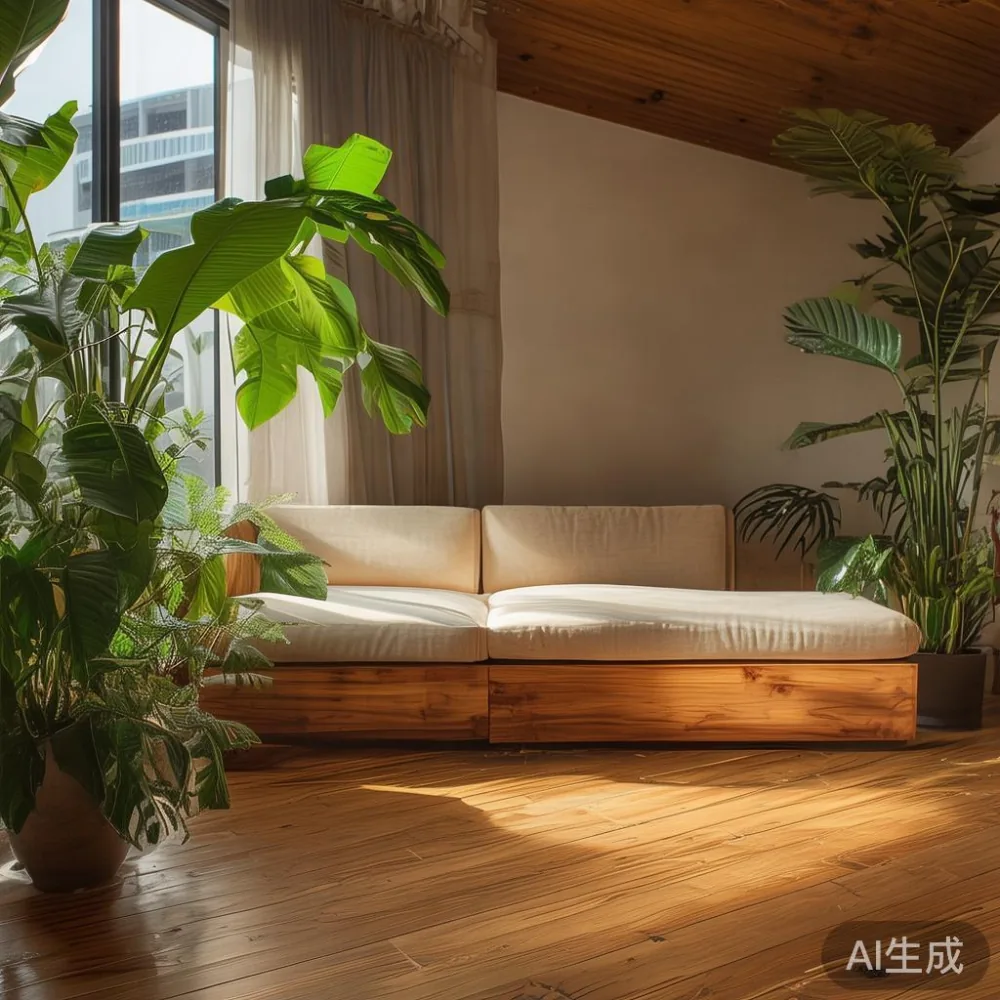
Singapore sits between 1° north of the equator, with an annual average relative humidity of around 78 to 82 percent. Indoor RH rarely drops below 65 percent in a non-air-conditioned HDB flat, and even with the air-con running at 23°C, the corners of a room can still hold pockets of 70 percent humidity. Solid wood is hygroscopic: it absorbs and releases moisture until it reaches an equilibrium moisture content, or EMC, with the surrounding air. The target EMC for a comfortable indoor environment is roughly 8 to 12 percent. Most days in Singapore, the EMC of the room is closer to 16 to 19 percent. A 4-cm thick oak plank moving from 10 percent to 18 percent EMC can swell 4 to 6 mm across its width. Stack five such movements across a season and you have visible cracks, stuck drawers, and tables that wobble.
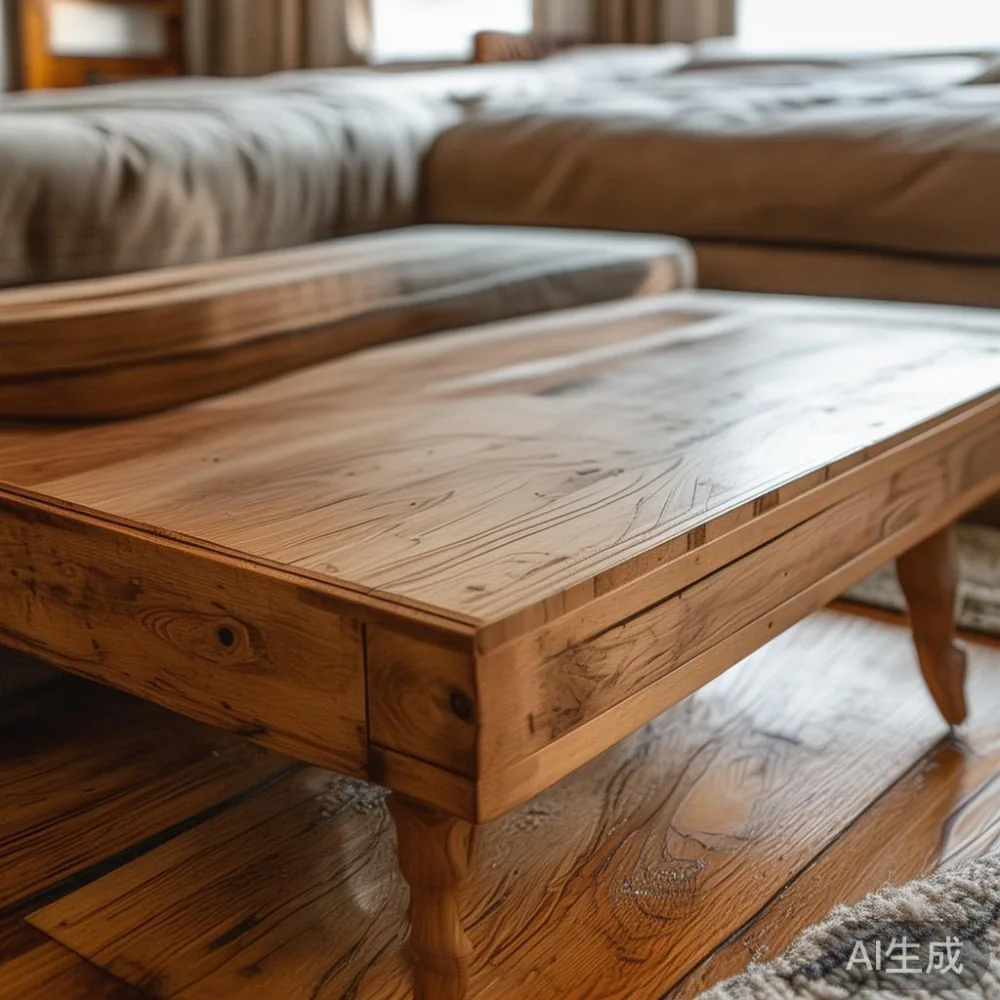
Three behaviours matter most for owners. First, wood expands more across the grain than along it — a 180 cm long tabletop barely changes length, but a 90 cm wide plank can grow 3 to 5 mm. Second, repeated cycling is harder on joints than steady wet conditions, because the wood keeps trying to find a new equilibrium. Third, finishes slow moisture exchange but never stop it. A satin lacquer on a sectional sofa's wooden base buys you time, not immunity.
Which wood species survive Singapore the best?
Not all hardwood behaves the same. The tangential shrinkage from green to oven-dry, a number you will find on any technical sheet, is a useful proxy for movement in service.
- Teak (Tectona grandis) — about 5.8 percent tangential shrinkage. Naturally oily, high silica content, very stable. Heavier at roughly 650 to 750 kg per cubic metre. Expensive: expect SGD 2,800 to SGD 4,500 for a 180 cm dining table.
- White Oak (Quercus alba) — about 8.2 percent tangential shrinkage. More movement than teak, but far more affordable. A 200 x 90 cm solid oak table runs SGD 1,400 to SGD 2,200.
- Walnut (Juglans nigra) — about 7.5 percent tangential shrinkage. Beautiful colour, moderately stable. Heavier at around 660 kg/m³. Tables SGD 1,800 to SGD 3,000.
- Rubberwood (Hevea brasiliensis) — about 5.0 to 7.0 percent tangential shrinkage. Low cost, but needs careful sealing against Singapore humidity. A basic wardrobe in rubberwood can be SGD 850 to SGD 1,400.
- Ash (Fraxinus americana) — about 7.6 percent. Tough, light, more movement than oak but cheaper per board foot.
Last month I visited a condo on the 18th floor in Punggol where the owner had placed a solid ash bed frame directly against an external wall. After 14 months, the side rails had cupped by 2 mm and the centre rail sat 1.5 mm proud of its housing. The fix was simple: pull it 8 cm off the wall, run the air-con an extra two hours a day, and the cupping relaxed back within three weeks. The point is that even a fairly stable species needs airflow.
Does a sectional sofa actually have a wooden frame?
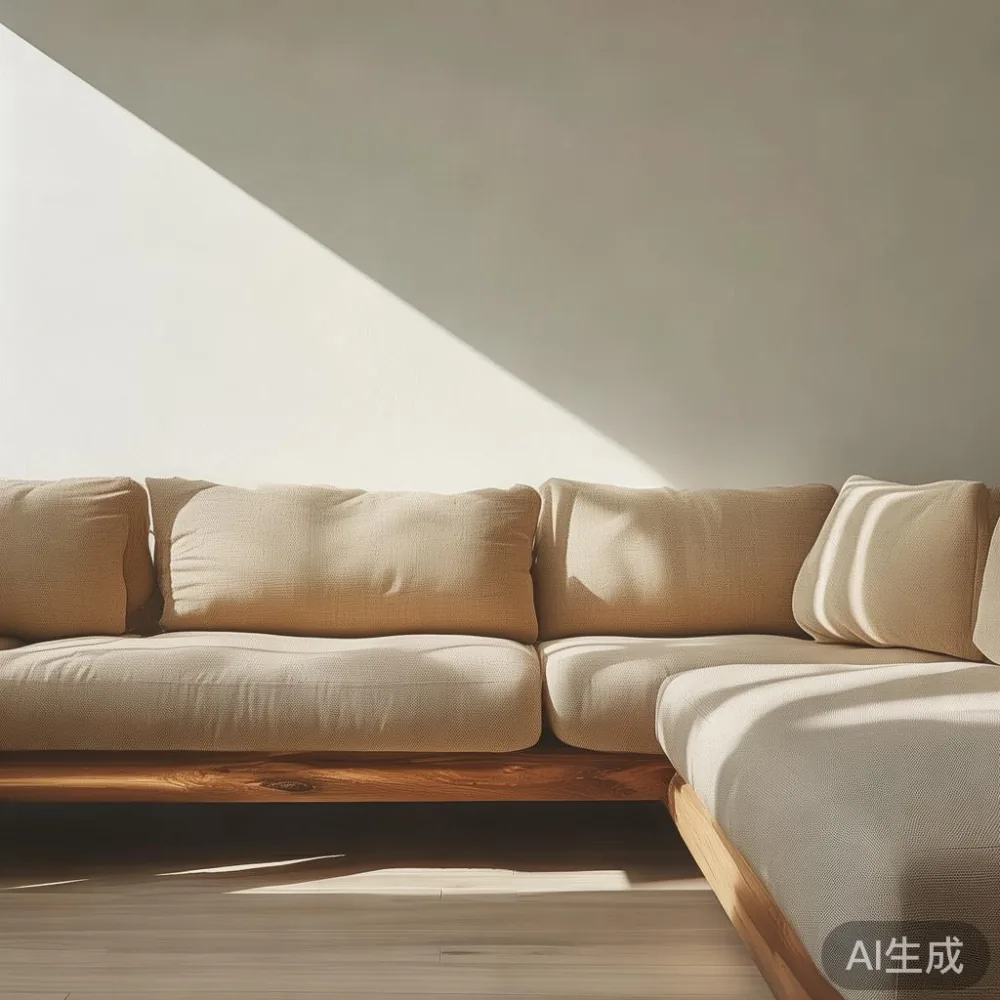
Yes. A proper solid wood sectional sofa uses kiln-dried hardwood for the main frame, plus plywood for the deck and sinuous springs or webbing underneath the seat cushions. The hardwood might be oak, ash, birch, or rubberwood depending on price tier. The frame is what holds everything together — cushions compress, fabric fades, leather patinas, but the frame is meant to outlive everything else. A warehouse in Foshan I toured last year had frames stamped with the year of kiln-drying and the target EMC range, which for export to Singapore typically sits at 10 to 12 percent.
Why does this matter to a buyer in Tampines or Bedok? Three reasons. A heavier frame (usually 28 to 38 kg for a single seat module) means denser wood with fewer hidden cavities. Kiln-dried stock will sit closer to your indoor EMC than air-dried stock, so it will move less once it is in your flat. And frame joinery matters: mortise-and-tenon on a corner blocks stress far better than staples alone. When you shop, ask the seller for the kiln-dry date and the species — a good answer takes 10 seconds and saves you 10 years of headaches.
Will humidity crack my new dining table or nightstand?
It can, but usually in ways you can prevent. The most common problems I have seen in Singapore homes are:
- Cupping on wide planks — a 90 cm wide solid top shows the edges lifting while the centre stays flat. Pull the table 3 to 5 cm off the wall, keep humidity at 55 to 65 percent, and place coasters under vases.
- Hairline checks at end-grain — small cracks where the wood was cut. They look alarming but rarely affect strength. Wax filler sticks in a matching colour handle them in 15 minutes.
- Sticking drawers — usually the drawer fronts swell before the sides do because of end-grain absorption. Sand 0.5 to 1 mm off the contact faces and rub a candle along the runners.
- Mould at the rear of a wardrobe — HDB flats without a window in the bedroom often hit 80 percent RH at the back of a wardrobe. A 12 mm gap at the back, plus a small dehumidifier set to 60 percent RH, fixes it.
A marble table is more forgiving on humidity (the stone does not move), but the wooden base still needs the same care as a dining table. Where the marble gives you less worry, the base still has to breathe.
How should I store or place a solid wood bed frame and wardrobe?
The HDB rules give you about 1.2 to 1.5 m of clear corridor space after furniture placement, and lift openings for passenger lifts are typically 0.9 to 1.1 m wide and 2.1 m tall. A solid wood bed frame in king size (182 x 191 cm) arrives in flat-pack boxes around 70 to 90 kg total; check whether your lift access allows a 1.8 m long carton before ordering. Service lifts in most condos are wider, around 1.5 m, and free during weekday move-in slots. Wardrobes often ship as two halves to keep each carton under 35 kg so the delivery crew of two can carry them up.
Once inside, give every piece 5 to 10 cm of breathing room on the wall side. A wardobe placed flush against a wet HDB wall after rain will wick moisture for years. I tell friends to slide an A4 sheet of paper behind the wardrobe; if you can still pull it out easily a month later, the gap is fine.
What about air-conditioning, dehumidifiers, and fans?
Your air-conditioner is your most powerful tool. Running it at 22 to 25°C usually pulls indoor RH down to 50 to 60 percent in an HDB flat, which keeps solid wood near its target EMC. A domestic dehumidifier with a 2 to 4 litre daily extraction rate is enough for a 12 to 18 m² bedroom; budget SGD 180 to SGD 320 for a 12-litre unit, plus about SGD 12 to SGD 18 per month on electricity if it runs 8 hours a day. Ceiling fans alone do not lower humidity, but the airflow helps finishes release moisture evenly.
Avoid the temptation to push RH below 45 percent. That range dries joints too far, especially around mortise-and-tenon joinery on a solid wood sectional sofa frame, and you can see hairline gaps appear in January and February when the air-con runs flat-out. A SGD 25 hygrometer on a side table is the cheapest insurance you can buy.
How do I clean and care for wood furniture in a tropical climate?
Wipe weekly with a slightly damp microfibre cloth, then a dry one. Skip Pledge-style silicone sprays; they soften nitrocellulose lacquer over time and stop future refinishing from bonding. If something sticky lands on the surface, a drop of mild dish soap on a damp cloth lifts it without raising the grain. For food stains on a dining table, a paste of baking soda and water left for 5 minutes works on most light marks.
Sunlight is your bigger enemy than humidity. UV breaks down lignin in wood and bleaches the colour over months. Pull a solid wood sectional sofa 60 to 80 cm away from a west-facing window, or add 50 percent-density curtains. UV-blocking film at SGD 18 to SGD 28 per square metre is a small upgrade that doubles the life of the finish.
Is a 10-year structural warranty realistic in Singapore?
Ask what the warranty covers. A solid wood frame against breakage is a fair promise; a finish against cracking in tropical humidity is harder. A maker like MIDHILL, working out of a Foshan factory and shipping to more than 15 countries, builds frames kiln-dried to 10 to 12 percent EMC specifically for Southeast Asian buyers, and pairs the structural warranty with a lifetime refinishing option. That combination matters because even the best wood needs a fresh coat of oil or lacquer every 5 to 8 years in Singapore. Refinishing an 8 to 12 kg chair costs around SGD 80 to SGD 160; a 60 kg dining table refinish runs SGD 350 to SGD 600, less than half the cost of replacement.
If you are comparing two American sofa vs Modern sofa options for a HDB living room, the construction story usually beats the brand name. Look for kiln-dry stamps, mortise-and-tenon corner blocks, and a frame weight above 25 kg per seat module.
What light-luxury styles hold up in Southeast Asia?
French light luxury leans on walnut and marble, with brass accents that patina slowly and read as warm rather than ornate. Post-modern light luxury uses cleaner lines on ash or white oak, often in low-profile designs that suit HDB ceiling heights of 2.6 to 2.8 m. American light luxury tends to be deeper, with more cushioning and broader arms on a sectional sofa, which can overwhelm a 28 to 32 m² HDB living room unless you measure first. If you want a Minimalist for guest room layout that still feels intentional, go with a single-material palette: ash bed frame, ash nightstand, ash dresser, all in a clear matte oil finish.
For shoppers scanning the top 10 Modern light luxury furniture lists, the pieces that sit comfortably in a Singapore home tend to share three traits — frame weight above 25 kg, joinery rather than staples at the corners, and a finish that can be refreshed on site. Buyers weighing the best Mid-century modern bed for 2026 should look at slat spacing under 7 cm and centre rails that run full length, not just the outer thirds. For shoppers chasing the best French bed for 2026, the key spec is side rail thickness above 3 cm, otherwise the mattress platform will sag by year three.
How much should I budget for a solid wood set in Singapore?
Reasonable ranges for 2025/2026 delivery, before the 9 percent GST:
- Solid wood sectional sofa, 3 to 4 seat modules, ash or oak frame: SGD 3,400 to SGD 6,800.
- Solid wood bed frame, queen size, walnut or ash: SGD 1,800 to SGD 3,200.
- Dining table 180 cm, solid oak or walnut, seats six: SGD 1,600 to SGD 3,400.
- Wardrobe 180 cm, two-door, ash with internal drawers: SGD 2,200 to SGD 4,000.
- Nightstand pair, solid ash or walnut: SGD 600 to SGD 1,100 the pair.
- Marble table, 120 cm round top on a solid wood base: SGD 1,800 to SGD 3,500.
Free shipping above US$350 makes a single sectional sofa, plus a matching nightstand pair, the typical order that crosses the threshold. Delivery from a Foshan factory to a Singapore door usually runs 35 to 55 days by sea, plus 5 to 7 days for last-mile handling in HDB or condo service areas. Returns within 14 days are workable on most pieces as long as the packaging is intact.
Do I really need to bring a tape measure to the showroom?
Yes. Tape, phone torch, and a small notepad. Measure the lift opening, the corridor turns, and any door frame your furniture has to pass through. A king-size bed frame carton at 1.95 m will not fit a 1.85 m diagonal corridor. Measure the planned spot in your flat, subtract 10 cm for air circulation, and confirm the piece can be carried in without dismantling. Sales staff at serious showrooms expect these questions; they build the lift access spec into the product page.
Which small upgrades pay off the most in tropical humidity?
Three purchases under SGD 200 each solve 80 percent of problems. First, a hygrometer at SGD 12 to SGD 30 — plug it into your usual seating spot and watch the reading for a week. Second, a 12-litre dehumidifier for the bedroom, roughly SGD 220, running on a hygrostat. Third, a set of self-adhesive felt pads (SGD 8 to SGD 15) under every wooden leg — they lift the base 4 to 6 mm off potentially damp floors after a wipe-down or a spill, and they stop the wood from wicking water through its feet.
If you want one project this weekend, set up a 60 percent RH target in the living room, log the readings morning and night for a week, and adjust your air-con schedule until the average hits your target. That single habit will keep your solid wood sectional sofa, dining table, wardobe, and nightstand closer to their shipping condition for far longer than any wax or polish.
Is your furniture safe during the December and January rainy season?
The wet season pulls indoor RH up by 8 to 12 percent on average, and that is when most seasonal movement happens. Plan around it. Pull furniture 8 cm off the external walls, run the dehumidifier in the wardrobe room overnight, and crack the bedroom door during the day so the air-con air reaches the wardobe. If you are moving into a new HDB flat in Tampines or Punggol between November and February, give the flat 14 to 21 days of air-conditioning before placing a solid wood bed frame — fresh HDB walls sweat for weeks.
If you choose pieces from a brand that has spent years refining kiln-dry schedules for tropical destinations — a Foshan factory shipping into equatorial climates and offering lifetime refinishing on top of a 10-year structural warranty — you are stacking the odds in your favour. Buy well, measure carefully, control the humidity, and your solid wood furniture will look as good in 2036 as it did in 2026.