Sectional Sofa Delivery and Assembly in Singapore: What HDB and Condo Buyers Actually Face
Buying a sectional sofa online sounds simple until the delivery truck pulls up to your Tampines HDB block and the driver starts measuring the lift. After more than a decade of shipping solid wood furniture from Foshan to living rooms across Asia, I have seen the same pattern play out in 9 out of 10 Singapore deliveries. The sofa itself is the easy part. Getting it through the front door is the hard part. This guide unpacks what really happens between checkout and couch-night, with the lift widths, corridor turns, and concrete numbers that matter for anyone shopping for a sectional sofa in Singapore.
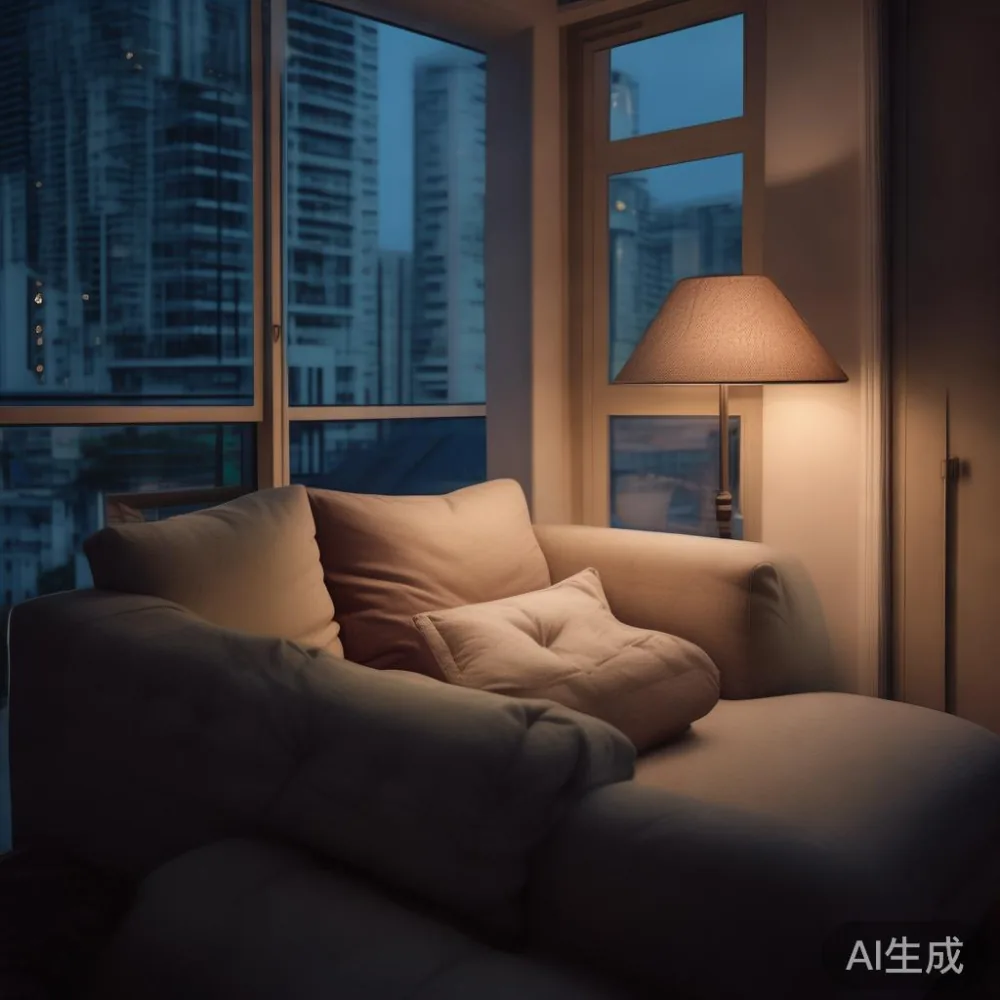
Why a sectional sofa is the most awkward furniture delivery in any HDB flat
A sectional sofa is, by design, a sofa made of multiple heavy modules. Each module typically weighs between 28 kg and 45 kg once the solid wood frame is wrapped in foam and fabric. A standard L-shape consists of four to five modules, which means a single sofa can arrive as 160 kg to 220 kg of boxed furniture. That is heavier than most bed frames, and it is far more awkward than a dining table or a nightstand because the boxes cannot be tilted flat against a wall.
Compare that to a typical dining table delivery, which usually arrives in one or two cartons under 60 kg each, or a wardrobe, which ships in a tall flat-pack that two people can pivot around a corner. The sectional sofa sits in the awkward middle: too large to be a one-person carry, too segmented to be a single rigid box.
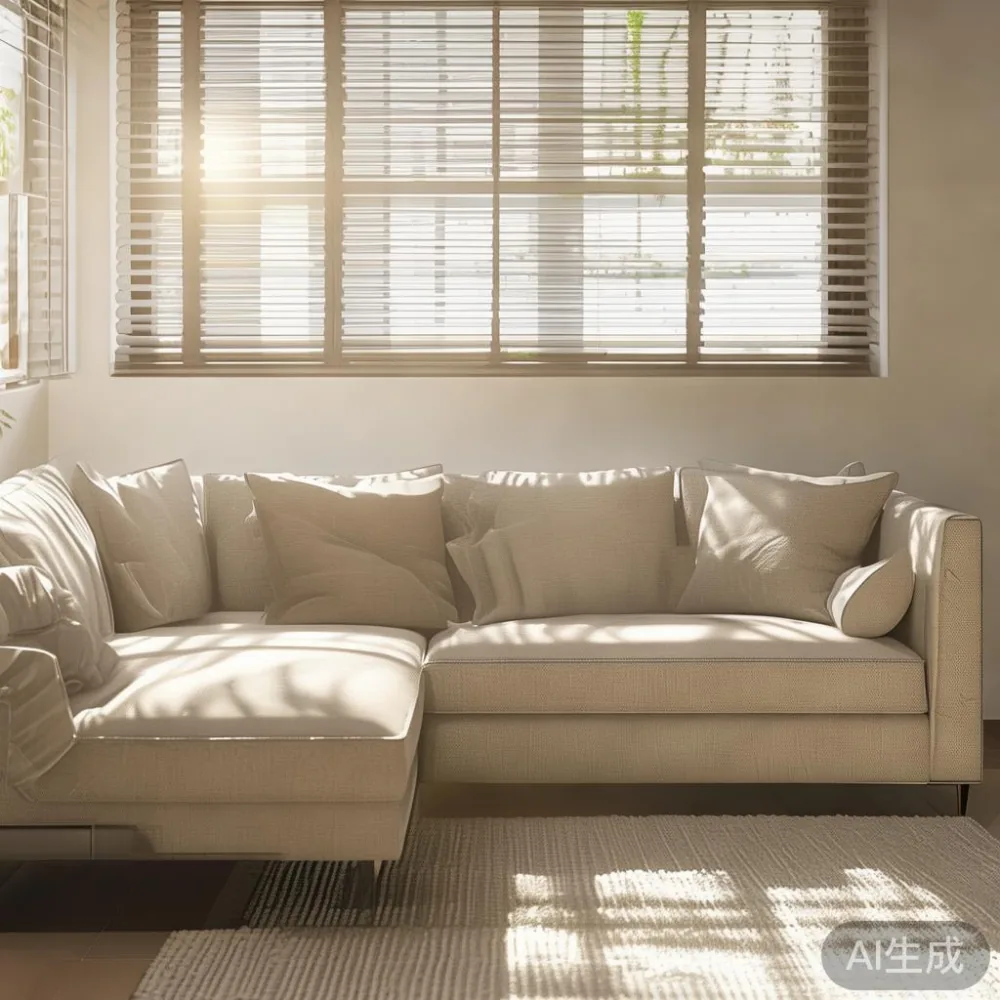
What are the actual lift and corridor dimensions in a Singapore HDB?
Here are the numbers I keep on a Post-it above my desk because I reference them every week. Most HDB passenger lifts built after 1990 have an internal cabin of roughly 1.10 m wide x 1.40 m deep x 2.10 m tall, with a sliding door opening of about 0.80 m wide. Newer BTO blocks in Punggol and Bedok often go up to 1.20 m wide cabins, but the door opening stays around 0.80 m. Private condo lifts can vary widely; some have 0.90 m openings, others squeeze to 0.75 m.
A single sectional module in its shipping box is usually around 0.85 m to 1.00 m wide, 0.90 m to 1.10 m deep, and 0.55 m to 0.75 m tall. Read those numbers again: the box height is rarely a problem, but the width often is. A 0.95 m box into a 0.80 m door opening will not work standing up. It has to go in flat, which means you need cabin depth of at least 1.00 m clear, and that is exactly the boundary case in older HDB blocks.
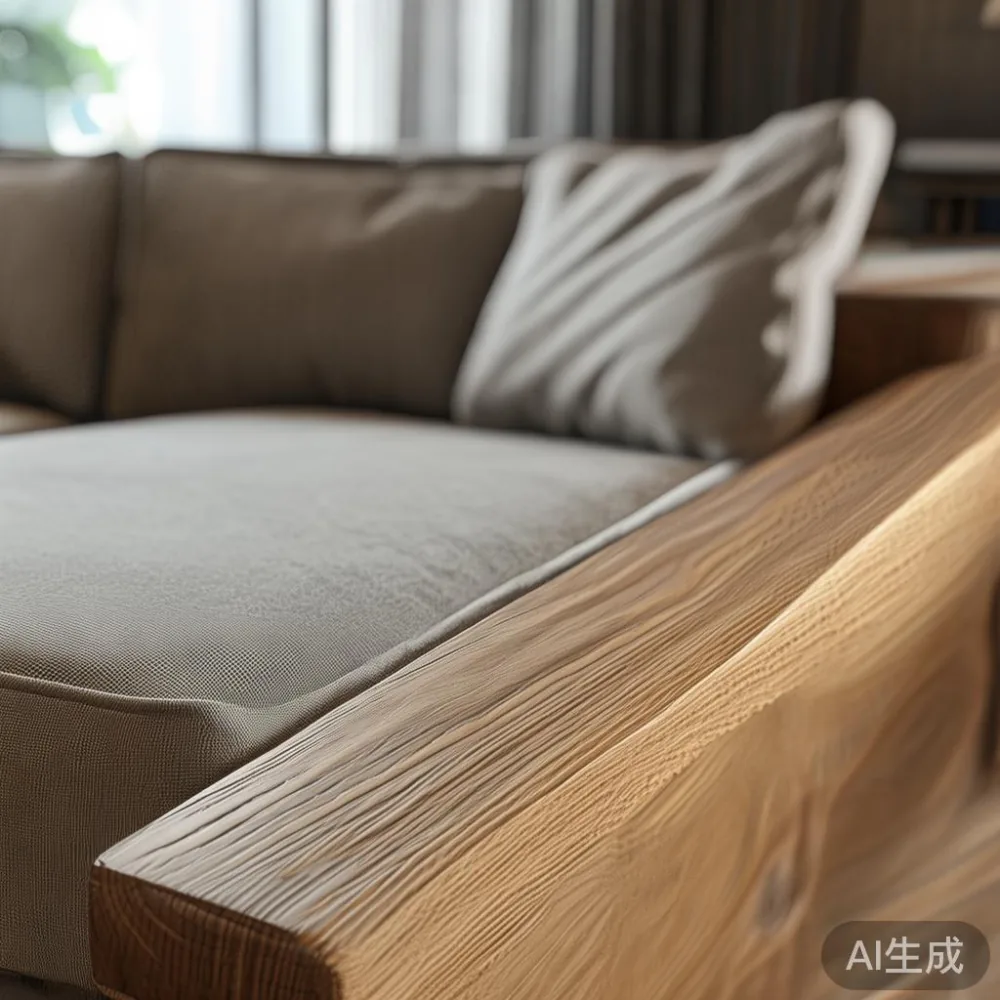
Corridors add a second problem. HDB common corridors are 1.20 m to 1.50 m wide, with right-angle turns at the lift lobby. A 0.95 m box turns a 1.50 m corner with about 0.25 m of clearance per wall. That sounds fine until you add the dolly wheels, which take another 8 cm to 12 cm of turning radius. I have watched two movers in a Punggol corridor lose 20 minutes pivoting a single module around a stairwell corner because nobody measured the diagonal beforehand.
How many delivery days should you really expect for a sectional sofa shipped from China?
A realistic timeline for a made-to-order solid wood sectional sofa shipped from a Foshan factory to a Singapore address looks like this: 12 to 18 days for production, 5 to 8 days for sea freight from Shenzhen or Guangzhou to Singapore, 2 to 4 days for customs clearance and GST handling, and 1 to 3 days for last-mile delivery and lift booking. Add it together and the total sits between 20 and 33 days, with the median around 26 days.
GST applies at 9% on the landed value, including freight and insurance, which is calculated by Singapore Customs. A sectional sofa retailing at S$3,200 with S$280 in freight and insurance attracts roughly S$313 in GST, so the delivered cost lands near S$3,793 before any domestic delivery surcharge. Some forwarders will absorb GST below S$400 in declared value, but for a sectional sofa that threshold is almost never used.
Last month I visited a colleague's new 4-room BTO in Bedok and timed his actual wait: he ordered a French light luxury sectional sofa on a Monday, received a production-complete notice on day 14, a vessel departure alert on day 17, cleared customs on day 22, and had the sofa in his living room on day 26. The original store quote had promised 18 to 25 days, so the timeline landed on the longer side of the estimate, which is more common than the marketing brochures suggest.
What is the difference between French bed and modern furniture?
The difference between French bed and modern furniture is that French bed (and broader French light luxury) styling is defined by curved silhouettes, soft tufting, cabriole or tapered gold-tipped legs, and a warm neutral palette rooted in 18th-century French court taste, while modern furniture (often called post-modern light luxury in the Asian market) uses clean straight lines, low profiles, matte metals, and geometric balance rooted in 20th-century Scandinavian and Bauhaus principles.
In practical terms, a French bed frame will arrive with a curved headboard, soft fabric upholstery, and decorative legs that you usually cannot disassemble for shipping, which means a single carton over 1.10 m long. A modern bed frame, by contrast, ships in a flat-pack with the headboard broken into two panels and the side rails nested inside, so the largest single carton rarely exceeds 1.05 m. That difference of 5 cm to 10 cm is the line between fitting into a Punggol lift and having to rebook a service lift. The same logic applies to dining tables and wardrobes: French light luxury versions ship more intact with curved edges and carved legs, while modern flat-pack versions break down into more, lighter boxes.
For a sectional sofa specifically, French light luxury tends to add rolled arms, button tufting, and gold-tipped solid wood legs, which adds about 3 kg to 5 kg per module but rarely changes the box geometry. Post-modern light luxury sectional sofas lean into low chunky profiles, integrated marble tables, and slim matte legs, which can sometimes reduce the box height to 0.50 m and make lift access easier.
Will a sectional sofa actually fit through my front door?
This is the question I get from roughly 7 out of 10 Singapore customers, and the honest answer is: usually yes for the modules, sometimes no for the assembled unit, and almost never for the assembled unit going around an internal corner inside the home. Measure three things before you order: the lift door width, the lift cabin depth, and the diagonal of your front door frame including the doorstop. The front door of a standard HDB measures 0.90 m wide x 2.10 m tall, but the usable opening is closer to 0.86 m once you account for the hinges and the door stop.
A single sectional module box of 0.95 m wide will not fit through a 0.86 m door standing up. It will fit on its side if the box height is under 0.86 m, which most are. The trap is the corner inside your home. A 0.95 m box turning into a corridor that is 0.90 m wide needs a diagonal clearance of about 1.31 m, which a typical HDB floor plan does not provide. The professional solution is to assemble the modules inside the living room rather than in the corridor, then drag the finished sofa into position.
How much does assembly actually take, and what tools do you need?
A well-engineered sectional sofa from a factory like MIDHILL arrives with pre-numbered modules, a single hex key, and an instruction sheet in English. For a four-piece L-shape, two adults should budget 35 to 55 minutes for assembly, plus 10 minutes to slide the assembled sofa into position. The total hands-on time is roughly one hour per four modules. A six-piece U-shape runs closer to 80 minutes.
The actual mechanical work is simple: align the metal clips on one module with the receiving bracket on the next, drop the hex bolt through the top hole, and tighten. There are typically 4 to 6 bolts per module joint. Tools needed are the included hex key, a Phillips screwdriver for the optional center table bracket, and a rubber mallet if the legs are inserted rather than screwed. I have never needed a power drill for any sectional sofa from a Foshan factory that I have tested in the past two years.
One detail buyers miss: the solid wood legs come in a small carton taped to the bottom of one of the seat modules, not in a separate box. If the delivery team rushes and leaves the legs behind at the door, the sofa will sit flat on its frame and damage the fabric within weeks. Open every box on the doorstep before signing the delivery order.
What does good delivery support look like for a sectional sofa?
Good delivery support for a sectional sofa in Singapore has four measurable traits. First, the team calls 30 to 60 minutes before arrival so you can ride the lift down. Second, they bring two movers for any order over 80 kg total, not one mover plus a driver. Third, they carry the modules into the room of choice and assemble the sofa on site, rather than dropping boxes at the door. Fourth, they remove the cardboard and plastic wrapping from your property, because HDB void deck disposal rules do not allow bulky cardboard to sit in the corridor for more than 24 hours.
Pricing varies. Last-mile delivery and assembly for a sectional sofa in Singapore typically runs S$80 to S$180 depending on floor level and module count, with high-floor condos above the 20th adding S$20 to S$40 for the extra lift trips. Free shipping thresholds, like MIDHILL's US$350 international free shipping policy or equivalent local promotions above S$500, often absorb this cost entirely for mainland customers but not always for Singapore door delivery, so read the line items carefully.
What about returns, warranty, and refinishing on a sectional sofa?
Three numbers worth memorizing for any online furniture purchase in Singapore: a 14-day return window, a 10-year structural warranty on the solid wood frame, and a lifetime refinishing option. A 14-day return window is enough to spot manufacturing defects, foam compression, and fabric flaws, but only if you unbox and inspect within the first three days. Foam that has bottomed out or frames that creak usually show themselves by day five, so do not leave boxes sealed for the full two weeks.
A 10-year structural warranty on the solid wood frame is the single most important number on the product page, because it covers the one failure mode that ruins a sectional sofa permanently: a cracked hardwood rail or a separated corner block. Fabric and foam wear is normal over 10 years and is not structural. Lifetime refinishing, offered by makers like MIDHILL on their solid wood bed frames, dining tables, wardrobes, and nightstands, means a factory can sand and re-oil the exposed legs or arm panels about 15 to 20 years into the sofa's life, which is rare in the industry and worth asking about explicitly.
Are there hidden costs I should budget beyond the listed price?
Yes, and they add up faster than most buyers expect. The four most common hidden costs on a sectional sofa order shipped to Singapore are: GST at 9% on landed value (around S$300 on a S$3,200 sofa), lift booking or service lift reservation fees in private condos (S$30 to S$120 per slot), high-floor surcharges above the 20th floor (S$20 to S$40), and disposal fees if the delivery team will not remove your old sofa, which can run S$80 to S$150 through a separate disposal vendor.
Add it all together and a S$3,200 sectional sofa can land at S$3,793 after GST and roughly S$3,983 after domestic surcharges and old sofa removal. That is about 24% over the sticker price, which is a fair budget rule of thumb for any imported sectional sofa to Singapore.
What should I measure before I click buy on a sectional sofa?
Measure six things, in this order. The lift door width and cabin depth in your block (use the emergency phone panel to find the exact cabin size, often printed inside). The diagonal clearance of your front door frame including the doorstop. The narrowest internal corner inside your home, measured wall to wall across the diagonal. The hallway length from the lift lobby to your unit door, because long corridors make pivoting harder. The final resting position of the sofa, including 5 cm of breathing room on each side for the skirt and the legs. And finally, the height of any air-conditioning ledge above the door, which can shave 2 cm to 4 cm off the usable door height if you need to angle a tall module through.
If those six measurements come back inside the typical specifications listed above, a sectional sofa will fit. If even one is borderline, ask the seller for the exact box dimensions of every module, not just the assembled sofa dimensions, because the box is what 7 inches bigger than the sofa in every direction. That single piece of information will save you a redelivery fee of roughly S$120 to S$250, and a 14-day delay on the return-and-rebook cycle.
How does a sectional sofa compare to buying a bed frame, dining table, or wardrobe online?
By lift-fitting standards alone, the ranking from easiest to hardest online furniture delivery in Singapore is: nightstand (small, light, almost always fits), dining table (one or two flat cartons under 60 kg, fits almost every lift), bed frame (long flat-pack, fits every modern lift, fits most corridor corners), marble table (heavy, single slab in a wooden crate, needs two movers and a service lift in condos above the 10th floor), wardrobe (tall cartons up to 2.20 m, needs lift cabin height of 2.10 m or more, the most common reason for rebooked deliveries in older HDB blocks), and finally the sectional sofa (multi-module, multi-corner, the most failure-prone delivery of the six).
The sectional sofa is the worst delivery case not because any single box is heavy, but because there are many boxes and every box must clear the lift, the corridor, the door, and the internal corner in sequence. A bed frame is one long box. A wardrobe is one tall box. A sectional sofa is four to six awkward boxes that all have to arrive in the same lift trip if you want to avoid S$40 in repeat-trip surcharges.
One last reality check before you order
Buy from a maker that publishes the exact per-module box dimensions in cm, the per-module weight in kg, the total delivery timeline in days, and the GST-inclusive landed price in SGD. If any of those four numbers is missing, the rest of the product page is decoration. A solid wood sectional sofa from a transparent factory will give you all four. The same applies to bed frames, dining tables, wardrobes, and nightstands, where the difference between a smooth Tampines delivery and a six-week delay is almost always decided before the order is placed. And if you are browsing designs that lean toward French light luxury or post-modern light luxury styling, ask specifically whether the curved elements are assembled at the factory or require on-site gluing, because that single detail will decide whether your delivery day is one hour or four.