How Southeast Asian Humidity Affects Solid Wood Furniture in Singapore
Singapore’s tropical climate can change solid wood more quickly than many buyers expect. Warm, moisture-laden air enters a living room each day, while air-conditioning lowers the relative humidity indoors. The repeated cycle affects timber joints, veneer adhesion, drawer movement, and finishes. For furniture placed in HDB flats and condominiums around Tampines, Bedok, and Punggol, the practical question is not whether wood reacts to humidity, but how to choose, place, and maintain pieces that remain comfortable and visually consistent.
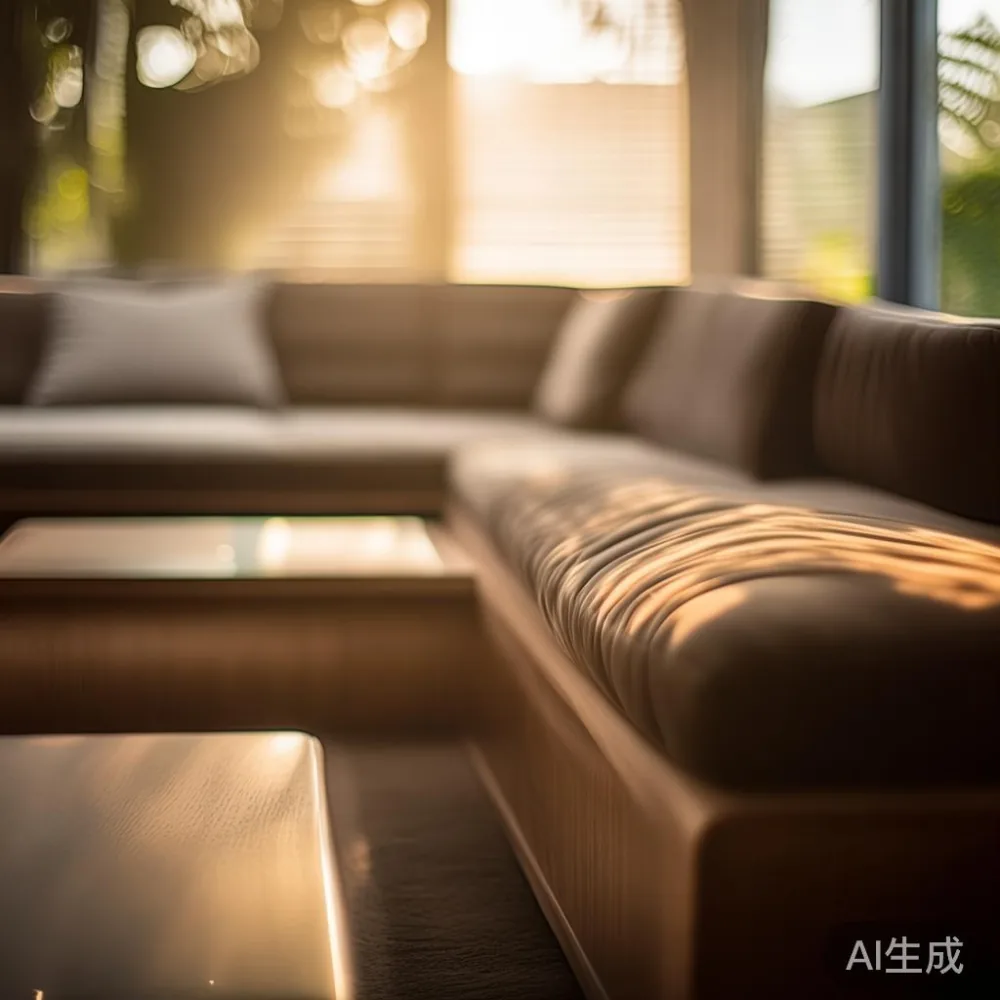
This guide examines how humidity affects a solid wood sofa, bed frame, dining table, wardrobe, and nightstand, with particular attention to Singapore delivery, lift access, GST, and long-term care. MIDHILL has manufactured solid wood furniture in Foshan since 2008, supplying customers in more than 15 countries. Its 10-year structural warranty and lifetime refinishing service are especially relevant in a humid environment, although good humidity control remains the customer’s responsibility.
How much humidity is normal in a Singapore home?
Singapore’s annual relative humidity commonly sits between 70% and 85%, while air-conditioned rooms may fall to 40% and 60%. During episodes with heavier rain, indoor readings can rise above 85%. Wood gradually exchanges moisture with the surrounding air, expanding when humidity increases and contracting when it decreases.
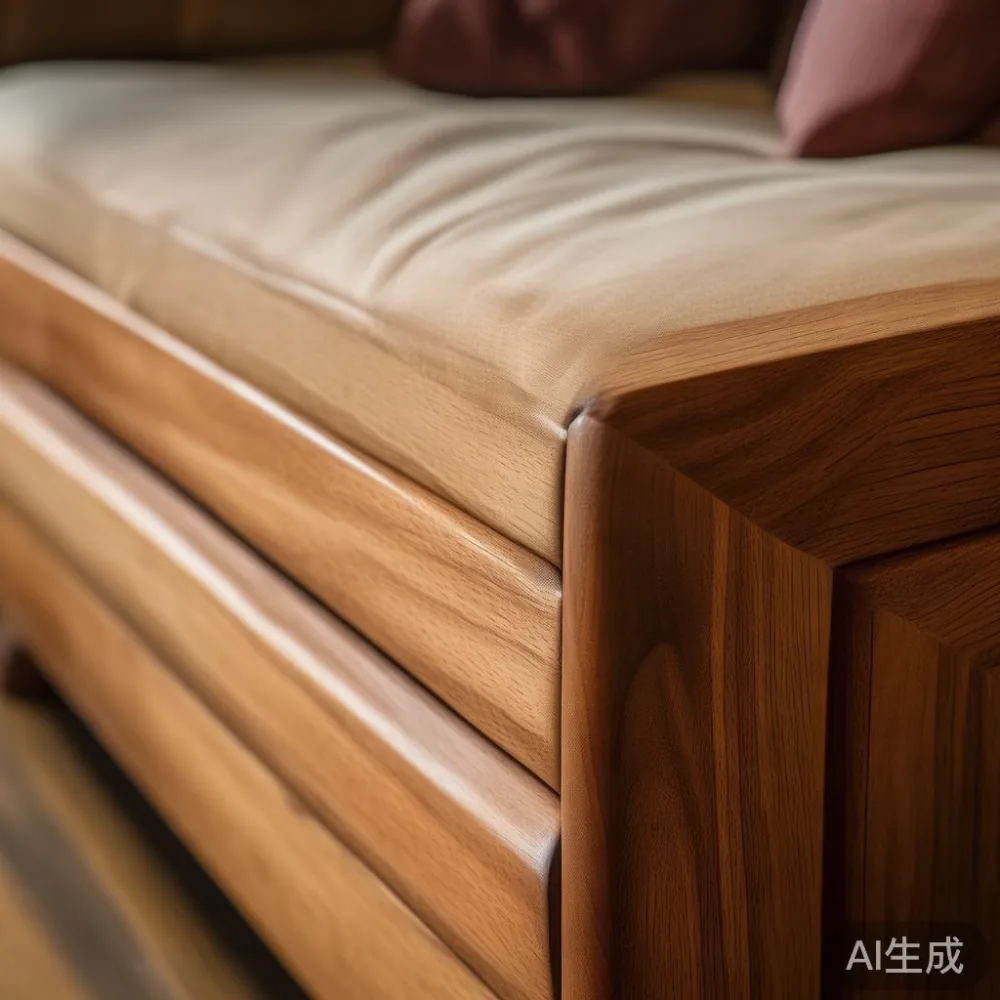
A useful target for solid wood furniture is approximately 45% to 60% relative humidity, with indoor temperatures around 22°C to 27°C. A hygrometer placed near, not directly against, a sofa or dining table costs about SGD 12 to SGD 35. Check it at 8 a.m. and 9 p.m. on the same day. A variation of more than 10 percentage points over several weeks warrants attention.
Seasonal monsoonic changes are less dramatic in Singapore than in many countries, but condensation on glazing and nightly air-conditioning still produce a repeated daily cycle. Exterior HDB corridors and open-air void decks can expose furniture to brief wet periods, especially near windows. Condominiums may have lower humidity, yet their larger windows, tiled floors, and frequently adjusted air-conditioning create their own shifts.
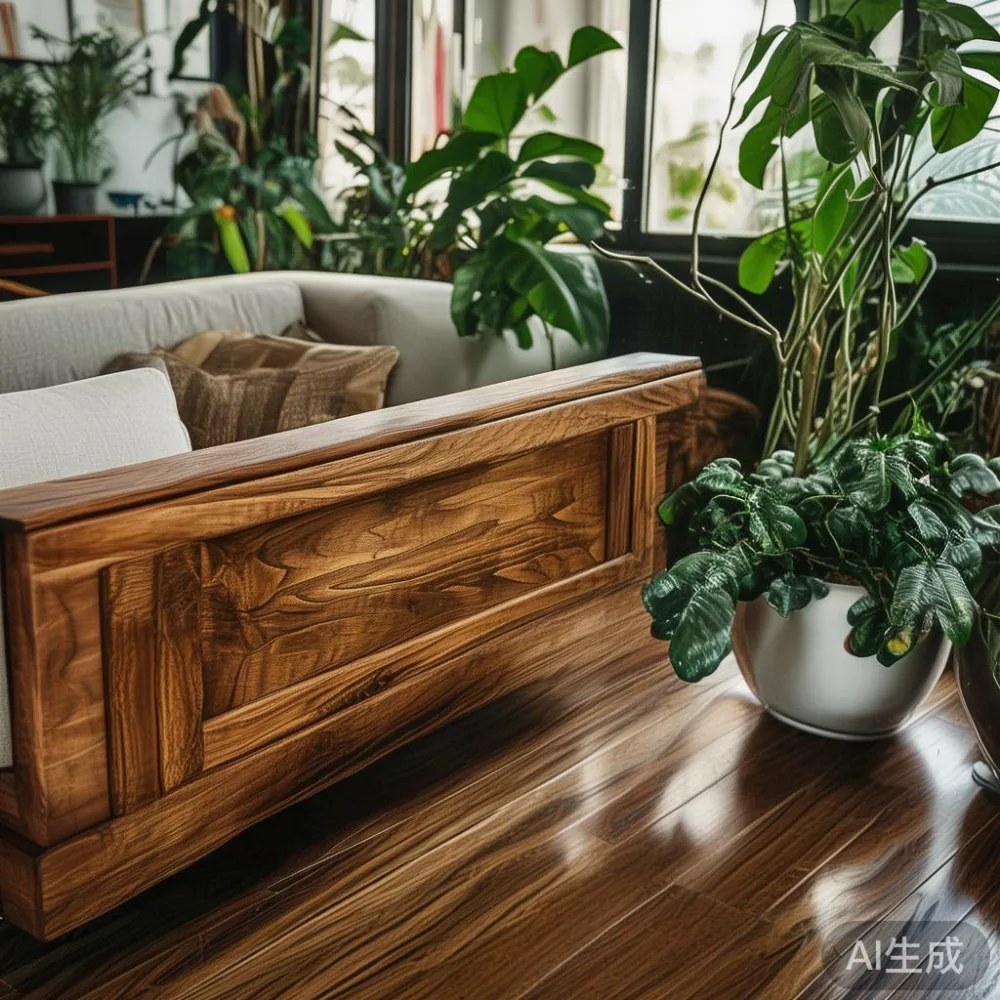
Humidity is only one part of the calculation. A room receiving coastal air through open windows, an apartment beside a swimming pool, or a home on the ground floor of a block experiences different conditions from one on the 18th floor. Recorded readings should guide the maintenance routine rather than general assumptions about Singapore’s climate.
What does humidity actually do to solid wood?
Solid wood is dimensionally stable within its normal service range, but it is not moisture-proof. Flat-sawn boards can show seasonal movement of roughly 1% to 3% across their width as relative humidity changes substantially. That movement of several millimetres can make a tight drawer bind, create a small gap at a mitred table edge, or make a door sit unevenly against its frame.
Solid wood sofa frames may use dowels, mortise-and-tenon joints, or metal fixings. Repeated swelling and shrinking can loosen joints if the timber is already wet. A solid wood bed frame can squeak or rack if its side rails change dimensions at different rates. Dining tables need an even top surface because cupped panels collect water and interfere with place settings. Wardrobes can develop alignment issues around doors, while a nightstand drawer may swell enough to catch on its runners.
Engineered components require similar attention. Plywood and MDF used inside a bed frame or wardrobe can absorb moisture at exposed edges. Veneer may lift if its adhesive is subjected to persistent dampness. Marble table tops are less vulnerable to expansion, but the wooden support beneath them must remain stable so that a seam does not open.
Finish quality affects the speed of moisture exchange. A well-sealed, factory-finished surface slows the exchange, while scratches, cracked lacquer, or open grain can allow dampness to enter more directly. Avoid placing a sectional sofa or dining table immediately beside a window where rain can wet the frame. Maintain at least 30 cm of clearance from exterior walls in frequently wet corridors and 15 cm from air-conditioner vents where practical.
Can moisture damage a solid wood sofa in an HDB flat?
Yes, particularly if the sectional sofa is installed in a humid room without controlled humidity. Foam cushions can acquire musty odours if fabric remains damp, and loose cushions may compress unevenly after repeated damp-and-dry cycles. Timber inside the frame can also absorb moisture through unfinished joints or damaged upholstery panels.
For HDB living rooms, position the sectional sofa away from the main exterior wall if condensation forms there. Use a washable cotton or linen-blend cover with a moisture-resistant backing, and vacuum the seat gap every week. If cushions feel damp, remove them and air them for 2 to 4 hours in a dry, ventilated room. Do not use a household hair dryer on the timber, since concentrated heat can cause local cracking.
Lift and corridor dimensions deserve attention before delivery. A two-seat module may fit comfortably through a typical HDB lift, but a three-seat module can block the turn from the corridor into the flat. Measure the lift door, the internal diagonal, the corridor turning radius, and the entrance threshold. Allow at least 10 cm of maneuvering clearance beyond the packed sofa dimensions. MIDHILL delivery to Singapore normally takes 7 to 14 working days after production, though busy periods and remote locations can extend the schedule.
Protection during the move matters as well. Keep packaging dry and avoid leaving a wrapped sectional sofa in a corridor overnight. Check for rain before delivery, and have the installer remove cardboard and moisture barriers after unpacking. If the sofa has been stored in a warehouse near an external wall, let it acclimatise for 24 to 48 hours before removing all protective wrapping.
How should I style a European light luxury sofa in a humid room?
For anyone asking how to style European light luxury sofa in room settings, start with proportion and material performance rather than decoration alone. A low-profile sectional sofa with clean lines suits Singapore interiors, while loose linen covers need regular washing in the humid climate. Pair a light grey piece with warm oak, off-white walls, and restrained brass details to create an American light luxury effect without making the room feel visually heavy.
French light luxury often uses refined curves, pale upholstery, and a measured mix of timber and stone. In a compact HDB flat, a sectional sofa with a 90 cm to 100 cm chaise depth can preserve circulation around a coffee table. Keep furniture 60 cm from a sliding balcony door so the opening path remains clear, but retain at least 30 cm from the balcony frame where condensation collects.
Post-modern light luxury provides another route: simple geometry, contrasting textures, and practical finishes. A marble table can balance a solid wood sofa, provided the timber base is protected from spills. Use coasters of at least 8 cm and wipe standing water within 5 minutes. For coffee tables, felt pads prevent scratches while allowing controlled airflow beneath the piece.
Humidity-aware styling also means avoiding decorative objects that trap moisture against timber. Leave space around a solid wood dining table, position it away from damp utility areas, and use a table runner that can be removed for cleaning. In a bedroom, keep a solid wood bed frame 20 cm or more from curtains that touch the floor, especially during heavy rain.
How do I keep a dining table and wardrobe stable through wet months?
Place a dining table in the interior zone of the home rather than against a frequently misted window. Maintain a relative humidity of about 45% to 60%, especially where the table’s timber joins are visible. Wipe the surface daily with a soft cloth, and treat ring marks promptly. Coasters should be replaced rather than stacked in a wet condition, because trapped water can penetrate a small scratch.
A wardrobe needs airflow, particularly if it sits beside an air-conditioning vent. Set the door on a 5 cm to 10 cm plinth if the design permits, but do not seal the back against an exterior wall without checking for condensation. Inspect hinges every 6 months and tighten screws by hand. A soft opening adjustment can correct a door that rubs after seasonal movement; do not force it and damage the hinge.
For bedroom storage, allow clothes to be completely dry before closing a wardrobe. During the 12 weeks around the main monsoon period, run a dehumidifier in the bedroom where practical. A unit rated for 15 litres to 25 litres per day can maintain a small room near 55% relative humidity. Place it 30 cm from walls and 60 cm from the nearest furniture so that airflow is not blocked.
Wardrobe finishes should be inspected annually for white haze, lifting veneer, or dull patches. Bed frames need the same scrutiny around slats and screw fixings. Check a French bed vs Nordic bed comparison with moisture performance in mind: French-style frames often have more visual detailing and a wider perimeter, while Nordic designs commonly use clean lines and slatted bases. Whichever style is selected, dry the frame before replacing bedding after washing.
What care does a marble table, bed frame, and nightstand need?
A marble table needs less protection from atmospheric moisture than a timber table, but its supporting structure still requires stable conditions. Use a pH-neutral stone cleaner, and avoid vinegar, lemon, bleach, and abrasive powders. Spills should be removed within 10 minutes. A natural-stone tabletop may need sealing every 1 to 2 years, depending on its porosity.
A solid wood bed frame should be checked for loose joints twice each year. Wipe it with a slightly damp cloth, then dry it immediately. Avoid placing laundry baskets or damp towels against the side rails. A nightstand should not be positioned directly under a leaking window, and its drawer should open fully at least once every 2 weeks so that runners do not remain compressed for long periods.
Keep furniture 10 cm to 15 cm away from walls where possible, allowing inspection and airflow. Vacuum upholstery every 7 days and clean spills promptly. Use a small moisture meter for suspicious timber: readings around 8% to 12% may be normal depending on the species and local conditions, while persistent dampness or visible mould requires professional assessment.
Singapore’s GST is 9% and should be included in the final quotation. MIDHILL offers free shipping for orders over US$350, with the converted Singapore threshold shown at checkout. The company has exported to more than 15 countries since 2008, and its 10-year structural warranty covers eligible frames under the published terms. Lifetime refinishing supports furniture that develops surface wear, but refinishing cannot compensate for chronic dampness.
How can I prevent mould, odours, and finish failure?
Prevent moisture problems with a repeatable routine rather than occasional aggressive treatment. Check the hygrometer weekly, clean ventilation grilles every 3 months, and keep the sectional sofa 30 cm away from exterior glazing where condensation is common. Run the air conditioner for 2 to 4 hours in humid afternoons, and use a dehumidifier when the room remains above 60% relative humidity for several hours.
Address odours at their source. Remove cushions weekly and wash removable covers according to the care label. If a musty smell remains, vacuum both sides of the cushion and dry the area with a fan. Never spray disinfectant directly onto timber or upholstery, as overspray can leave residue or encourage further moisture retention.
Repair scratches within 24 hours because damaged seals are easier to restore while the surrounding finish remains intact. Use a matching maintenance product approved for the finish type, and test it on a hidden area measuring roughly 5 cm by 5 cm. Small lacquer marks can be treated with a fine polishing compound, but deep cracks or lifting veneer require an assessment rather than household solvents.
Let buyers evaluate 2026 European light luxury furniture with Singapore’s humidity built into the decision. A solid wood sofa, bed frame, dining table, wardrobe, nightstand, or marble table should suit the room’s size, access route, and moisture level. For a solid timber bed, the best European light luxury bed for 2026 is not determined by style alone; stable joinery, a sound finish, and a sensible humidity range matter more. Likewise, the best European wardrobe for 2026 should pair clean proportions with ventilation and dependable hardware.
Buyers can also compare light grey luxury sofa options for Singapore interiors, since pale upholstery shows dust and damp marks readily but works well with both French and American light luxury schemes. Request a fabric specification, timber species, finish details, and care instructions before ordering. With an indoor hygrometer, careful placement, and periodic maintenance, solid wood furniture can retain its warmth and structural integrity for many years in Singapore homes.