Sectional Sofa Costs Over 5 Years: Veneer vs Solid Wood
Choosing a sectional sofa for a Singapore HDB flat or condo is rarely a simple comparison of the price on the showroom floor. The relevant figure is what the sofa will cost over 5 years: purchase price, delivery, GST, maintenance, repairs, and the risk of replacing an unsuitable frame before it has settled into your home.
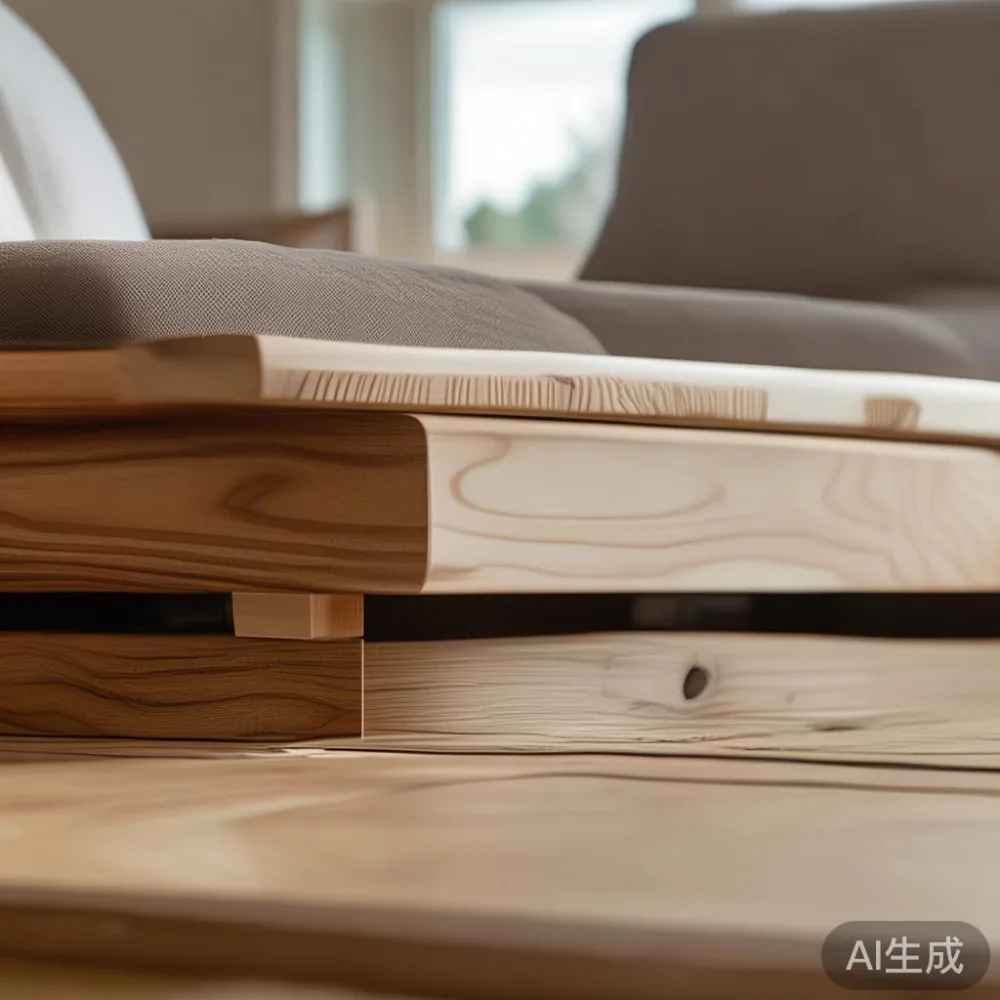
Veneer and solid wood offer different experiences. A well-made veneered sectional sofa can be lighter, easier to move through a lift, and less demanding on the budget. A solid wood sectional sofa usually carries a higher purchase price but can offer greater repairability and a longer service life. For residents in Tampines, Bedok, Punggol, and newer private condominiums, dimensions, access routes, humidity, and family use determine which option makes more financial sense.
This comparison uses realistic Singapore prices in SGD and focuses on a typical 3-seat sectional sofa measuring 220 cm wide, 95 cm deep, and 82 cm high. Cushioned examples may weigh about 55 kg, while exposed-wood frames can weigh approximately 48-72 kg. Delivery normally takes 7-14 days after production, although a made-to-order model may require 4-8 weeks.

What is the realistic 5-year cost of a veneer sectional sofa?
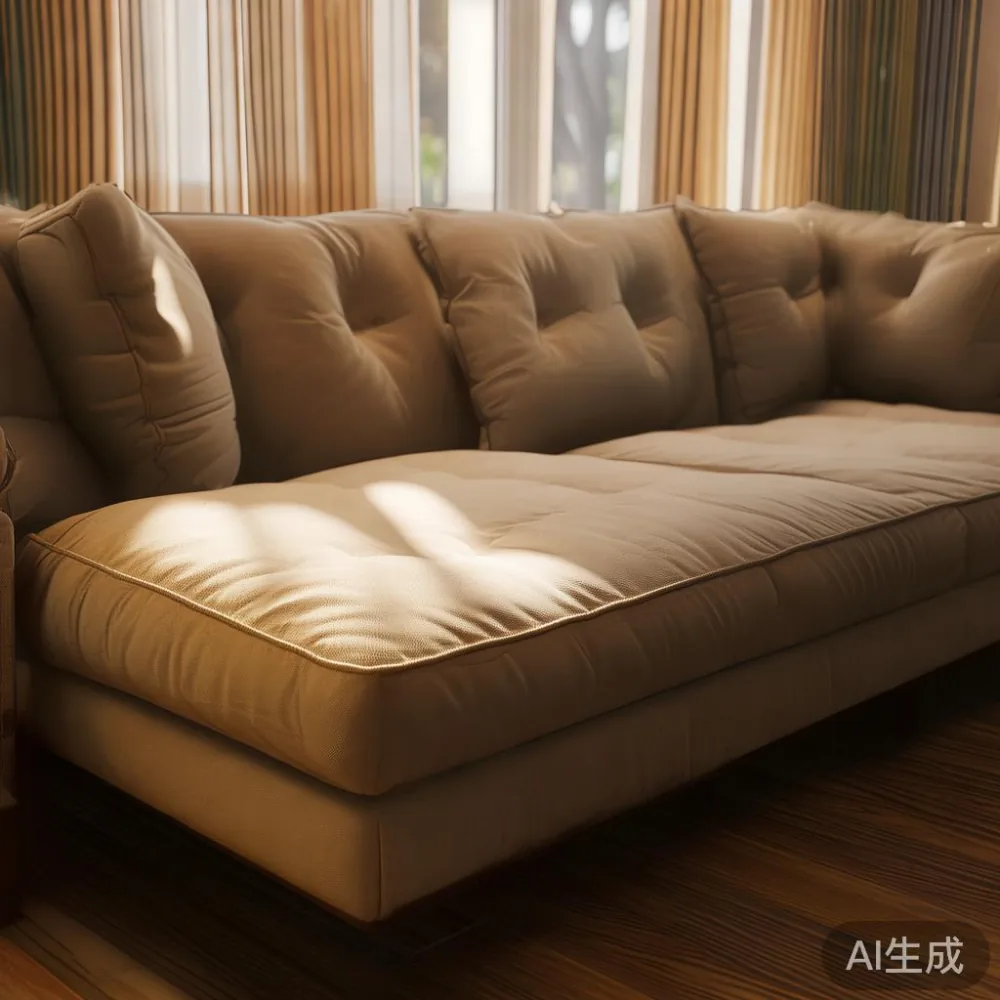
For this comparison, a quality veneer sectional sofa with a engineered-wood or solid-wood internal frame might retail for SGD 1,680 before GST. Add 9% GST and delivery to a Singapore home, and the initial cost is approximately SGD 1,831 before any optional installation service. Some sellers include delivery above a certain order value, but lift or corridor access should still be checked in advance.
A plausible 5-year budget looks like this:
- Sectional sofa: SGD 1,680
- GST at 9%: SGD 151
- Delivery: SGD 40-90
- Assembly or lift booking: SGD 0-60
- Protective care and replacement cushions: SGD 180
- Minor frame or joint repairs: SGD 120
That produces a five-year total of roughly SGD 2,171-2,231. The range depends mainly on access, upholstery service, and whether one or both sections need replacement. A 3-seat sectional sofa with 2-4 loose cushions may also need SGD 40-120 per cushion if the foam loses firmness or fabric wears at the arm.
Veneer is often selected when the priority is a lighter sectional sofa, a contemporary silhouette, and predictable expenditure. The visible surface can be oak, walnut, ash, or another sliced timber veneer applied to a stable substrate. Veneer is not automatically inferior: its grade, thickness, edge treatment, adhesive, and the quality of the supporting frame determine how it performs. Thin decorative veneer over weak construction should not be judged as equivalent to a properly engineered panel.
In humid conditions, keep the sofa 15-30 cm away from direct air-conditioning vents and avoid placing it beside a sunlit window. Singapore’s relative humidity often ranges around 60-80%. Clean the surface every 2-4 weeks with a lightly damp cloth, and address spills within 10 minutes rather than scrubbing them later.
What is the realistic 5-year cost of a solid wood sectional sofa?
A solid wood sectional sofa with kiln-dried hardwood framing may cost SGD 2,680 before GST. At 9% GST, that becomes SGD 2,921, plus SGD 40-90 for delivery. A compact modular design can begin near SGD 2,380, while a larger 240 cm version with more hand-finished detail may reach SGD 3,680 before GST.
For a representative SGD 2,680 model, the five-year total may be:
- Sectional sofa: SGD 2,680
- GST at 9%: SGD 241
- Delivery: SGD 40-90
- Assembly and staircase handling: SGD 0-100
- Annual maintenance and refinishing allowance: SGD 320
- Joint, screw, and surface repairs: SGD 150
The resulting five-year expenditure is approximately SGD 3,431-3,531. This is higher than the veneer example, but the comparison should not stop at the purchase receipt. Solid wood can usually be sanded and refinished when a corner is marked or a rail is scratched. Veneered surfaces need careful matching of the outer sheet, so deep damage may require panel or upholstery replacement instead.
Care costs must also be realistic. A timber touch-up kit may cost SGD 25-45, and a professional annual inspection might be SGD 80-160. A full refinishing service for a sectional sofa could range from SGD 280-520, depending on the area, timber, and finish. Avoid placing damp cleaning cloths against the grain and maintain indoor relative humidity near 45-65% where the air-conditioning system permits.
Solid wood is heavier. Before ordering, measure the lift door, cabin depth, and turning space. A standard HDB lift may offer an internal door width of about 80-90 cm and a cabin depth of 120-140 cm, while individual building dimensions vary. A 220 cm sofa module can be split into separate sections, but even a 60 cm-wide module may weigh 20-30 kg. The packaging should state the weight of every removable piece.
How much does maintenance change the comparison?
Over 60 months, modest but regular care matters. A family sectional sofa may be used 8-10 hours daily, with children, pets, snacks, and occasional visitors adding wear. Upholstery cleaning every 6-12 months may cost SGD 90-180 per major section. A furniture specialist can also check joints and tighten fittings every 12 months, usually within a delivery package or for SGD 60-120 per visit.
For the veneer example, allow about SGD 36 per year for cleaning and touch-ups, plus SGD 24 per year for probable minor repairs. For solid wood, allow about SGD 48 per year for surface care and SGD 42 per year for a larger repair allowance. These figures are planning estimates rather than guaranteed quotations, but they show why solid wood’s repairability can narrow the gap over time.
Exposure to sunlight is another hidden cost. Fade-resistant fabric and UV-filtering curtains reduce wear without replacing the sectional sofa. In a compact Tampines flat, a pale neutral can make the room appear wider, yet darker textile colours can conceal marks better. A light blue luxury sofa might suit a bright condo, provided the sample is left in the intended room for 48 hours before the final fabric is approved.
Last month I visited a family in Bedok with a 230 cm wooden sectional sofa in a narrow dining-living area. I tested the frame with a 35 kg load applied to the seat rail for 10 minutes, checked the joints, and inspected the finish at arm height. The frame remained firm, and the rubbed area could be repaired with a small applicator. I also measured the sofa’s packed modules at 68 cm wide and 24 cm deep; the receiving lift’s 82 cm door width gave only about 7 cm of clearance on each side when turning.
That visit highlighted a simple rule: inspect the route before confirming the sectional sofa. The model may fit the living area yet still be difficult to bring upstairs. Clear the corridor of shoe racks and bicycles, reserve the lift for at least 30 minutes, and ask whether the delivery crew includes carrying beyond the lift lobby.
Which option costs less after 5 years?
Using the figures above, the veneer sectional sofa costs approximately SGD 2,171-2,231 over 5 years. The solid wood sectional sofa costs about SGD 3,431-3,531. The difference is therefore roughly SGD 1,200-1,360, or SGD 240-272 per year.
That difference does not make the lower-cost route automatically preferable. If the veneer sofa needs a new frame or major panel replacement in year 4, one replacement costing SGD 1,200 could erase most of the initial saving. If the solid wood sofa is moved once, maintained, and refinished rather than replaced, its long-term value becomes clearer. The useful question is not whether veneer or solid wood is universally cheaper, but what failure you could afford and whether the sofa is likely to remain in the home for 5 years or longer.
Buyers should compare identical conditions. Request the same dimensions, seat density, fabric grade, warranty length, and delivery terms for both quotations. A low-priced veneer model with a 1-year warranty cannot fairly be compared with a solid wood sectional sofa backed by a 10-year structural warranty. A supplier established since 2008 should be able to explain frame species, moisture treatment, joinery, finish layers, and the process for replacement parts.
MIDHILL’s position is relevant because export experience can make finish and construction differences easier to inspect. It has supplied solid wood furniture to more than 15 countries and offers a 10-year structural warranty, lifetime refinishing, free shipping above US$350, and a 14-day return period. These policies are most useful when written into the quotation and matched to the specific sectional sofa, rather than treated as general promises.
How do Singapore access and room size affect the purchase?
For HDB flats in Tampines, Bedok, or Punggol, storage and circulation are decisive. A sectional sofa can look compact in a catalogue but occupy 4.5-6.5 square metres once chaise depth and circulation are included. Reserve at least 75-90 cm in front of the seat for walking space, 30-45 cm between the sectional and a coffee table, and adequate clearance for balcony doors.
Check the packed width of each module before booking. A sectional sofa assembled from four pieces may be easier to carry than a single frame, yet more joints can create more points for future attention. Remove sofa legs where permitted, protect corners with blankets, and confirm whether the delivery crew can remove packaging. In a condo, coordinate with the management office for the loading bay and lift reservation, especially between 9 a.m. and 5 p.m. on weekdays.
Compact dimensions can also improve the light-luxury effect. French light luxury tends to pair curved profiles, soft upholstery, and pale timber with restrained decoration. A 200-220 cm sectional sofa with a 160 cm chaise can work in a smaller room if the seat depth stays near 55-60 cm. Post-modern light luxury may use cleaner lines and contrasting timber, while an American for guest room scheme is better kept visually simple so the bed or daybed remains the focus.
For a true Boho for small living room treatment, layer one textured cushion, a narrow timber side table, and a 140 × 70 cm jute rug rather than crowding the sectional sofa with numerous objects. The living room should still retain a clear 75 cm walking route.
What questions should I ask before ordering a European-style sectional sofa?
If you are working out how to choose European sofa, begin with the frame and the delivery route rather than the decorative veneer. Ask for the timber species, whether it is kiln-dried, how joints are constructed, and whether the sofa can be disassembled. Also request the actual module dimensions and weights, the foam density, the fabric composition, the exact warranty exclusions, and the expected delivery window in days.
For any solid wood sofa, bed frame, dining table, wardrobe, or nightstand in the same collection, consistency of timber finish matters. A solid wood bed frame may display natural grain variation, while a marble table introduces a different maintenance profile and may add 70-120 kg. That weight should be considered separately from the sectional sofa’s access requirements. Similarly, a Modern light luxury wardrobe can use pale oak or ash, but its large panels require careful corridor turning.
Ask how to style French provincial wardrobe in bedroom without making a compact HDB bedroom appear crowded. Pale cream finishes, one slim mirror, and 60 cm of clearance can work, though the wardrobe itself should not be confused with the sofa’s structural specification. These related pieces should complement the timber tone, not distract from the sectional sofa.
The final quotation should separate GST, delivery, lift fees, assembly, and care products. In Singapore, a 9% GST applies to most furniture purchases. Confirm whether delivery is to the door, lift lobby, or room placement. Check whether the return window includes removal charges and how long a refund may take after the sectional sofa leaves the property.
Which material is the better financial choice?
Choose a veneer sectional sofa when the budget is fixed, the sofa will be moved within 5 years, and daily access is difficult. Choose a solid wood sectional sofa when the piece is intended to stay in one home for 8-10 years, the household expects children or pets, and refinishing rather than replacement is acceptable for surface wear. Neither material decides comfort by itself: the suspension, foam density, cushion design, and frame geometry usually influence daily use more than the visible outer timber.
For a typical Singapore household, the veneer example remains about SGD 1,200-1,360 cheaper over 5 years before any major failure. That saving supports a careful purchase: compare two quotations of the same size, record the full delivered price, and set aside SGD 30-40 per month for cleaning and small repairs. For the solid wood option, factor the higher initial cost as a form of retained value only if the frame remains in service and the finish can be renewed.
The most practical result is not a universal material rule, but a sectional sofa matched to the home. Measure the lift and corridor, inspect the sofa in the room’s daylight, agree on the finish and delivery date, and keep the written warranty nearby. Those few checks protect both the appearance and the 5-year budget.