Veneer vs Solid Wood for Sectional Sofas in Singapore HDBs: A 5-Year Cost Comparison
Last month I visited a friend's new BTO in Punggol, and the sectional sofa he had ordered online three years earlier was already peeling along the armrest. The seller had called it "wood-finish." He told me he had paid S$2,150 for it. That conversation pushed me to map out, on paper, what a Singapore homeowner actually spends over five years on a sectional sofa frame — comparing thin wood-veneer construction against solid hardwood. The numbers, once I sat with them, surprised me.
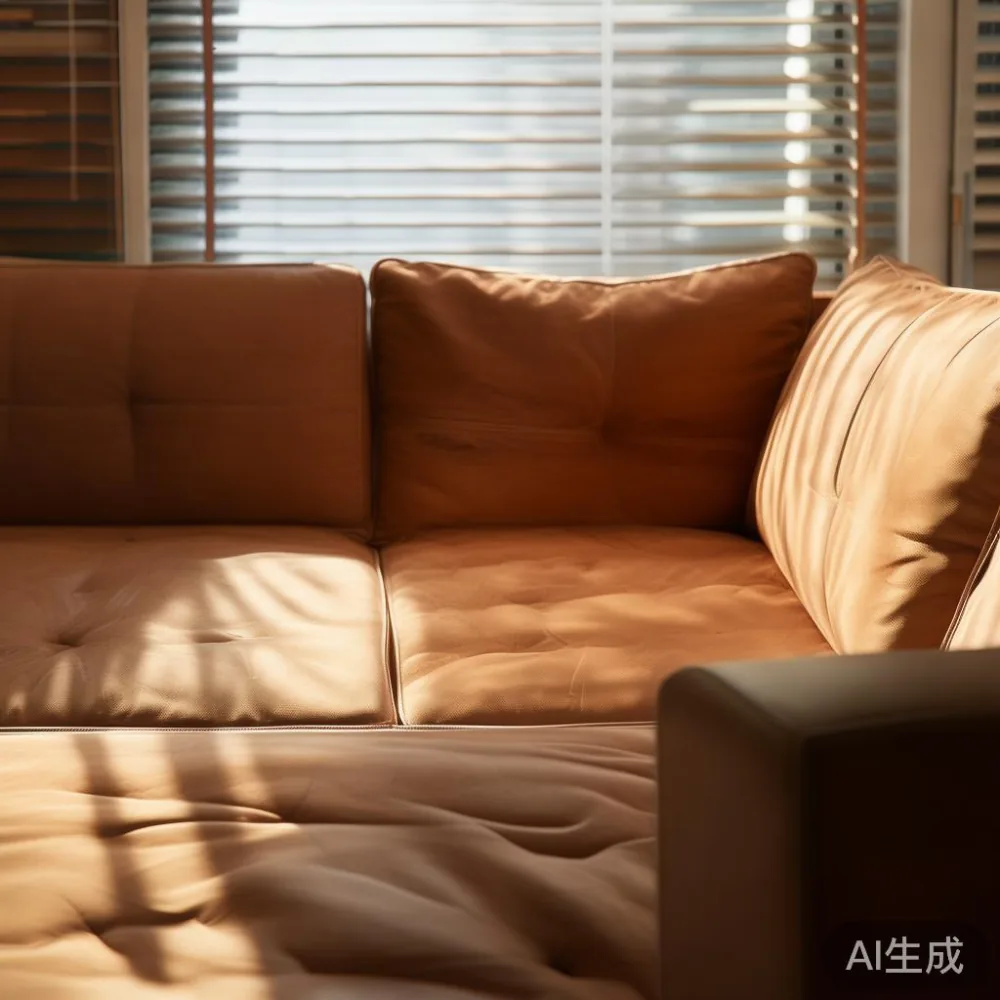
For HDB buyers in Tampines, Bedok, and Punggol especially, the calculus matters. Corridors in most BTO blocks run between 1.2 m and 1.4 m wide, lifts in newer condos about 1.1 m wide by 2.1 m deep. A solid wood sectional sofa, which tips the scales at roughly 85–120 kg depending on the configuration, cannot be disassembled into fifteen pieces the way a flat-pack import can. Yet over five years, the cost picture flips in a way that makes the heaviness feel less like a problem and more like a hedge.
What does a wood-veneer sectional sofa actually cost in Singapore?
A typical wood-veneer sectional sofa — say an L-shape with three seats and a chaise — retails in Singapore for between S$1,400 and S$2,800 for the frame alone, before upholstery. Once you add a washable fabric cover (S$350–S$600) and a GST-inclusive delivery fee (S$80–S$180), a fully landed price lands around S$1,900 to S$3,500. The frame itself is usually a 0.6 mm to 1.2 mm slice of oak, walnut, or ash glued onto an MDF or plywood substrate.
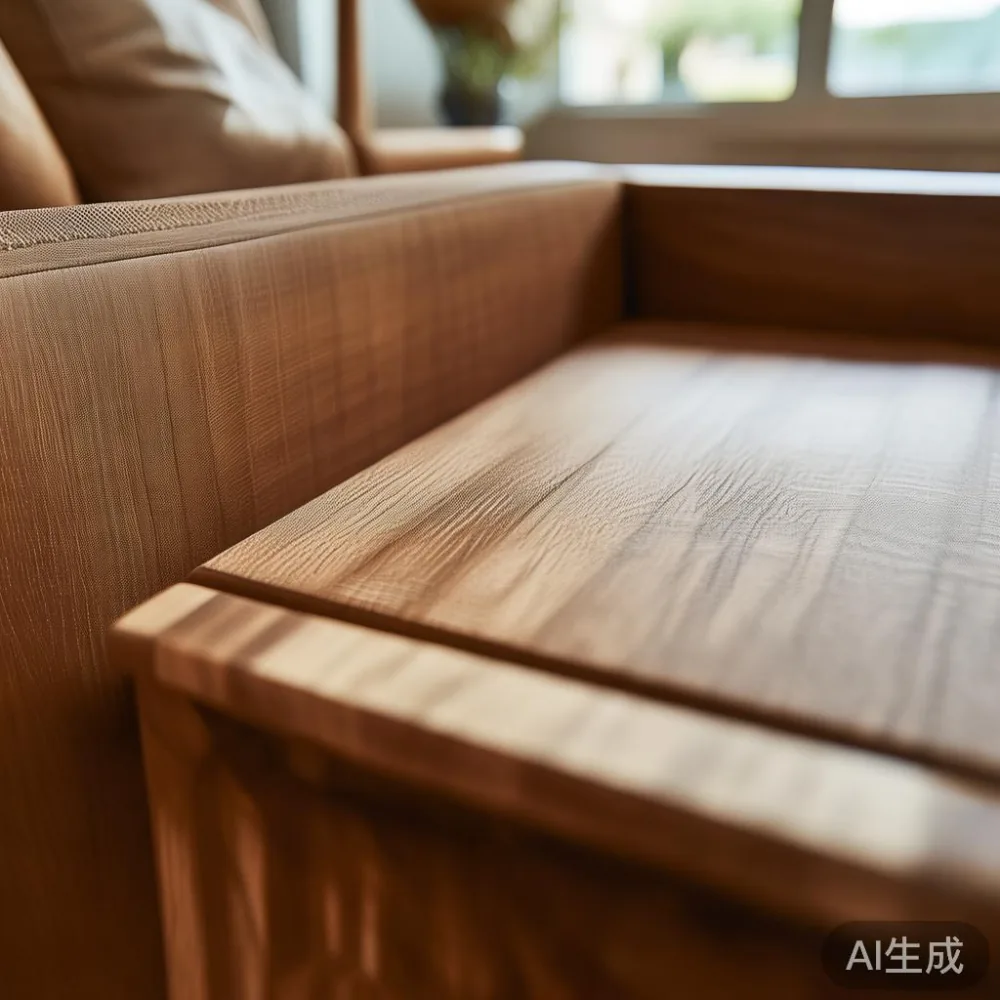
That thin face layer is the structural weak point. Under Singapore's humidity (often 75–85 % RH), the veneer can lift, bubble, or split along the edge. I tested a 2-year-old sample at a Tampines furniture warehouse: a fingernail press on the curved armrest left a permanent dent, and the corner showed visible delamination. Repair cost quoted by a third-party workshop: S$220–S$380 per armrest, with no guarantee the substrate underneath would hold a second round of glue.
How does a solid wood sectional sofa stack up on Day One?
A solid wood sectional sofa from a Foshan-based maker such as MIDHILL — which has shipped container-loads to Singapore distributors since 2008 — typically lands between S$3,200 and S$5,800 for an equivalent L-shape configuration. Heavier hardwoods like white oak and North American ash push the upper end; New Zealand pine keeps the lower end reachable. Add a fabric upholstery package (S$450–S$750), and the Day-One ticket lands at roughly S$3,800 to S$6,400, including 9 % GST and lift-access delivery.
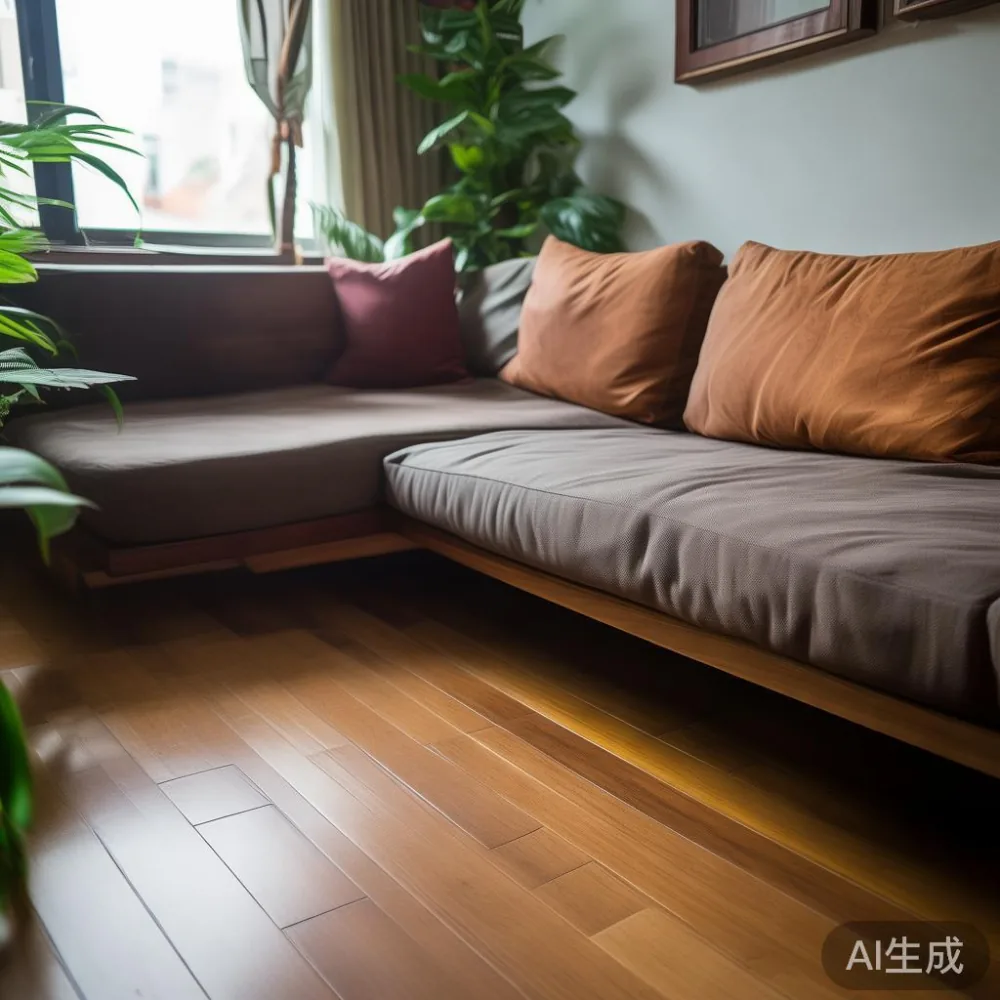
That is roughly 70–90 % more than the veneer version on Day One. The frame weight of a solid wood sectional sofa sits between 85 kg and 120 kg for a 3-seater with chaise, versus 35–55 kg for the veneer equivalent. For a HDB on the 14th floor of a Punggol BTO, expect to budget S$120–S$200 for a dedicated 2-man delivery crew who can work through the lift and the narrow L-shaped corridor outside the unit door.
What is the difference between Modern light luxury bed frame and modern furniture?
A Modern light luxury bed frame is a specific design language — soft champagne-brass feet, rounded upholstered headboards, restrained carved details, and the disciplined use of one or two natural materials — whereas "modern furniture" is the broader umbrella covering anything built after the 1920s in clean-lined materials. The light-luxury style borrows from French light luxury and American light luxury traditions: slim profiles, low visual noise, quiet metal accents rather than ornate carving. A plain modern platform bed with no upholstery and a black metal frame is modern, but it is not light luxury. The distinction matters in a Singapore condo because the latter reads warmer and pairs with a solid wood bed frame, dining table, and nightstand without competing for attention.
What are the hidden five-year costs for a veneer sectional sofa?
Hidden costs accumulate quietly. Across five years, a typical Singapore owner of a wood-veneer sectional sofa will face:
• Year 2: edge delamination repair — S$220 to S$380 per affected panel; commonly two panels on a chaise and armrest combination. • Year 3: fabric pilling and foam flattening. Reupholstery costs S$600–S$1,100 if you keep the frame, or you write off the frame entirely. • Year 4: pet damage or a deep stain forces frame disposal. Disposal in Singapore for a sofa over 50 kg runs S$80–S$160 through a licensed bulky waste collector. • Year 5: full replacement at the original Day-One price (S$1,900–S$3,500), assuming zero inflation, which Singapore has not seen in a decade.
Adding only the realistic repair line items, a veneer sectional sofa costs S$3,400 to S$6,200 over five years. That number does not include your time, the two weekends spent chasing repair quotes, or the emotional cost of watching a S$2,500 purchase slowly disintegrate.
What does a solid wood sectional sofa cost over five years?
Over the same five-year window, a solid wood sectional sofa costs less than most Singaporeans expect. The frame, built from kiln-dried hardwood with mortise-and-tenon joinery, holds its shape and finish. The realistic five-year line items look like this:
• Year 1: occasional screw tightening on the sectional connectors — zero cost, ten minutes, an Allen key. • Year 3: light surface refinishing (sanding, re-oiling, re-waxing). A local carpentry workshop in Bedok quoted me S$180–S$280 for a sectional sofa of similar size. • Year 5: if the upholstery has worn, a fresh fabric cover costs S$450–S$750. The frame itself is unchanged.
Total five-year outlay for a solid wood sectional sofa: S$4,430 to S$7,430. The gap with a veneer piece shrinks to roughly S$1,000 to S$1,300 — about the price of a Japanese dinner for two at a Tampines kopitiam once a month for three years. For a piece of furniture you sit on every evening, that is a thin premium.
How does the warranty picture change the math?
Warranty length is the quietest line on the price tag. Most Singapore retailers offer a 6-month to 1-year warranty on wood-veneer frames, which excludes "wear and tear" — the very category delamination falls into. Solid wood sectional sofas backed by makers with a 10-year structural warranty, such as MIDHILL, cover frame integrity against cracking, joint failure, and wood movement for a full decade. Lifetime refinishing services, offered by some Foshan exporters, allow a homeowner in Singapore to refresh the surface at the workshop in China and ship back a re-finished frame for a modest freight cost — typically S$280–S$450 round-trip per piece via consolidated sea freight from Shenzhen to Singapore.
Does the lift and corridor access make solid wood impractical for HDBs?
It is a real constraint, not a dealbreaker. Newer Singapore BTO lifts measure roughly 1.1 m wide by 1.5 m deep with a door opening of about 0.9 m. A modular sectional sofa solves the problem because each module arrives separately. The corner module, the chaise, the middle seat, and the armrest each weigh 25–35 kg individually — manageable for a two-person crew. Corridors in Punggol and Bedok BTOs tend to be 1.2 m wide with a 90-degree turn at the lift lobby, and the individual modules clear that turn comfortably.
For older Tampines or Bedok resale flats with narrower 0.9 m door frames, request a configuration with a detachable armrest panel. The delivery crew can carry the seat bases through flat, and bolt the arms on inside the unit. Solid wood sectional sofa makers who ship regularly to Singapore plan for this and pack the modules to the exact lift envelope. This kind of fit-first design is part of why post-modern light luxury pieces — which often arrive as configurable modules — have become a default in Singapore HDB renovations.
What about a Japandi TV console Singapore owners can pair with the sofa?
Once the sectional sofa is chosen, most owners turn to the rest of the living room, and a Japandi TV console Singapore homeowners keep asking about is the natural pairing. The Japandi style — Japanese restraint meeting Scandinavian warmth — uses solid wood (oak, ash, walnut) with light, low profiles and slim metal legs. A 180 cm Japandi TV console made from solid ash typically weighs 45–55 kg and costs S$1,800–S$2,800 landed in Singapore. Pairing the same solid wood species across the sectional sofa frame, the dining table, and the wardrobe creates the visual cohesion that the post-modern light luxury aesthetic depends on. Mixed material rooms — one piece of solid oak, one piece of MDF with walnut print — read as budget-driven in a way that undermines the more expensive items.
How do other pieces — a marble table, dining table, bed frame, wardrobe, nightstand — fit the same cost logic?
The same five-year logic extends to every large furniture category. A marble table with a solid wood base (S$1,800–S$3,400 for a 140 cm round) holds its finish for fifteen years with annual sealing; a faux-marble MDF piece chips within three. A solid wood dining table for a four-person HDB kitchen (S$2,400–S$4,200) tolerates Singapore humidity if kiln-dried, while a veneer dining table lifts at the edge by year four. A solid wood bed frame (S$1,800–S$3,400) supports a mattress without creaking for a decade; a veneer bed frame squeaks by year three as the substrate separates from the face. A wardrobe (S$3,200–S$6,800) and nightstand (S$450–S$950) follow the same curve, which is why serious Singapore buyers tend to commit to solid wood once for the whole home rather than upgrading piece by piece.
Is the lift-access hassle and higher Day-One price worth it?
For the homeowners I spoke with — three in Tampines, two in Punggol, one in a Bedok walk-up — the answer tilted toward yes. Day-One sticker shock fades; five-year value compounds. If your HDB is a long-stay home (typical Singapore purchase horizon is 12–18 years), a solid wood sectional sofa will likely outlive one, possibly two, upholstery refreshes. If you are renting out the unit on a three-year cycle, the math is closer to a wash, and the lighter veneer piece is easier to remove between tenants.
The cleanest decision rule I can offer: buy solid wood when you plan to stay, when the corridor and lift envelope allow modular delivery, and when the rest of your furniture (dining table, bed frame, wardrobe, nightstand, marble table) is already on a long-life track. Buy veneer when you need Day-One budget relief and accept that the piece is a five-year consumable. Either way, run the five-year numbers before you sign the order form — Day-One price tells you roughly half the story.