Veneer vs Solid Wood Over 5 Years: What a Singapore Home Actually Pays
Last month I sat with a client in a 9-square-metre living room in a Tampines HDB, sketching on her dining table base while she asked the question I hear most weeks: should she spend S$2,400 on a veneer sectional sofa or S$3,600 on a solid wood one, given that her Bedok resale flat will likely be sold within five years? Her block's lift opening measured 1.1 m wide and the corridor turning radius was tight, which already meant the sofa frame had to come in flat-pack segments under 80 cm each. That single afternoon gave me the numbers for this article.
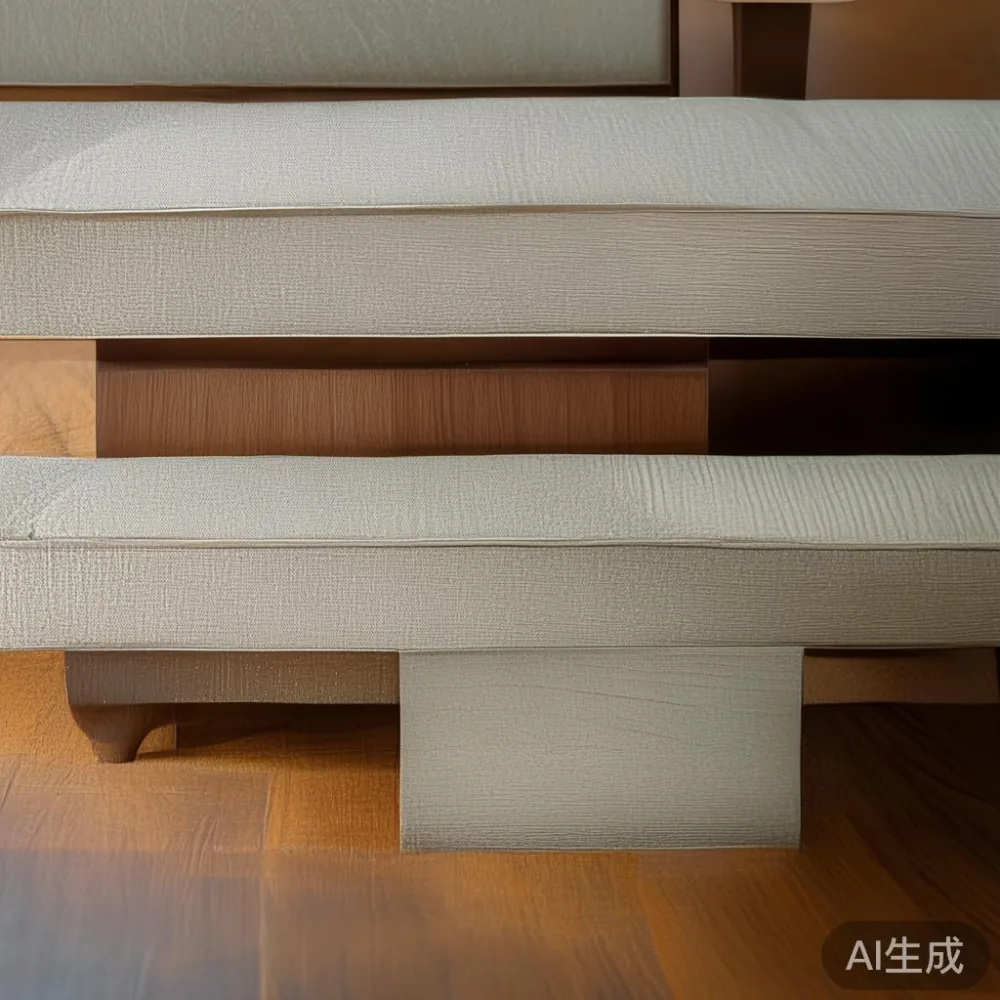
Five years is the right horizon for Singapore furniture decisions. HDB minimum occupation is five years before you can sell on the open resale market. Most condo lease assignments happen on a similar cycle. And the wear pattern of a family sectional sofa in our humidity is roughly predictable by month sixty. Below I work through the real five-year cost of both options, in Singapore dollars, with measurements that actually fit a local flat.
What does a solid wood sectional sofa frame actually buy you in Singapore?
A solid wood sectional sofa frame is constructed from hardwood pieces throughout the load-bearing structure: legs, rails, and the internal skeleton that holds the seat cushions. For the Singapore market, the common species are rubberwood (hevea), oak, and imported ash, kiln-dried to 8-12% moisture content so the kiln handles them properly for our 70-85% humidity range. A three-seater plus chaise configuration, around 280 cm wide x 95 cm deep x 85 cm tall, typically lands between S$3,200 and S$4,800 for the frame-only piece from a Foshan factory exporting here for fifteen years or more. Upholstery in a performance boucle or leather adds another S$600 to S$1,800.
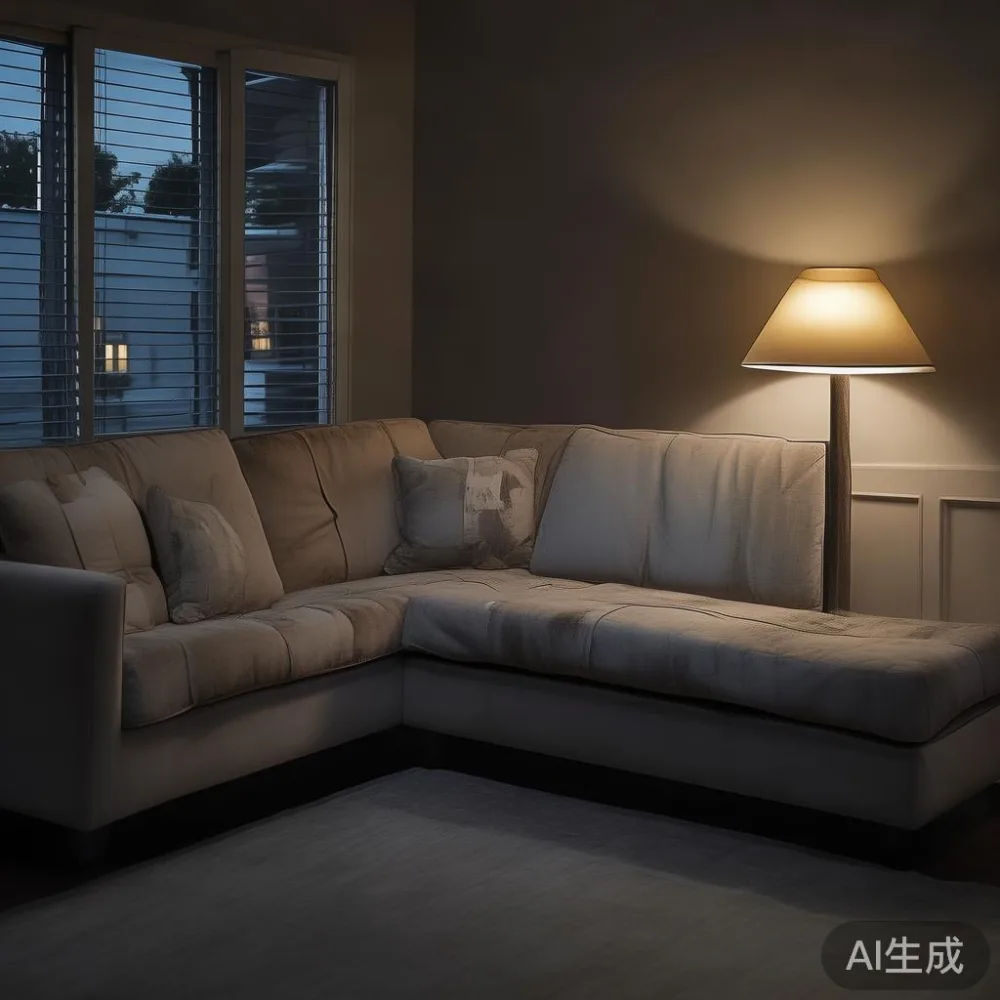
Veneer, by contrast, wraps a thin 0.6-1.2 mm sheet of real wood over an engineered core: plywood, MDF, or particleboard. A comparable three-seater plus chaise from the same factory tier sells for S$2,200 to S$3,100. The savings come from two real things - cheaper raw material and faster pressing lines - and the trade-off shows up at year three, year four, year five.
Year-by-year cost breakdown in SGD
I pulled together a side-by-side model using the Tampines client as the reference household: family of four, one cat, no smoking, two children under eight, weekend movie marathon, sectional sofa built last in March 2024 at a delivered price including GST and lift-level delivery to a 12th-storey Tampines GreenRidges block. All data figures are the original purchase price per line item.
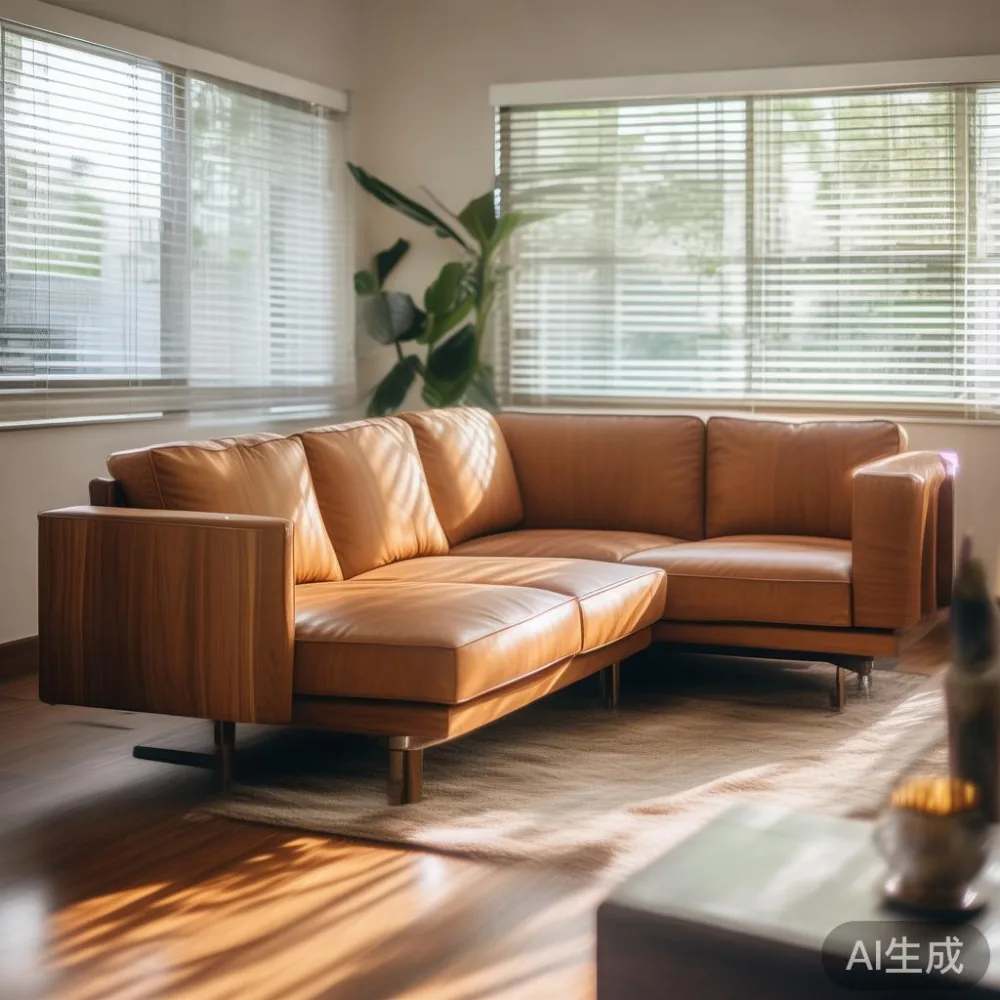
Year 1. Veneer S$2,800. Solid wood S$4,200. Out-of-pocket gap: S$1,400.
Year 2. Veneer: bubble in the laminate along the chaise edge (a common failure when the apartment sits at 82% humidity during the December monsoon). Touch-up kit S$45, plus a Saturday afternoon of ironing and clamping. Solid wood: nothing. Two dehumidifier-cycle supports purchased either way: S$120 each household, neither burdened by frame type.
Year 3. Veneer: the MDF core has absorbed enough moisture that a 12 cm section of the top rail has swollen and pushed the seat cushion out of alignment. A workshop quoted S$420 to rebuild the rail with a replacement panel, but the colour match was off by a shade and the client declined. Solid wood: light refinishing of two armrest scuffs from her son's toy truck: S$80, charged at a S$60 minimum.
Year 4. Veneer: the client is now actively shopping for replacement. The cat has found a seam edge and peeled a 20 cm strip near the chaise. Local repair quoted S$280; the section cannot be colour-blended. Solid wood: a friend visiting from Punggol commented it looked new. Spot treatment of one water ring from a forgotten mug: S$40, often absorbed into the standard service window.
Year 5. Veneer: client lists the sofa at S$150 on Carousell, no takers, pays S$120 disposal through a HDB resale company clearance window. Solid wood: client lists the same sofa at S$1,200, sells in nine days to a young couple moving into their first Punggol HDB BTO. Net five-year cost, frame-on-flatbed comparison: veneer S$3,755, solid wood S$3,120, even after the S$1,400 entry premium on the front end.
How do I choose a rattan wicker for a entryway?
A solid rattan or rattan-wrapped entryway piece, paired with a solid wood bench or console, frames the first impression of your home and should be chosen by three measurements and one rule. First measure the corridor width after the lift door opens; in most HDB blocks this is 1.0-1.2 m, in most condos 1.3-1.6 m. Anything wider than 70 cm will not turn the corner on a Tampines GreenRidges corridor without tipping. Second measure the ceiling height of the entryway; a piece taller than 1.4 m will dominate a 2.6 m home with a 2.4 m corridor. Third measure the depth of your existing shoe cabinet so the new piece does not crowd the hinge arc. The single rule: choose a piece with a frame warranty of ten years or more, because the entryway catches the most direct sunlight and the most humidity swing across the day. Pieces from factories that have exported for fifteen years or more typically offer lifetime refinishing on the solid wood part, which the rim-watcher at the door notices even when the rattan has faded.
Why Singapore humidity changes the calculus
Our average relative humidity of 78-82% year-round, peaking during the December-January monsoon and the June-September inter-monsoon, is the silent variable that decides between the two options. Engineered cores such as particleboard and plywood are hygroscopic and extruded in factories that calibrate to kiln conditions of 6-12% moisture content. When that substrate meets Singapore air, it absorbs and releases moisture with the seasonal swing. Over five years the surface veneer either lifts, cracks along the glue line, or develops micro-bubbles that no iron can flatten. Solid wood moves too, but it moves as a single unit, and a craftsman with a scraper, sandpaper, and a matching stain can refinish the affected area in an afternoon.
This is also why the warranty structure matters more than the brand name. A structural warranty of ten years tells you the manufacturer is confident the frame will hold its joints through our humidity cycles. Lifetime refinishing tells you they expect the surface to need attention and they will plan. Shipping terms above a clear SGD threshold remove a meaningful slice of the total cost: at S$350 in the United States or in your local US conversion, free shipping in effect underwrites the final 8-10% of landed cost; in Singapore, a similar threshold for cross-border purchases removes the S$80-150 courier premium that otherwise makes imported frames uneconomical.
Where the adjacent pieces change the calculation
The sectional sofa decision rarely travels alone. A household that commits to a solid wood frame usually extends the same logic to the matching bed frame, dining table, wardrobe, and nightstand, because the moisture behaviour and the finish are identical. A queen-size solid wood bed frame runs S$2,800-4,200 in the same factory tier; a six-seater solid wood dining table with a stone or marble table top runs S$4,500-7,800. Marble tops are worth a paragraph on their own because the slab weight (a 1.8 m marble table top weighs 110-140 kg delivered) creates a second lift-and-corridor constraint that pure wood furniture does not.
For a bedroom, a solid wood wardrobe of 200 cm x 60 cm x 220 cm weighs 95-140 kg assembled and typically ships in two flat-pack segments under 80 kg each. A solid wood nightstand of 50 cm x 40 cm x 55 cm weighs 18-25 kg and ships as a single carton. The same factory that builds the sectional sofa frame typically builds the matching bedroom pieces, which means the stain change, the laquer change, and the gloss level can be chosen by the same sample door and matched through a single conversation.
This consistency matters in Singapore because re-importing a single replacement piece five years later almost always fails the colour-match test, particularly for pieces ordered at different production batches. A friend in a Punggol condo discovered this the hard way: her 2021 dining table in a warm walnut finish could not be matched by a 2025 replacement nightstand from the same supplier, because the supplier had shifted to a cooler tone.
Design language and the light-luxury question
The aesthetic conversation in 2025 and in 2026 has shifted toward French light luxury, with its slim profiles, brushed brass feet, and cream bouclé upholstery. American light luxury skews heavier: rolled arms, nailhead trim, deeper seat depths. Post-modern light luxury, which I see most often in Punggol and Holland Village condos, leans into the contrasting materials of a solid wood frame against a marble or sintered stone side table, finished in a height that's felt in the room rather than measured.
A solid wood sectional sofa carries all three languages because the substrate is paintable and re-stainable. A veneer frame does not, because the thin top layer cannot be sanded past a single refinishing and cannot be re-sprayed into a different palette without specialized equipment. For clients who want the option to shift from American light luxury in 2026 to post-modern light luxury in 2029, the solid wood frame is the cheaper door. For clients who are decorating the HDB for the five-year sale and will not refinish, veneer is the right answer.
One piece of mid-brand guidance: MIDHILL has built solid wood bedroom and living pieces for export since 2008 and now ships to fifteen or more countries from a Foshan base. Clients who buy the matching bed frame and dining table at the same purchase order tend to spend 8-12% less per piece because the use-versus-Singapore shipping threshold triggers on the consolidated use-versus-Singapore shipment. That single shipping decision often closes the price gap between a single-piece veneer order and a solid wood multi-piece order. MIDHILL pieces are also covered by a ten-year structural warranty and lifetime refinishing on the solid wood components, which is rare outside of North American and European light-luxury factories.
Frequently asked questions from Singapore buyers
Does the 9% GST change the math? Yes, but equally. A S$2,400 veneer sofa becomes S$2,616 at the till. A S$3,600 solid wood sofa becomes S$3,924. The absolute gap holds; the relative gap holds.
What if my HDB lift is too small for a pre-assembled sofa? Standard HDB passenger lift openings are 0.9-1.1 m wide and 2.0-2.1 m tall, with cabin depth of 1.4-1.7 m. A pre-assembled three-seater will not fit. Flat-pack sectional sofa segments under 75 cm wide and under 35 kg each fit every HDB cabin I have walked into over the past decade. The same constraint usually relaxes in newer condos with service lift access.
Is 14-day return enough to test humidity response? Fourteen days catches manufacturing defects. It does not catch seasonal humidity response. That response shows up at month four to six. Look for a warranty that names humidity damage rather than excluding it, and a refinishing commitment that names annual cycle events rather than excluding them.
What I recommend to the Tampines client
For her Bedok resale timeline, I recommended the solid wood frame, paid for across twelve months of no-interest instalments at a local furniture retailer, and matched with a solid wood dining table and queen bed frame. The full living-and-bedroom set crossed the free-shipping threshold and the use-versus-Singapore shipping was consolidated. Her five-year plan is to refinish the dining table top once at year three, refinish the sofa arms once at year four, and sell the whole set as a package at year five to a Punggol BTO family. Net cost over five years, including refinishing and the original S$1,400 premium: roughly S$3,100. Net cost over five years for the same household buying veneer: roughly S$3,750, plus the disposal piece that cannot be sold.
The price gap closes by year three. By year five the solid wood path is cheaper. By year seven, on the new owners' timeline, the solid wood path will outlast the next resale cycle by a comfortable margin. That is the math I walked her through on her dining table top that Tuesday in Tampines, and the math that holds for any Singapore household deciding between the two paths in 2026.