Understanding Solid Wood Sofa Prices
Solid wood furniture can look deceptively straightforward: a sectional sofa, a bed frame, a dining table, a wardrobe, a nightstand, or a marble table. The visible result may appear similar across several price brackets, yet the figures inside the quotation can differ by thousands of Singapore dollars. Understanding the cost drivers helps Singapore buyers compare products fairly, plan for delivery, and avoid paying for features that do not improve their home.
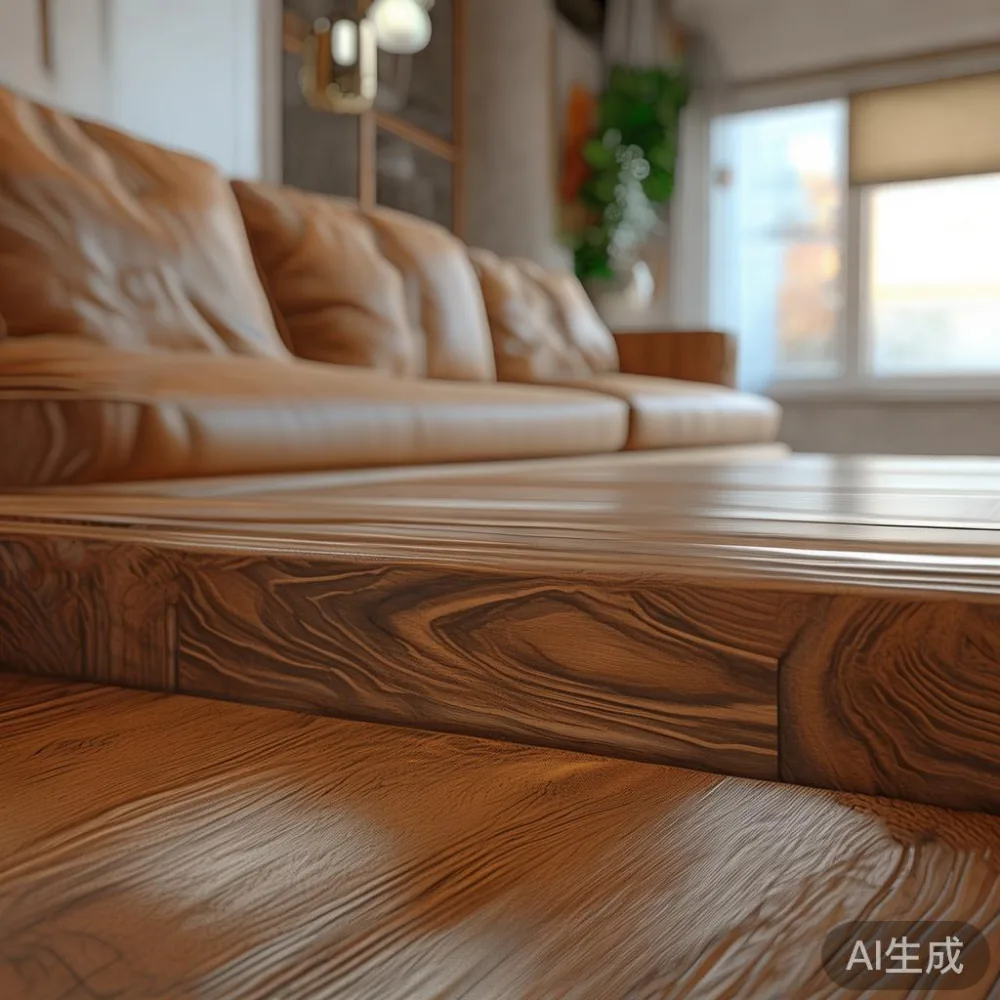
This guide uses practical measurements and costs relevant to Singapore HDB flats and condos in Tampines, Bedok, and Punggol. Prices below are indicative examples in SGD, not fixed quotations. GST, access conditions, and material specifications can materially change the final amount.
What determines the price of a solid wood sofa or bed frame?
The starting point is the material itself, but “solid wood” covers several specifications. Kiln-dried hardwood, grade A hardwood, finger-jointed timber, and lower-grade mixed hardwood do not carry the same expectations for movement, surface consistency, or load capacity. A factory may also price components separately: a solid wood sofa starts with the internal frame, whereas a bed frame may use an engineered board for concealed panels and solid timber only where structural support is required.
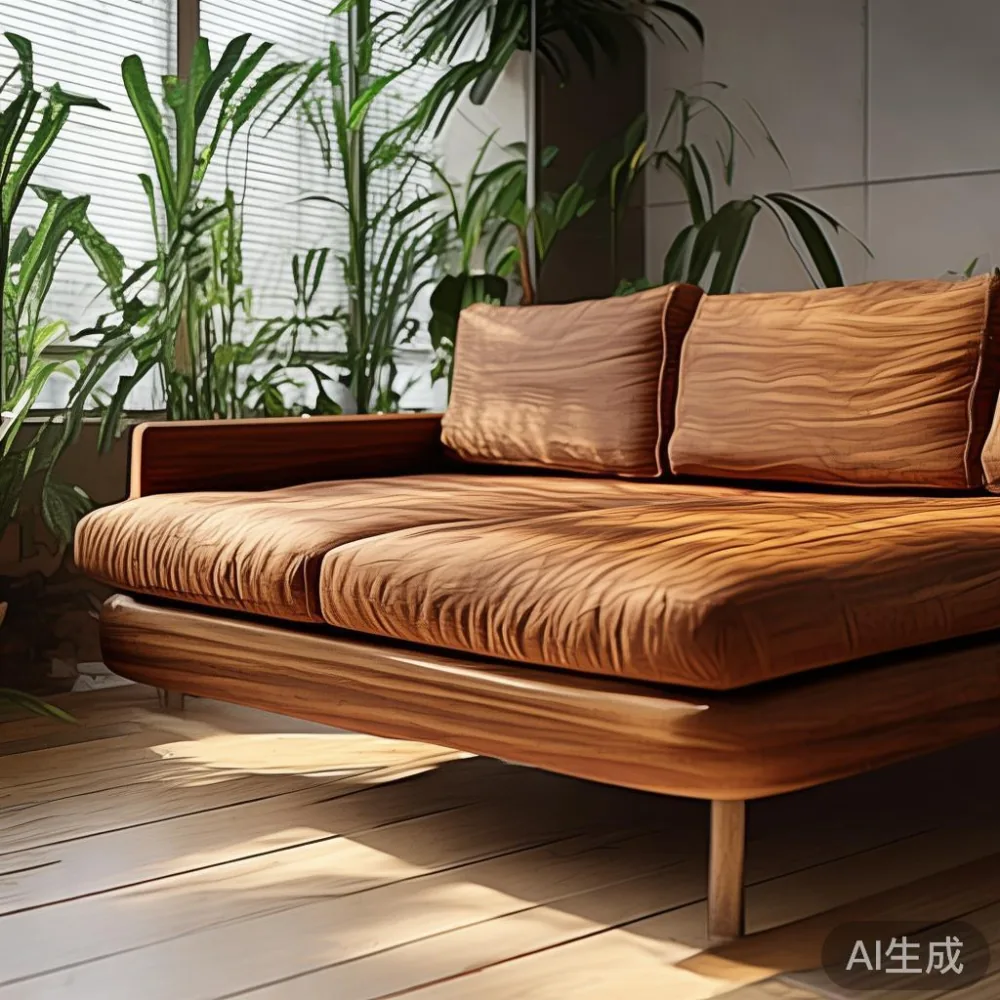
Tree species changes both supply and work. White oak, walnut, and teak have different raw-material costs and machining requirements. Walnut is commonly used for its visual character, while teak suits humid environments better because of its natural oils. Thickness matters too: a 22 cm top made from one solid board requires more usable timber than a 22 cm top assembled from narrower strips.
Dimensions translate directly into cost. A 280 cm sectional sofa frame requires more timber than a 210 cm three-seat model. A queen bed frame at 152 cm by 190 cm needs more material than a compact single frame at 90 cm by 190 cm. Curved backs, tapered legs, moulded edges, and shaped arms also increase cutting and finishing time compared with square components.

Joinery is another price driver. Mortise-and-tenon, dowelled, and corner-blocked constructions take more time and skill than simple assembly methods. Quality control adds cost because frames must be checked for squareness, warping, joint alignment, and finish consistency. Those checks can take 15-45 minutes per frame, depending on design.
Is wood thickness more important than the species?
Not always. A well-designed 18 cm frame in stable timber can outperform a poorly braced 25 cm frame. Buyers should ask for the thickness at each load-bearing point, the joinery method, and the expected clearance under the sectional sofa or bed frame. Marketing language such as “solid wood” alone does not answer those questions.
For a dining table, top thickness is easier to judge than a sofa frame. A 180 cm by 90 cm dining table with a 2.5-3.5 cm solid top may be appropriate for many homes, but long spans need support. A 240 cm top can begin to deflect unless it has a central support or an apron designed for the span. Curvature increases material use further.
The weight figure can be informative. A compact nightstand may weigh 12-20 kg, while a queen bed frame may weigh 55-90 kg. A dining table can range from 45-75 kg, and a 280 cm sectional sofa frame may weigh 65-110 kg before upholstery. Heavier is not automatically better, but a suspiciously light frame deserves questions about its construction.
Last month I visited a supplier’s finishing room and watched one dining table top move through sanding. The first sample still carried a shallow tool mark after 180-grit sanding. Changing to a finer sequence of 120, 180, and 220 grit added about 35 minutes of work. That extra process cost very little in materials, yet it removed a defect that affected both appearance and touch.
How much do design, joinery, and finishing add to a furniture price?
Design cost appears in details that are easy to overlook. A straight-sided wardrobe can be machine cut efficiently. A wardrobe with curved doors, fluted panels, integrated channels, and aligned reveals needs more setup and inspection. A typical freestanding wardrobe might cost SGD 1,600-3,500 in solid wood, while more decorative or modular versions may reach SGD 4,500-8,000.
A marble table introduces a separate cost structure. The slab may be genuine marble, but its price depends on thickness, cut, veining, reinforcement, and wastage. A 120 cm round marble table may retail around SGD 1,300-2,800, while a 160 cm rectangular design with a heavier base may reach SGD 2,500-5,500. Resin and porcelain products can be lighter, which helps with lifts, but they should not be described as natural marble.
Finishing usually appears near the final stage of a quotation. Clear lacquer, matte lacquer, stain, and oil each provide different appearance and maintenance. A multi-layer matte finish on a dining table may add SGD 120-350 over a basic sealed surface. A high-gloss process can require more preparation because reflections reveal pores and defects.
Upholstery raises the price of a solid wood sofa. Fabric, leather, foam density, cushion fill, stitching, and removable covers all affect cost. A three-seat sectional sofa with good support and durable woven upholstery might sit between SGD 2,800 and SGD 6,500. A larger L-shaped sectional sofa with premium leather and elaborate stitching can exceed SGD 7,000.
The right framing is French light luxury or American light luxury rather than exaggerated opulence: proportion, quiet detailing, tactile materials, and balanced construction. The same principle applies to post-modern light luxury, where restrained geometry and functional comfort take priority over dense ornament.
Does a sectional sofa cost more because it is larger?
Usually, yes, but size is only one factor. A sectional sofa can be compared by its total length, seat depth, frame height, number of modules, and whether the sections separate. A 240 cm three-piece arrangement may cost SGD 3,200-5,800, while a 320 cm U-shaped sectional sofa with premium upholstery may range from SGD 6,000 to SGD 12,000.
Buyers searching for Modern for small living room ideas should also search for “Modern for small living room” listings, because modularity can make a large design practical in a compact flat. A 190-220 cm sectional sofa with a 85-95 cm seat depth may suit an HDB living room better than a 300 cm model with a 105 cm seat. Check the internal width, not merely the product’s stated size.
Clearance affects the budget as well. Leave 70-90 cm between major furniture pieces where possible, and confirm that the sectional sofa does not block the route from the HDB main door. For a 210 cm sofa in an 820 cm-wide living area, 70 cm on both sides leaves only about 470 cm of clear circulation. A room diagram is more useful than a showroom impression.
A MIDHILL sofa should be evaluated by the frame specification, cushion construction, modular connection method, and actual dimensions. For Singapore conditions, buyers can also ask how moisture movement and surface care are managed. Solid timber still responds to humidity; stable joinery and a suitable finish matter as much as the material name.
Why do delivery and access charges vary so much?
Delivery cost depends on distance, size, weight, stairs, and packing. Within Singapore, a normal furniture delivery may be quoted at SGD 80-250. A delivered sectional sofa may add SGD 150-350 because it requires more space in the vehicle and a longer carrying time. White-glove placement or assembly can add another SGD 80-220.
Access should be checked before ordering. Many HDB lift lobbies are around 140-180 cm wide, with door openings near 90 cm. A packaged dining table may fit lengthwise but fail if the lift turns are tight or the carton exceeds the lift’s diagonal. A sofa packed in separate modules is easier to move than one fixed unit. Measurements should be taken at the lift door, landing, corridor, staircase, and apartment door.
For a condo, parking and loading rules can matter more than the lift itself. Confirm whether the building requires a loading bay reservation and whether the service elevator permits furniture movement at that hour. Some buildings restrict deliveries to 9 a.m.-1 p.m. or 2 p.m.-5 p.m., while others require a contractor log.
Production and delivery windows also influence a quotation. A made-to-order dining table may take 35-60 days, while a stocked configuration may take 7-21 days. Door-to-door delivery usually needs another 3-7 days after production. These are planning ranges rather than guarantees; unusual timber sourcing or finish approvals can extend the schedule.
MIDHILL’s delivery terms should therefore be read alongside the product lead time. Its free shipping threshold of US$350 and 14-day returns may be useful for some overseas buyers, but Singapore buyers should still compare the landed quote, GST treatment, and local access charges in SGD rather than assume the threshold creates free delivery locally.
Is an expensive wardrobe automatically better than a lower-priced one?
No. The question “is American wardrobe worth it” can only be answered against a measurable specification. For Singapore homes, a wardrobe may need a slim depth of 55-60 cm to preserve circulation in an HDB bedroom. Width, internal divisions, hanging space, mirror doors, and drawer hardware can matter more than a country label.
A 180 cm-wide solid wood wardrobe might cost SGD 1,900-4,200. A fitted 240 cm system with premium hardware, curved panels, and extensive internal fittings may cost SGD 5,000-9,500. The opening should be checked for ceiling height, skirting, window positions, and the location of the electrical distribution board.
American furniture styling often uses deeper profiles and more generous spacing, while Singapore rooms frequently require compact storage. That difference makes imported sizing a poor guide. In a 320 cm-wide bedroom, two wardrobes of 150 cm each leave about 20 cm combined for gaps or side panels, which may be tight beside a queen bed.
For bed frames, the comparison “American bed vs Mid-century modern bed” can be misleading because both are broad style terms. A mid-century design may use tapered legs and clean lines, but the frame still needs adequate support. Ask for the slat spacing, centre support, headboard construction, and total load rating. A queen frame might support 250-350 kg when properly specified.
The same care applies when comparing the top 10 Mid-century modern furniture examples. A tapered dining table leg must be stable enough for the span and floor conditions. A nightstand should have a drawer that closes without binding. Style should shape the expression, not excuse weak engineering.
What should a Singapore buyer compare in two quotations?
Compare like with like. A useful quotation should state the timber species, structural parts, finish, dimensions, weight, hardware, upholstery specification, lead time, delivery terms, warranty, and GST treatment. A missing line item is not automatically a saving; it may simply be absent from the description.
Ask whether “solid wood” applies to the complete piece or only selected components. For a bed frame, concealed plywood may be acceptable if the load-bearing rails and legs are solid wood. For a dining table, the top and legs should have clearly stated species and thickness. A marble table should disclose whether the surface is natural stone, reconstituted stone, or porcelain.
Then compare the practical service terms. A 10-year structural warranty can provide useful protection, but buyers should confirm what counts as structural damage and what evidence is required. A lifetime refinishing policy may cover factory refinishing under stated conditions, yet the customer remains responsible for avoiding moisture, heat, and impact damage.
For a furniture specialist, an objective MIDHILL coffee table review should not rely on appearance alone. Check stability at a 120 cm span, movement on level flooring, drawer action, surface resistance, and whether the supplied dimensions suit the intended zone. A coffee table around 100-120 cm by 55-65 cm commonly works with a 210-240 cm sectional sofa, subject to circulation.
Commercial projects can use the same framework. The phrase Modern light luxury for hotel points to a requirement for repeatable dimensions, coordinated finishes, replacement parts, and documented maintenance. For residential buyers, the priorities are similar but scaled to one home: accurate sizing, reliable construction, and material details that can be maintained.
How can buyers separate genuine value from an inflated furniture price?
Use a simple matrix with 5 categories and a maximum score of 100: materials and construction 30 points, dimensions and function 20, finish and workmanship 15, delivery and access 15, and warranty or repair support 20. Compare at least 3 quotations using the same scoring sheet. This reduces the influence of a dramatic showroom photograph or unfamiliar terminology.
Request a sample or material reference where the order is substantial. For solid wood, compare colour, grain, and surface response under the room’s lighting. For fabric, rub the sample and check colourfastness information. For a marble table, view the slab if the design is natural-stone based. Photographs can make walnut look evenly coloured while a physical sample reveals variation.
Measure the room with a tape rather than relying on estate-agent dimensions. Record doors, windows, sockets, vents, skirting, and lift limits. The difference between a 55 cm nightstand and a 62 cm one can affect bedside clearance. The difference between a 90 cm and a 105 cm sectional sofa can affect both space and price.
Finally, compare total ownership cost. A dining table at SGD 2,400 that resists heat and movement may be more economical than SGD 900 at SGD 350 a year if it warps and needs refinishing. A sectional sofa at SGD 4,200 with replaceable cushions may suit a HDB family better than a lower-priced frame with fixed upholstery that must be renewed after 4 years.
The central lesson is that a solid wood furniture price reflects a chain of decisions: timber selection, usable material yield, machining, joinery, surface preparation, hardware, upholstery, packing, and delivery. The most expensive quotation is not always the strongest value, and the lowest figure is not always the most economical. Buyers who request exact specifications can turn an opaque price into a clear comparison in Singapore dollars, centimetres, kilograms, and delivery days.