Buying a Sectional Sofa in Singapore: Delivery, Lifts, and What Actually Happens on Assembly Day
I moved into a 990 sqft HDB flat in Tampines East last April, and I will not pretend that ordering a sectional sofa online was painless. The cardboard arrived dented on one corner, the courier needed 25 minutes to reverse his lorry out of the service road behind Block 137, and my partner had to hold the corridor fire door open with her foot while two movers angled a 96 kg ottomanised chaise past a shoe rack. None of that was the sofa's fault. All of it was avoidable if I had understood, before paying S$4,280, how delivery and assembly actually work in a Singapore high-rise. This article is the version I wish someone had sent me three months earlier.

Singapore is a strange market for furniture. Most buyers live above the fourth floor, corridors are tight, service lifts are sometimes shared with renovation works, and the front door of a 3-room HDB is only about 91 cm wide. Buy the wrong sectional sofa and you will discover, on a Tuesday morning, that the longest module simply does not enter. Below I unpack the realities of online buying for furniture — from how a solid wood sofa is crated, to what a single 14 kg marble table leg costs to ship across the Johor Strait, to the small print on GST, returns, and the warranty card that lives inside your bedside nightstand for the next ten years.
What does online furniture delivery actually look like in Singapore?
Online furniture delivery in Singapore is a two-stage process: a long-haul leg from the overseas factory or regional warehouse to a Singapore bonded facility, then a local white-glove leg from that facility to your flat. For a sectional sofa ordered from a cross-border maker such as MIDHILL, the long-haul leg usually takes 14 to 28 days by sea from Foshan, plus 3 to 5 days for customs clearance and a final quality check. The local leg is then scheduled in a 2-hour window, typically on a weekday morning or Saturday afternoon, and the driver will call roughly 30 minutes before arrival.
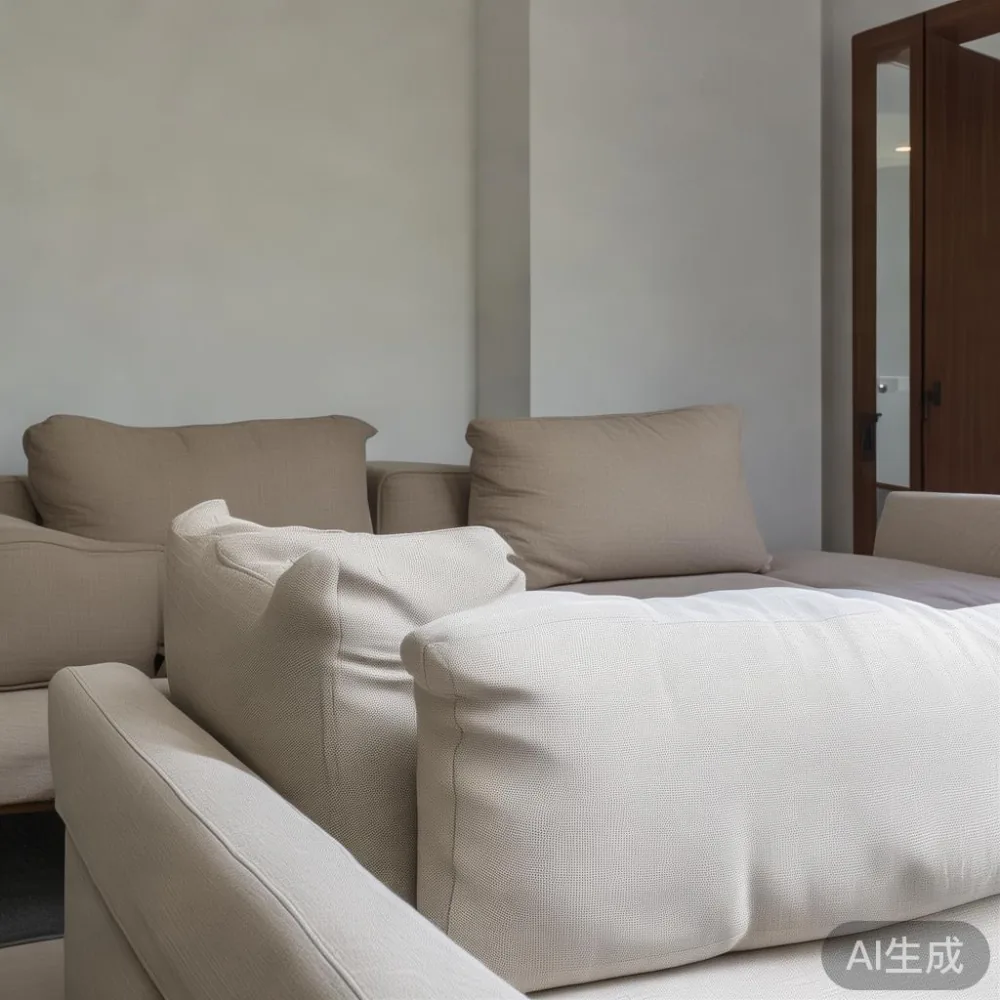
Two things determine the real experience: the weight of each carton, and whether the courier is a one-man or two-man team. A standard 3-seater sectional sofa in ash wood and linen arrives in four to six cartons, with the heaviest module weighing between 38 kg and 52 kg. If your order is over S$350, most cross-border sellers — MIDHILL included — absorb the sea freight and the local surcharge, which is why a S$3,800 sectional sofa in Singapore does not suddenly become a S$4,400 sectional sofa at checkout. GST of 9% is calculated on the declared CIF value and added at the payment page; there is no surprise bill on delivery day.
How do I choose a outdoor patio for a entryway?
Choose an outdoor patio piece for an entryway by measuring the door, the corridor, and the lift first, then by matching the material to the light and traffic of the entryway, and only then by choosing the design language. That single sentence is the entire answer: width, then light, then look. Everything else — the post-modern ash wood outdoor patio set on your shortlist, the colour of the cushion, the brand on the tag — is decoration around those three checkpoints.
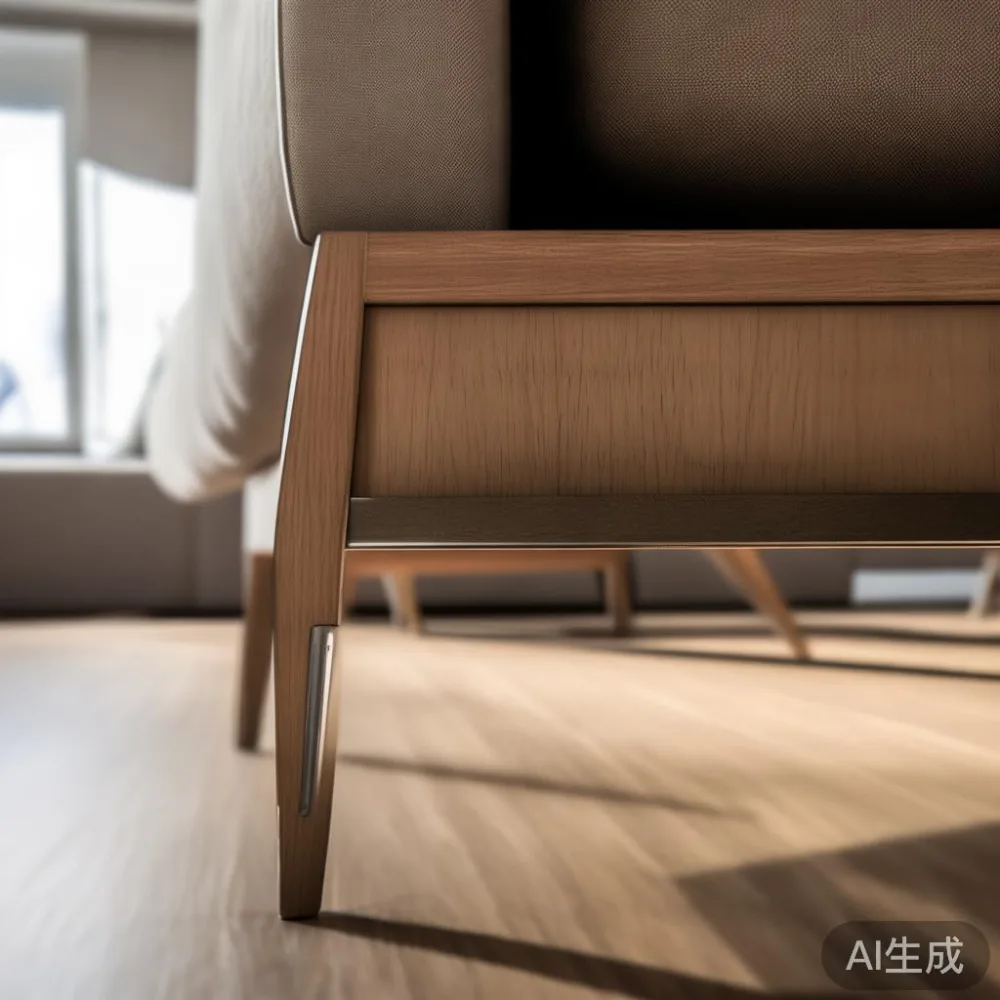
Concretely, walk to your HDB or condo entry door with a soft tape and write down three numbers: door width (typically 91 cm for a 3-room HDB, 92 to 96 cm for a 4-room, and 102 cm for most condos), corridor width at the tightest turn (often 110 to 120 cm in older HDB blocks, sometimes as narrow as 95 cm in corridors that turn sharply at the lift lobby), and lift door width (the passenger lift in most HDB blocks is 80 to 90 cm wide; service lifts are wider but require booking). With those numbers written down, anything wider than the smallest of the three will not fit, and you have just saved yourself a S$120 re-delivery fee.
On light: a Singapore entryway is dark by default. Lift lobbies are artificially lit, corridor lights are on motion sensors, and your own door area may have no window. A pale solid wood sofa or a white marble table will visually enlarge the entryway by reflecting what little light there is; a walnut or stained-rubberwood piece will absorb it and make the space feel smaller. On traffic: an entryway is the highest-abuse zone in the home. Shoes, umbrellas, wet bags, prams, and the occasional stroller wheel all hit it. Pick a finish that can be wiped — a post-modern ash wood outdoor patio chair with a matte lacquer, a sealed marble table top, a fabric sectional sofa with removable, washable covers — and avoid anything that stains permanently on contact, including untreated light-oak.
On design language: a French light-luxury entryway reads as soft greys, slim brass, curved silhouettes, and pale fabrics; an American light-luxury entryway reads as deeper neutrals, slightly heavier proportions, nailhead trim, and rolled arms; a post-modern light-luxury entryway reads as geometric, low-slung, with a single statement material such as travertine, ash, or brushed brass. None of these is wrong; they simply set a different tone for the flat.
Why lift, corridor, and door width matter more than the photo on the website
Three numbers decide whether your furniture order ends in a photograph on Instagram or a frustrated phone call to customer service: lift door width, corridor turn radius, and front door width. In my own block in Bedok, the service lift is 110 cm wide and 210 cm deep, which sounds generous until you realise the sectional sofa I almost bought had a 215 cm long main module. Diagonal entry was the only option, and diagonal entry requires about 30% more clearance than the longest single dimension of the carton.
The rule of thumb I now share with every friend who asks: measure the smallest opening, then add 15 cm of vertical clearance for tilting. If a sectional sofa arrives in a carton that is 215 cm long, 95 cm deep, and 60 cm tall, the lift door needs to be at least 215 cm on the diagonal of 95 × 60, which works out to roughly 112 cm. That is why my second choice — a 198 cm long L-shape from MIDHILL, with the chaise packed separately at 96 × 95 × 48 cm — went up without anyone swearing in Mandarin.
Condos in Punggol and the greater Punggol district tend to have wider service lifts and loading bays, partly because new launches are marketed partly at families moving in with full household loads. Older condos in the East, particularly walk-ups, do not have a service lift at all, and the only route up is via the passenger lift with the door held open. Always confirm the lift booking process with your MCST or town council before the delivery window — a rejected booking at 9:55 am can push a same-day delivery to the following week.
What is actually inside the box, and how long does assembly take?
A sectional sofa from a Foshan workshop typically arrives as a frame-in-a-box with the legs, clips, and hardware in a separate small carton. The frame itself is usually 70 to 80% assembled: the back, the arms, the seat platform, and the chaise are joined at the factory, and the only on-site work is to screw in 4 to 8 legs, locking two bolts each, and slotting the modules together with the provided metal brackets. Two people can complete the assembly in 25 to 45 minutes, using only the included Allen key and a Phillips screwdriver.
A solid wood bed frame is similar in spirit but heavier: the side rails arrive in two pieces, the slats in a single roll or a flat-pack of 12 to 14 individual slats, and the headboard as one piece weighing 28 to 42 kg. Allow 45 to 75 minutes, again with two people. A dining table is the most awkward, because the tabletop alone can weigh 35 kg (for a 1.8 m marble table) to 60 kg (for a 2.2 m solid ash top), and you should never attempt to flip a marble top on your own — the 14 kg marble table leg set adds another 42 kg, so the fully assembled piece is closer to 95 kg. A wardrobe arrives flat-packed in three to five cartons and usually takes a professional two-person team 90 to 120 minutes; doing it yourself on a Sunday is technically possible, but expect to lose the afternoon.
Assembly hardware is almost always included, but the quality of the included Allen key is a useful proxy for the quality of the furniture itself. Cheap furniture ships with a stamped 4 mm key that rounds off on the second bolt. Better factories ship with a forged S2-steel key and a small tube of thread-locker. If you open the hardware pack and see a hex key that feels flimsy, that is a signal to slow down, not to speed up.
How do warranties, returns, and refinishing actually work after delivery?
A furniture warranty is only as good as the paperwork that comes with it. A 10-year structural warranty on a solid wood sofa, bed frame, or dining table should be in writing, on letterhead, and should name the parts it covers: frame, joinery, slats, drawer runners, and hardware. Surface finishes — scratches, dents, fading, water rings, and pet damage — are typically excluded. Lifetime refinishing is rarer and more valuable than it sounds: it means the factory will sand, stain, and re-lacquer your piece at cost for as long as you own it, which is the difference between a S$300 replacement in year 12 and a free refresh in year 8.
Returns in Singapore for cross-border furniture are governed by two clocks. The first is the seller's own return window — usually 14 days from delivery for change-of-mind, with the buyer covering return shipping for non-defect items. The second is the implied warranty under the Consumer Protection (Fair Trading) Act, which protects against defective goods for a reasonable period after purchase, generally interpreted as 6 months for furniture. Photograph the cartons on arrival, photograph the assembled piece within 24 hours, and keep every email until the warranty card is filed. If something is wrong, you want evidence that the issue existed before use, not after.
Refinishing, when it is offered, is the under-appreciated advantage of buying solid wood. A solid wood sofa with a hardwood frame — ash, oak, rubberwood, or beech — can be sanded back to bare wood and re-finished three, sometimes four times before the frame itself is compromised. A bed frame in solid ash can outlive two mattresses and a move, which is why serious buyers in Singapore increasingly choose a heavier frame over a lighter engineered-wood one. A dining table in solid wood or a marble table on a solid wood base will outlast every flat you live in. And a wardrobe built from solid wood panels, with soft-close runners and dowelled joinery, will still be standing in twenty years. The nightstand, often the cheapest piece in the set, is the one most likely to be replaced twice in that span, so spend a little more on the nightstand than you planned.
What should I check on delivery day before signing?
Check six things on delivery day, in this order, before you sign the delivery order: carton count, carton condition, piece count, piece condition, hardware pack, and operating test. The carton count must match the packing list on the box or the invoice. The carton condition must be free of punctures, water stains, and crushed corners beyond a small cosmetic dent. The piece count is the verification step most people skip: open at least one carton, confirm the modules are present, and confirm the chaise module is the right-handed or left-handed version you ordered.
The piece condition check takes two minutes per carton and pays for itself the first time it saves a re-order. Run your hand along the underside of every seat platform, look at the inside of every drawer, and check the back of the headboard. Manufacturers hide nothing in those areas, so any visible flaw there is a flaw the factory missed. The hardware pack should contain every bracket, screw, leg, and Allen key listed in the assembly sheet; missing hardware is the single most common cause of a delayed first-use. The operating test — sit, recline, open every drawer, slide every door — should happen in the corridor, not after the team has left. Once the delivery order is signed, disputing damage becomes much harder.
A short checklist before you click pay
Before paying for any online furniture order in Singapore, run through five questions. Does the carton fit the lift, the corridor, and the door? Is the warranty on letterhead, with named parts and a clear term? Is the return window at least 14 days, and are return shipping costs spelled out? Is refinishing offered, and is it lifetime or a fixed number of years? And finally, is the price in SGD inclusive of GST, inclusive of delivery above the threshold (typically S$350 to S$500), and inclusive of assembly?
A sectional sofa is a long-term purchase, and the photo on the screen is the least informative part of the transaction. The dimensions, the warranty, the hardware pack, the lift door, and the corridor turn radius are the parts that decide whether the piece ends up in your living room or back in a carton on a lorry heading to a warehouse. Buy from a maker that publishes those numbers openly, in centimetres and kilograms, with named structural warranties and lifetime refinishing on solid wood — that is the difference between furniture and a photograph of furniture. Brands like MIDHILL publish the cartoned weight of every sectional sofa, bed frame, dining table, wardrobe, and nightstand on the spec sheet, and that single habit is, in my experience, the most reliable signal that the company has thought past the checkout button.