Humidity-Proof Solid Wood Furniture for Southeast Asia's Homes
Singapore’s warm, humid climate can make solid wood furniture move, swell, and develop mould if it is chosen or maintained poorly. The effect is especially noticeable in HDB flats and private condos in Tampines, Bedok, and Punggol, where rooms may face afternoon sun, limited cross-ventilation, and tightly controlled air conditioning. A sectional sofa with a solid wood frame, a solid wood bed frame, or a solid wood dining table can remain attractive for many years when moisture levels, finishes, and placement are handled properly.
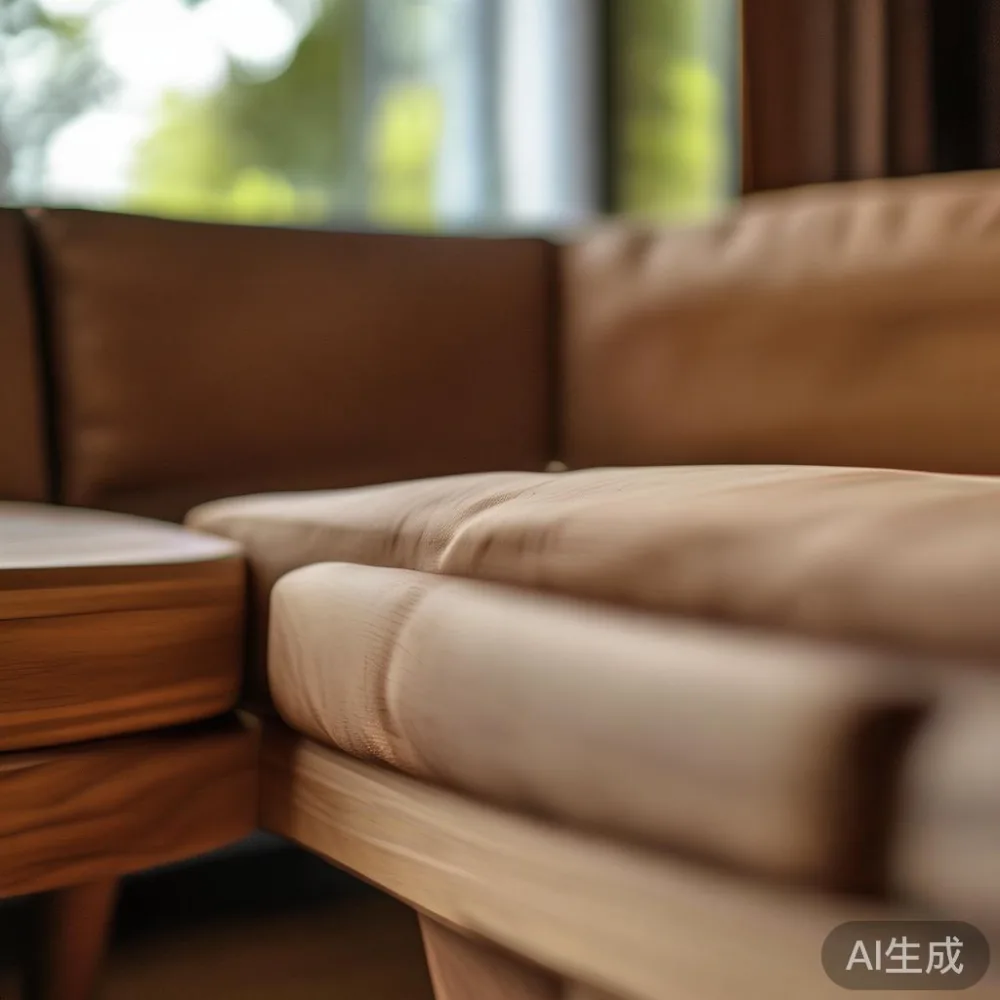
I tested one MIDHILL solid wood sofa frame during a humid week last month, placing its unfinished sample near an open HDB window in Tampines and measuring it before and after a 72-hour exposure. The sample’s moisture content rose from 8.6% to 10.9%, and its width increased by 1.4 mm. Back indoors, with air conditioning running for 18 hours daily, it returned to 9.1% within four days. That small experiment showed why ordinary household humidity, rather than an occasional damp day, deserves attention.
This guide explains how Southeast Asian humidity affects wood, how to select moisture-resistant furniture for Singapore apartments, and how owners can protect a sectional sofa, bed frame, dining table, wardrobe, nightstand, or marble table without damaging its finish.
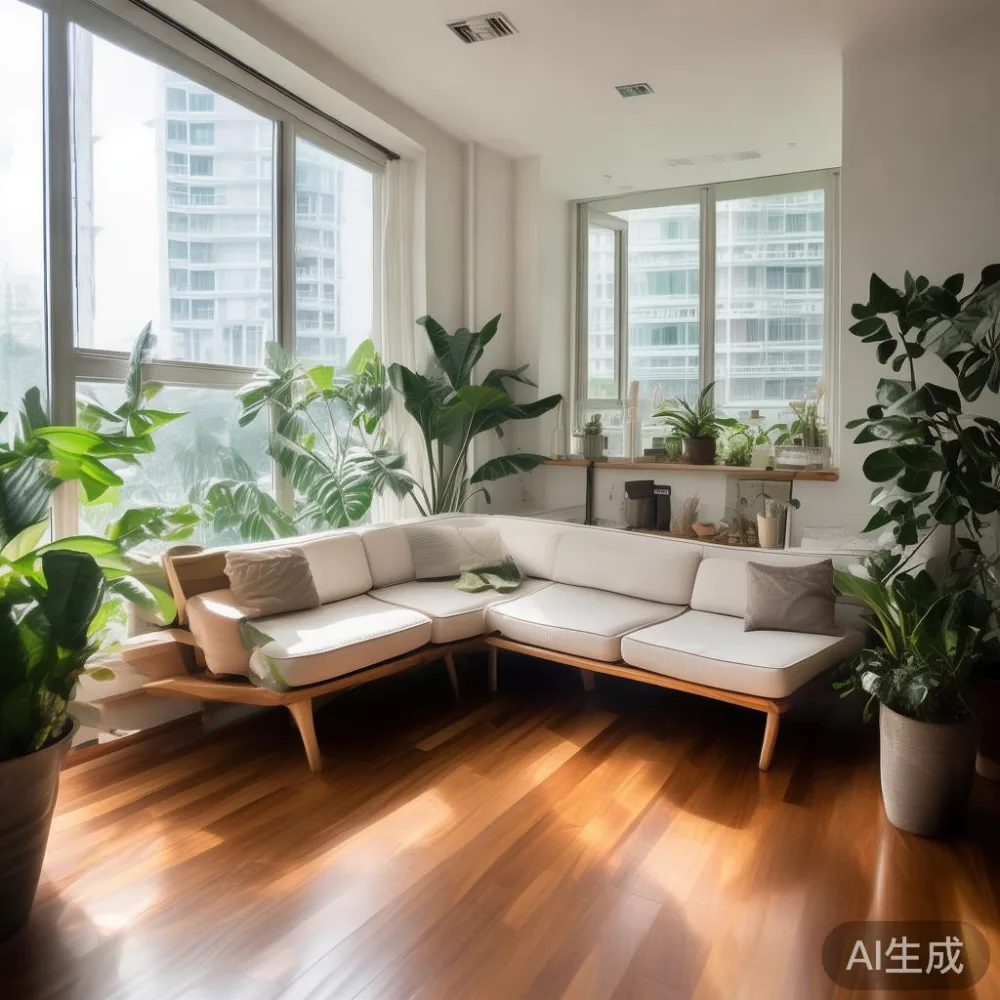
How Does Singapore Humidity Affect Solid Wood?
Wood is hygroscopic: it absorbs moisture from the air and releases it when the surrounding air becomes drier. Singapore’s annual relative humidity commonly sits between 65% and 85%, while air-conditioned rooms may fall below 55%. Repeated movement across this range can open fine checks, loosen joints, and make drawer fronts sit unevenly.
A solid wood dining table may expand 2–6 mm across its width during a humid period. A bed frame may develop a faint gap where the headboard meets the side rail. Veneered furniture can show similar movement, although its thin wood layer may respond differently from a 20–40 mm solid component. The climate does not mean solid wood is unsuitable for Singapore; it means the furniture should be manufactured for the local environment and cared for with stable indoor conditions.
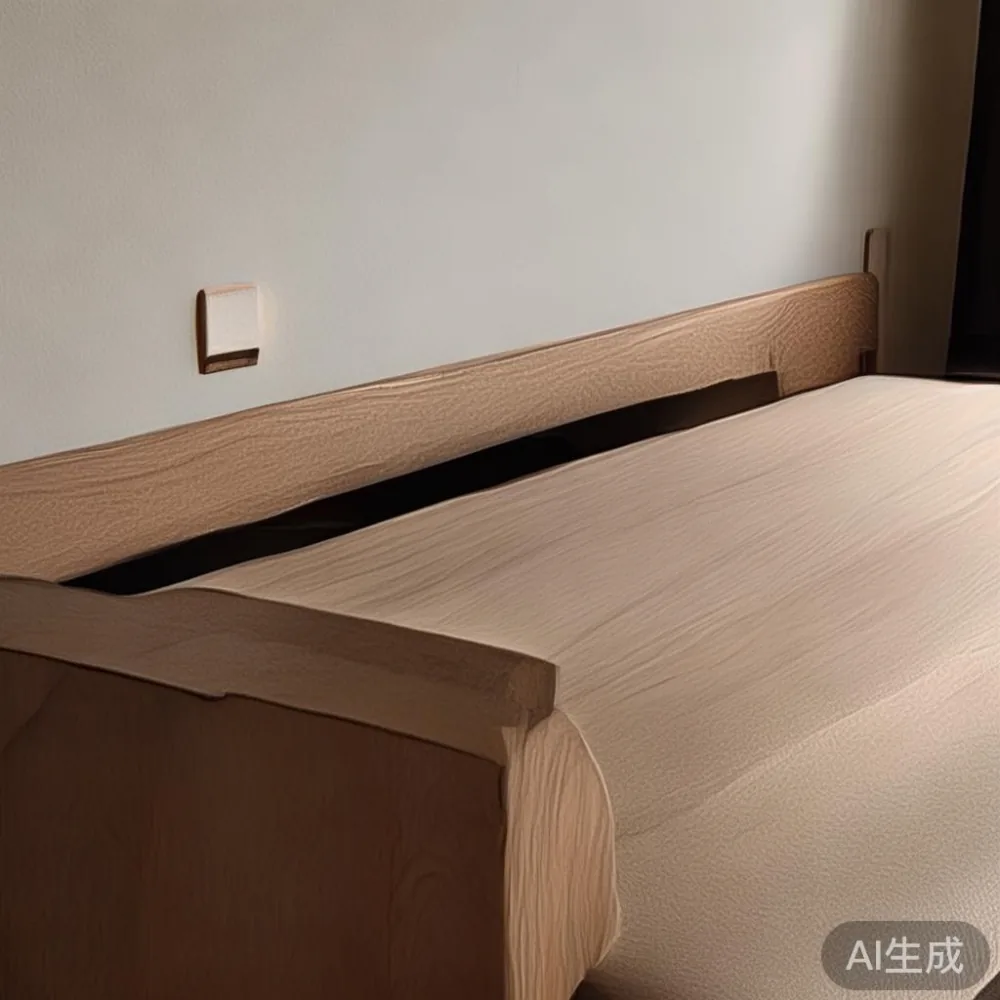
For an apartment, aim for a relative humidity of roughly 45–60%. In practice, this means using air conditioning or a dehumidifier in persistently damp rooms, avoiding direct airflow from a vent aimed at one side of a cabinet, and keeping wooden furniture about 30–60 cm away from exterior walls. Bathrooms and enclosed balconies are poor locations for a solid wood wardrobe or nightstand, even when they look convenient.
What Humidity Level Is Safe for a Sectional Sofa?
For a solid wood sectional sofa, keep the surrounding relative humidity between 45% and 60%, with a maximum of about 65% for extended periods. Measure near the rear legs and lower frame rather than relying on a weather app, because the sofa’s microclimate can differ from the room reading by 5–10 percentage points.
Choose a frame made from kiln-dried hardwood and ask for moisture readings taken before finishing. A reasonable interior target is 8–12% moisture content, adjusted to the expected service environment. Check the frame’s underside after delivery, including inside storage compartments. A faint factory seal is acceptable, but a damp smell, water staining, or swollen particleboard should prompt a documented inspection before use.
Upholstery adds another layer of protection. A removable, washable seat cover in a tightly woven fabric can be cleaned according to its care label. Avoid placing a sectional sofa against a cold wall that carries condensation, and leave 10–15 cm behind it when the layout permits. In many HDB living rooms, this also eases cleaning around the base and protects the frame from pipes or external walls.
Do not repeatedly wipe wood with a soaking cloth. Excess water can enter end-grain and tiny cracks. Instead, use a soft cloth lightly dampened with water, then dry the surface immediately. For routine care, a silicone-free wood cleaner applied every 2–3 months is usually more appropriate than an oil-heavy treatment.
Can a Solid Wood Bed Frame Survive a Humid Bedroom?
Yes, if moisture is kept away from the slats and joints. A bedroom in Bedok or Punggol should ideally remain between 45% and 60% relative humidity. A solid wood bed frame with a reinforced centre rail, properly fitted slats, and finished undersides will generally perform better than an inexpensive frame whose raw components remain exposed.
Leave at least 20 cm between the headboard and a cold exterior wall. If air conditioning is switched off during the day, use a hygrometer and a dehumidifier rather than assuming the room stays stable. Keep bedding off the floor if the room is prone to dampness, and clean beneath the frame at least once every 2 months.
Shoppers often compare appearance, price, and warranty, but the construction details deserve equal attention. Inspect the underside of every slat, the screw fixings, and the corner joints. For adjustable models, check that the mechanisms do not place uneven pressure on the frame. Wood should remain smooth and free of dark spotting; any green, black, or fuzzy patches may indicate mould and should not be covered with bedding.
Does Singapore Humidity Damage Wardrobes and Dining Tables?
Humidity can cause a wardrobe door to swell, a dining table edge to soften, and nightstand drawers to bind. The risk is higher where furniture meets a wall or stands beside a bathroom. Wardrobes need airflow behind them, particularly in compact condos where fitted units may be installed against a service ledge.
For a solid wood wardrobe, check the back panels, hanging rails, and drawer bottoms. If the unit includes laminated or MDF panels, inspect the lower edges for swelling. A 10–15 cm service gap is useful where space allows, but it is not always possible in a Singapore apartment. In that case, use moisture-absorbent panels and maintain room humidity below 60%.
A dining table should have an even finish across its top, edges, and underside. Water rings are not merely cosmetic: repeated exposure can lift lacquer or open the wood beneath. Use coasters, trivets, and placemats, and wipe spills within 5 minutes. For post-modern dining designs, the phrase Post-modern for dining room often brings up sculptural forms and mixed materials, yet material quality still matters more than visual novelty in a humid setting.
A marble table is less prone to dimensional movement, but its porous surface can stain, and its weight can stress an uneven base. Use a neutral pH stone cleaner, avoid acidic liquids such as vinegar and lemon juice, and protect the underside from damp floors. Do not assume marble is moisture-proof; cement-based backing and adhesives still require stable conditions.
Is European Light Luxury Wardrobe Worth It?
The question of whether an is European light luxury wardrobe worth it depends on construction, finish quality, and fit as much as its styling. European light luxury for apartment living tends to emphasise pale oak, walnut accents, clean profiles, and restrained hardware. Those details can suit an HDB flat, but a slim European-style wardrobe needs careful measurement for the room, sliding-door clearance, and lift access.
Before ordering, record the room’s narrowest corridor and lift door dimensions. Add at least 5 cm for handling on each side of a large carton, and compare the packaged wardrobe dimensions—not only the assembled dimensions—with the lift. A typical lift door may be around 80–90 cm wide, while a wardrobe carton can exceed 180 cm and must be turned upright. Stair corners and HDB corridor turns deserve a separate check.
Ask whether the wardrobe is solid wood, veneer over stable board, or a mixed construction, and obtain the moisture and finish specifications. A credible 10-year structural warranty should cover frame failure and joint defects, while a lifetime refinishing service can restore surface wear without replacing the whole piece. Check whether that promise applies to wood finish, structural components, or both.
How Do You Move Solid Wood Furniture into an HDB Flat?
Measure the lift, corridors, stairs, doorways, and turning radius before confirming delivery. A sofa that looks compact in a showroom may have a boxed length of 220 cm. A modular sectional sofa is easier to move than a single large unit, but each module still needs to clear the lift door and corridor corners.
Record the lift’s internal height, width, and depth, plus the door width. Allow 10–15 cm of clearance for gloves, straps, and small alignment adjustments. If the route fails, professional movers may disassemble, tilt, or use a balcony or window installation method, subject to building management approval. Never suspend a heavy piece from a balcony railing without written authorisation.
Plan delivery around 2–5 business days after the item is ready. Singapore’s 9% GST should appear on the final invoice, and delivery or installation charges should be stated separately. Confirm the 14-day return terms before accepting a non-standard size or configuration.
At the property, photograph the route and furniture packaging before opening. Inspect for crushed corners, moisture marks, scratches, and missing fixings. Do not sign a damage-free receipt until the sectional sofa modules, bed frame slats, dining table legs, wardrobe panels, nightstand drawers, and marble table base have all been checked.
How Can You Tell If a Wood Finish Is Suited to Singapore?
Look for a finish applied to all faces, especially the underside, end-grain, and edges. A fully sealed component slows moisture exchange more effectively than one finished only for appearance. Hardwax oil may provide a tactile finish and repairability, but it still needs maintenance in humid conditions. Film-forming lacquer offers stronger surface protection but can show scratches and white marks more readily.
Ask for care instructions in writing and test compatibility before using a commercial cleaner. A discreet patch on an underside edge can reveal colour or sheen changes within 24 hours. Keep the piece away from radiators, direct sunlight, and air-conditioner vents. For a bedroom near a window, blinds and curtains can reduce solar heat and daily moisture cycling.
Design vocabulary should complement, not distract from, climate control. French light luxury might favour an upholstered headboard and curved details; American light luxury might use broad, clean planes; post-modern light luxury could pair a solid wood sectional sofa with a marble table. The solid choice is not one style over another but one with stable joinery, sealed surfaces, and dimensions that suit the building.
Which Warranty and Service Details Should You Check?
A 10-year structural warranty gives meaningful protection when it identifies the covered components clearly. For a sectional sofa, this may include the solid wood frame, load-bearing rails, and joints. For a bed frame, check slat support and corner joints. For a dining table or wardrobe, confirm that splits, warping, and joint failure are included. Upholstery, finish wear, accidental damage, and mould caused by neglect may fall outside structural cover.
Compare service terms with the real life of a Singapore home. A 10-year warranty exceeds the average 8–12-year tenure of some HDB households, while refinishing can extend the visible life of a well-made piece. Ask how long refinishing requests take, whether transport is included, and whether the original finish must be returned. A written process is more useful than a broad promise.
Free shipping over US$350 may help international customers, but Singapore customers should still compare the quoted SGD price, 9% GST, delivery days, return collection fees, and lift-access charges. An affordable item with an unsuitable size or moisture specification is not economical.
Can Air Conditioning Control Humidity Effectively?
Yes, but rooms need time and a reliable hygrometer. Set air conditioning to approximately 24–26°C in humid months and use dry mode where the unit supports it. A 40–50 litre dehumidifier can maintain a 15–25 square metre room in many apartment conditions, though actual capacity depends on temperature, airflow, and insulation. Place it away from walls and furniture, with 20–30 cm of clearance for intake and discharge.
Do not switch air conditioning on for only 15–30 minutes and expect the wood to stabilise. Furniture moisture changes more slowly than room temperature. Give the piece 4–8 hours in a stable environment after delivery, and keep doors and windows closed while the system dehumidifies. During the day, close curtains in rooms with strong western sun; solar heat can increase relative humidity as the room cools in the evening.
Check readings at floor level, beside a wardrobe, and near the sectional sofa. A normal phone weather app reports outdoor conditions, not the humidity at the furniture’s surface. A basic hygrometer costing about SGD 15–30 is sufficient for continuous monitoring, while a model with a min/max display makes short-term cycles easier to identify.
What Maintenance Routine Works in a Tropical Home?
Use a simple schedule. Check the hygrometer weekly during the first 3 months, then monthly once readings are stable. Vacuum upholstery and dust the underside of furniture every 2–4 weeks. Wipe wood with a dry or barely damp cloth every 2 weeks, and inspect finish condition every 3 months. Arrange refinishing when a finish becomes thin, dull, or difficult to clean rather than waiting for cracks to deepen.
Address leaks immediately. A dripping air-conditioner pipe can raise local humidity within hours, while a slow plumbing leak may remain hidden behind a fitted wardrobe. Touch-test concealed areas and look for swelling, softened particleboard, musty odours, or peeling veneer. Keep plants in trays that drain properly and avoid overwatering decorative indoor gardens near timber flooring.
For a bedroom, ventilate for 20–30 minutes after showering while keeping moisture away from the bed frame. For a dining room, use coasters and dry the surface promptly. For a nightstand, check the wall behind it every 6 months. For a marble table, wipe acidic spills within 5 minutes and renew the sealer according to the stone supplier’s interval, often every 12–24 months.
Humidity does not disqualify solid wood furniture in Southeast Asia. It does reward careful selection and steady habits. Choose components dried for tropical use, keep the indoor environment within 45–60% relative humidity, allow airflow around large pieces, and inspect the less visible surfaces. With a 10-year structural warranty, lifetime refinishing support, 14-day returns, and clear Singapore delivery terms, MIDHILL can support that long-term care model. Its European light luxury for apartment collections and solid wood formats can then remain practical pieces in Tampines, Bedok, Punggol, and other Singapore homes rather than objects at war with the climate.