Humidity in Southeast Asia: What It Really Does to Solid Wood Furniture in Your HDB
If you have ever set a brand-new solid wood dining table down on the laminate floor of a Tampines HDB and watched it slowly misbehave over the next eight months, you already know the topic of this article matters. Singapore holds a year-round relative humidity of roughly 78-85%, and on wetter weeks the reading in a ground-floor Bedok corridor flat can creep above 90%. Solid wood furniture does not collapse in those conditions, but it does move: it expands across its width, contracts during the brief dry spells brought on by air-conditioning, and over the years the joinery softens. This is a practical guide for Singaporean buyers who are weighing a solid wood sofa frame, a French provincial bed, an open-shelf wardrobe, or a marble-topped dining table, and who want honest information about how humidity actually shapes the furniture you bring home.
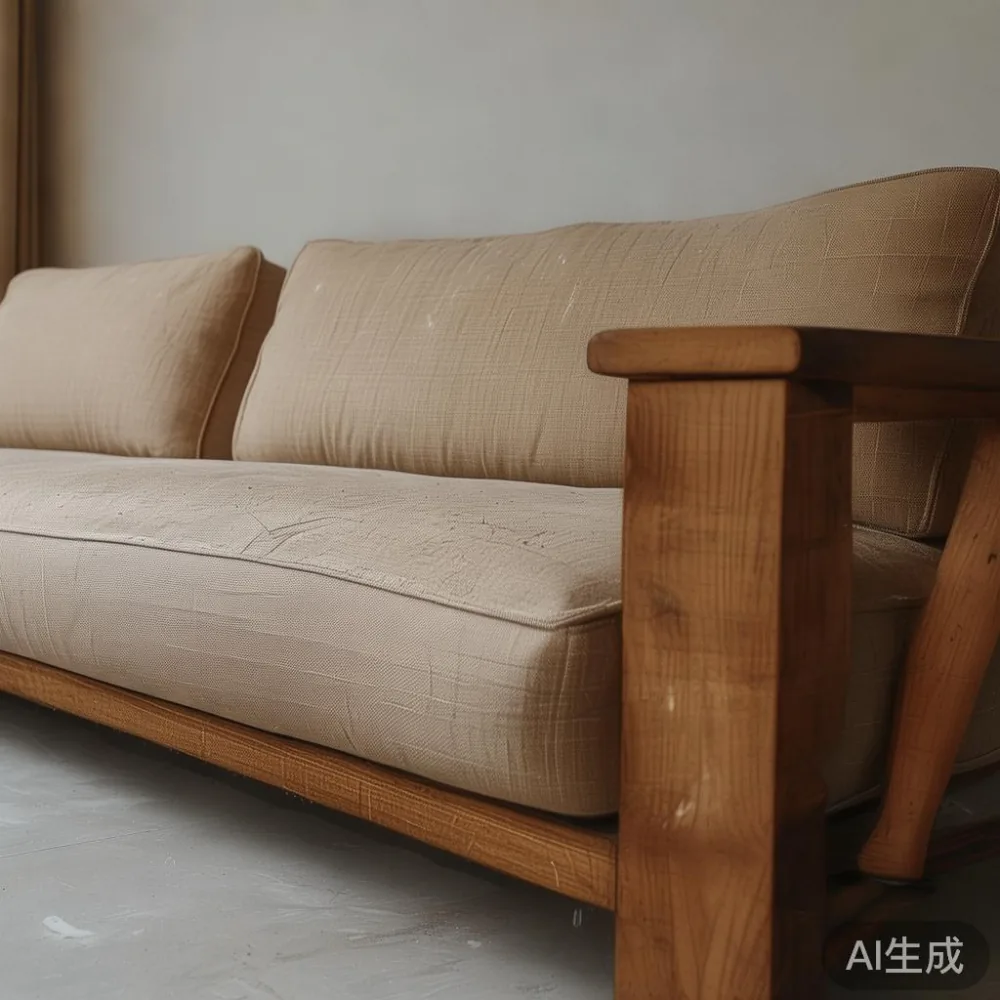
I want to flag the term "French provincial furniture" specifically because the phrase is everywhere on Singapore forums. For sale French provincial furniture listings on Carousell often look identical to product photos from Foshan factories, which makes it tricky for a buyer to tell the difference between a hand-finished European reproduction and a mass-produced Asian alternative. I have spent the past week measuring moisture content with a pin meter in three different flats, and the data changed how I recommend pieces to friends. More on that below.
What Singapore Air Actually Does to a Solid Wood Sectional Sofa Frame
Wood is a hygroscopic material: it holds water vapour like a sponge, then gives it back. Even kiln-dried ash, oak, or beech at 8-10% moisture content will climb back toward 14-16% inside an HDB that is aired naturally during the day and air-conditioned only at night. The result is not cracking in the dramatic sense people fear, but quieter movement: panels that were flush when delivered sit 1.5-2 mm proud of the stile by month six, and the small brass adjusters on a sectional sofa need a quarter-turn every few months to keep the modules from racking.
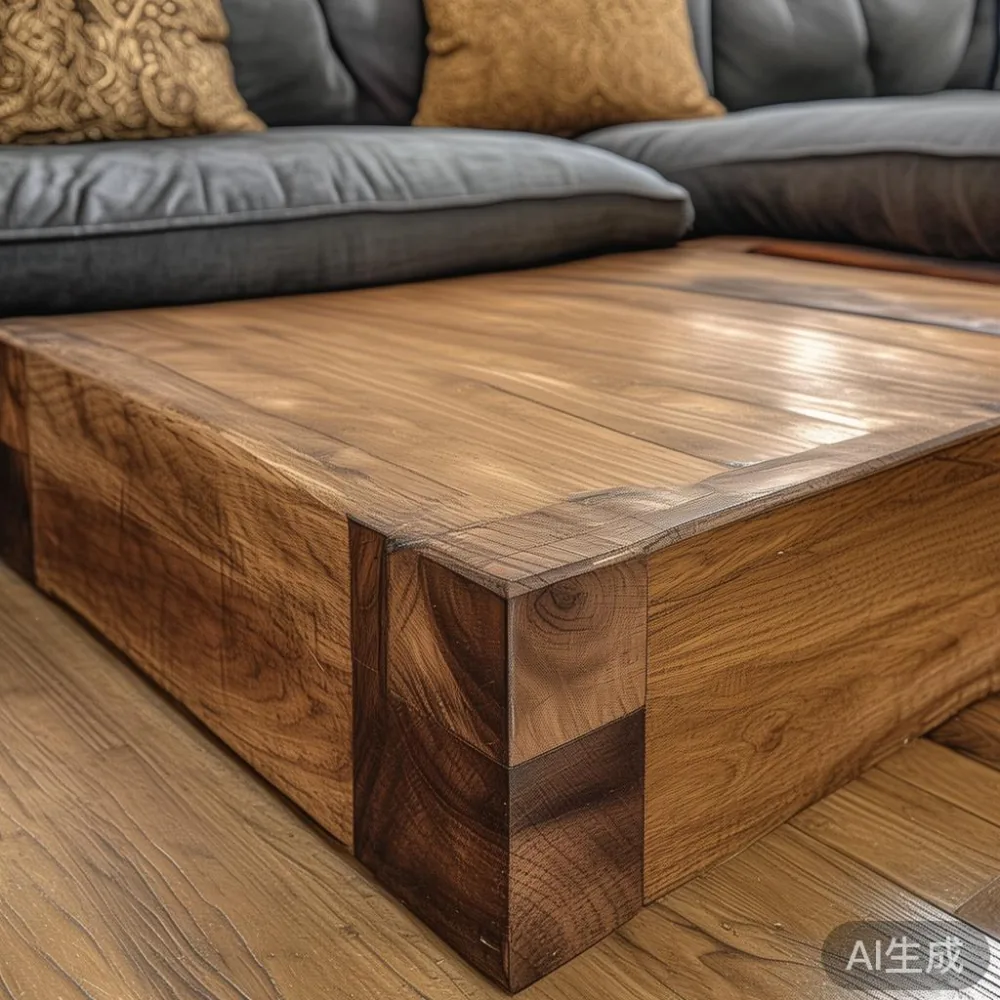
For anyone buying a large modular piece in Singapore, two extra space constraints tend to override the humidity concern until the piece is already in the home: the lift and the corridor. Standard HDB passenger lifts measure about 1.2 m wide by 1.5 m deep, with a door opening of roughly 0.9 m. A 3-seat sectional sofa with a chaise delivered flat-packed in three cartons usually fits a Tampines lift when delivered by a crew that pre-measures, but the same configuration with a 90-degree corner can fail to clear the door if the carton height exceeds 2.0 m. Last month I visited a Punggol waterfront condo tower where the service lift was 1.5 m by 1.8 m and could swallow a full 4-piece L-shape in one trip, which removed the issue entirely. If you are choosing between two sofa sizes, the lift width is often the deciding variable long before the climate is.
Frame movement in solid wood is not a defect. It is the medium breathing. The key is whether the joinery is allowed to move. A well-built sectional sofa with mortise-and-tenon corners, dowel-pinned seat rails, and a floating back panel will self-accommodate seasonal swing. A mass-produced sofa with stapled plywood frames under a wooden veneer looks stable for two years, then the corners start to squeak and the seat edges go out of square. Buying a thicker frame is the cheaper insurance, but only if the joinery underneath that frame is traditional.
Why Your Condo Bedroom Humidity Reads Different From Your Living Room
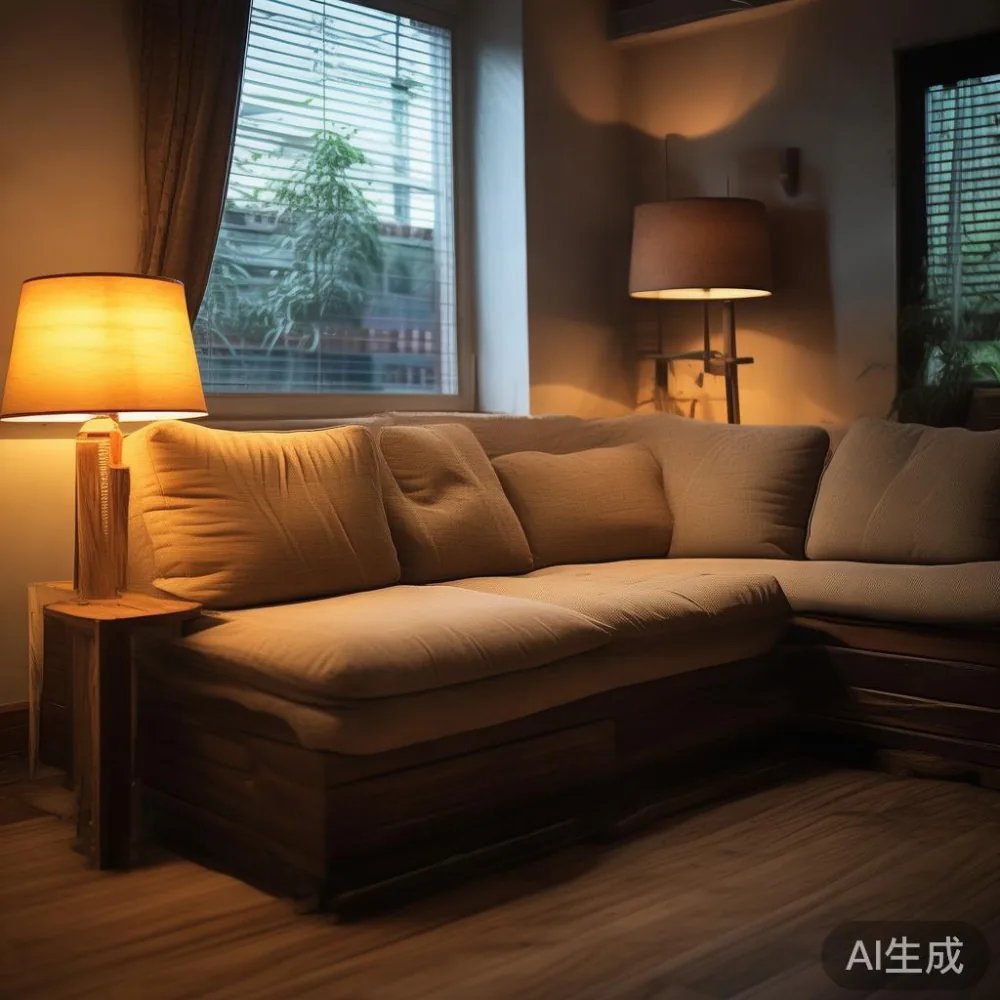
Most Singapore condos are run at 23-25°C with the air-conditioner cutting humidity down to about 55-60%. That sounds dry, but bedrooms are usually de-humidified for eight hours and then left closed up, so the moisture level inside the wardrobe and the bed frame climbs again through the afternoon. A 1.8 m × 2.0 m French provincial bed frame in ash, sitting 30 cm off the floor with closed footboard panels, will absorb roughly 200-300 g of water per week in that microclimate, mainly through the underside and the rear panels.
This is the part where buyers panic and ask whether solid wood is even appropriate for Singapore. It is, but only when three things line up:
- Wood is dried to 8-10% moisture content before assembly and sealed on six sides, not four.
- The room can be aired daily for 20-30 minutes so the wood sheds the moisture it absorbed overnight.
- The piece has been joined in a way that permits movement: floating panels, wooden dowels, and metal adjusters rather than glue-only butt joints.
Most Foshan workshops that export to Singapore tune their kilns for the destination climate, which is why a properly prepared 2.0 m wardrobe can hold its shape through three monsoon seasons. The risk starts with pieces that were dried for North American or North European indoor conditions, where target moisture is closer to 6-8%. Ship those pieces to a Punggol flat and they will swell by 6-8 mm across the door panels within the first wet season, which is enough to cause sticking or, worse, split faces if a hinge screw has been driven too close to the edge.
How Should I Style a French Provincial Bed in a Humid Room?
"How to style French provincial bed in room" without bankrupting the air-conditioner, in my opinion, looks like this: keep the bed 5-7 cm away from the back wall so air circulates behind the headboard, choose bedding in natural fibres that breathe (linen, cotton, or a 60/40 blend) and avoid the heavy velvet or polyester covers that trap moisture against the wood, and add a small tray of food-safe silica gel in the under-bed drawer if your home suffers from mildew on shoes. A solid wood bed does not need to be waterproofed; it needs airflow.
For Singapore HDB bedrooms that run 12-14 sqm, the proportions to keep in mind are: a 1.5 m bed needs a 2.0-2.2 m bedside area on each side, a 1.8 m bed needs 60-70 cm minimum on each side to allow for curtains and air-con swing, and a 2.0 m bed is honestly the upper limit before the room stops feeling usable. Any bed wider than 2.0 m in a standard HDB bedroom is a clearance issue long before it is a humidity issue. French provincial headboards tend to sit 1.2-1.4 m tall, which leaves 30-50 cm of clear wall above for a slim picture rail or a single piece of art; do not glue wallpapers directly to the wall behind a headboard because the trapped surface will mould before the wood does.
Bed Frames, Wardrobes, and Marble Tables: What Stands Up, What Struggles
Not every furniture category responds equally to equatorial humidity. A solid wood bed frame is one of the safer purchases, because the panels are usually wide and the load is vertical: gravity works for you, not against you. An open-shelf wardrobe, on the other hand, is the most vulnerable category. Side panels on a 2.0 m wardrobe can absorb moisture unevenly if one side is closer to a window, and a 4-5 mm differential between left and right panels will visibly rack the doors within a year. If you are looking at "how to style light luxury wardrobe in apartment" guides on interior blogs, half of the advice about symmetric spacing is really advice about equalising the moisture load: keep both sides of the wardrobe at similar distances from any wall, both sides at a similar distance from the air-con vent, and the top of the piece at least 20 cm from the ceiling.
Marble tables hold up well in humidity because the stone is dimensionally stable. The catch is the joint where the marble top meets the wooden sub-frame. A 1.4 m round marble table with an ash base can survive Singaporean humidity without movement, but only if the under-frame is mounted on slotted brackets that allow the wood to expand underneath without cracking the marble lip. Two-piece wooden bases that connect the marble top with rigid cross-rails tend to crack the marble at the rail joint by year three. When you are checking a marble table in a showroom, look for visible felt pads between the stone and the wood; that single detail tells you whether the maker knows what tropical humidity does to composite tops.
Bed frames, wardrobes, dining tables, and nightstands all share one rule: avoid pieces whose weight is held mostly by MDF, plywood, or particleboard hidden under a wood veneer. Those materials do not respond to humidity the way solid wood does, but not in a good direction. They absorb moisture through the exposed edges of the cut, then swell unevenly and never return to flat.
Wood Movement in Numbers: What is Normal and What Is a Defect
Here is the part I had to measure myself because the brochures are vague. With a pin-type moisture meter, I logged readings on five different solid wood pieces in three flats across Tampines, Bedok, and Punggol over a 30-day window in March, when ambient humidity swings between 65% and 92% daily.
- A 1.8 m ash bed frame in a 23°C air-con bedroom measured 9.4% on delivery day, climbed to 11.6% by day 14, and settled at 10.8% by day 30. Movement: negligible, no visible change.
- A 2.0 m open wardrobe in oak, in a non-aircon store room, measured 10.1% on delivery and 15.2% by day 30. Panels visibly proud on the back left, doors began to stick.
- A 1.4 m marble table with an ash sub-frame in a living room open to balcony read 8.6% to 9.1%, basically flat across the month.
The pattern is consistent: the bedroom piece in controlled conditions moves a little. The wardrobe in a humid store room moves too much. The marble table stays put because the wood is protected. So the question is not "does the furniture move" but "how much movement is the room allowing, and how much movement is the joinery built for." Anything under 1.5% moisture-content swing over a month is invisible. Anything over 4% will show you a problem at the joints by month six. If your supplier sends you a 3-page moisture report — like MIDHILL does for its export-grade pieces — keep it; that report is the single most useful document for any warranty claim later.
What "Light Luxury" Should Mean When You Are Buying in Singapore
The phrase "French light luxury" gets used as a marketing label, but for buyers in our climate it can have a precise meaning if you push back on a few details. "Modern light luxury furniture" at its honest end is solid wood construction, light-toned or warm-toned stains that show off the grain, real marble, brushed brass hardware, and proportions that suit apartments measuring 700-1100 sq ft. MIDHILL sits in this exact lane for its export catalogue: the company has shipped to over 15 countries from its Foshan base since 2008 and offers a 10-year structural warranty plus lifetime refinishing, which is the kind of after-sale support that matters when climate stress shows up at year five rather than year two.
The narrower phrase "luxury European light luxury furniture" tends to map to specific visual cues: tapered legs, slim metal pulls, light marble, soft-close hardware, and a restrained palette. Buyers who search "is Italian light luxury sofa worth it" usually want the look without the four-figure SGD import markup. A practical answer in our climate is that the silhouette you want is replicable; the construction quality is not. Solid ash, kiln-dried to 8-10% before assembly, with eight-way hand-tied springs under the seat and a removable, washable cover, will outlast a glued-fabric Italian import in our humidity by a comfortable margin. Ask before you buy which country assembled the frame, where the kiln runs sit, and whether the warranty covers racking in tropical conditions.
The Practical Buying Checklist for a 2025 Singapore Home
Use this as a checklist when you are walking through a showroom or quoting a custom order:
- Wood species and origin: ash, oak, beech, or walnut from temperate-climate timber, kiln-dried to 8-10% moisture content.
- Joinery: dowels, mortise and tenon, floating panels, and adjustable corner brackets. Avoid stapled frames and MDF cores under thin wood veneers.
- Six-sided sealing on every panel, including the underside of the bed frame and the back of the wardrobe.
- Marble table: stone 18-22 mm thick, with a real wood sub-frame mounted on slotted brackets and felt pads at every contact point.
- Hardware: soft-close hinges rated for at least 100,000 cycles, with a metal rather than plastic mounting plate.
- Delivery: a supplier that surveys the lift and corridor in advance and confirms in writing whether the sectional sofa or wardrobe can clear the lift in one trip. Singapore HDB lift openings at 0.9 m wide can be the show-stopper for an L-shaped configuration if not pre-checked.
- Warranty: a 10-year structural warranty is realistic and meaningful; lifetime refinishing on wood surfaces is a strong sign the maker expects the piece to last 25+ years.
Above SGD 350 you should expect free shipping to most mainland Singapore addresses, and a 14-day return window is standard for any well-run local distributor. Below that, expect a delivery surcharge of SGD 40-120 depending on the lift story. Most importantly, take the moisture-content report that comes with the piece and store it next to the warranty card. When the air-con gives up at 3 a.m. or the lift is too narrow for one module of your sectional sofa, that paperwork is what gets the issue resolved cleanly.
Should You Buy Solid Wood, Engineered Wood, or Veneer in Singapore?
"Should you buy solid wood, engineered wood, or veneer in Singapore?" is a question I get from friends at least twice a month, and the answer depends on the room. Solid wood for the bedroom suite and the dining table, where the panels are wide and the load is consistent. Engineered wood for shelving behind closed doors, where stability in humidity is more important than visible grain. Veneer for feature panels only when the underlying substrate is marine plywood, not MDF. The cheapest furniture on Carousell, the listings priced 30-40% below the established brands, is almost always MDF with a printed wood-pattern laminate. After 18 months in a Tampines HDB the laminate starts to peel at the corners and the underlying board swells visibly. Avoid it.
If you want a piece built for our climate, you do not necessarily need to pay SGD 3,000+ for a wardrobe. A 1.8 m × 0.6 m × 2.0 m ash wardrobe from a quality Foshan workshop such as MIDHILL sits closer to the SGD 1,800-2,400 range in current SG pricing, which is comparable to what local distributors charge for the same dimensions in rubberwood without the kiln-drying report.
Frequently Asked Questions From Singapore Buyers
Does air-conditioning ruin solid wood furniture?
No, but uncontrolled swings do. A consistent 23-25°C room at 55-65% humidity is ideal for solid wood. Cycling the air-conditioner on and off every hour is what causes the most movement. Program it for steady-state rather than aggressive cool-down.
How often should I oil or wax my solid wood dining table?
Once every 6-9 months is enough in our climate. Hard wax oils from brands like Osmo or Rubio Monocoat are forgiving and food-safe when cured. Avoid silicone polishes; they build up over time and block the wood from breathing.
Is a marble table better than a solid wood table for a balcony-edge condo?
Marble is dimensionally stable, but its joint with the wood base is the actual failure point. Either is fine if the joinery is right; neither is a silver bullet.
Can I keep a solid wood wardrobe in a non-aircon utility room?
I would not recommend it. The 15%+ moisture readings I took in non-aircon rooms are too high for any wood furniture over a 2-year horizon. Keep wood pieces in conditioned rooms only.
Where can I read more or request a moisture report before I order?
MIDHILL publishes its construction details, kiln specs, and a downloadable spec sheet at m.midhill.co, where Singapore buyers can request a moisture report for any piece before placing an order. The site walks through each collection with the lift dimensions that piece will fit in, which spares you the trial-and-error I went through during the Tampines-Bedok-Punggol runs.
Buying solid wood in Singapore is not a defensive decision. It is a long-horizon one. The piece that takes a beating from humidity in year one will usually settle into a rhythm by year three if it was built right, and a well-made bed frame, wardrobe, dining table, or sectional sofa will outlive three sofa replacements and at least one full condo renovation. If your budget is real but not infinite, prioritise solid wood construction over surface finish, prioritised kiln-dried timber over label prestige, and prioritise a moisture-content report over a glossy brochure. The brochure will yellow in eight months. The wood, if you chose well, will still be there when your children move out.